Why Do Archaeologists Study Ceramic Vessels?
At Tell el-Retaba, the majority of the archaeological material consists of ceramics. Studies of these vessels reveal that the site was inhabited from the Second Intermediate Period (around the middle of the 2nd millennium BCE) up to the Ptolemaic period. Preserved vessels or their fragments are the primary remnants of everyday activities related to the preparation, storage, and consumption of food.
Recent analyses have shown that traces in the clay of some vessels indicate trade contacts with distant regions: Crete, Greece, the Aegean islands, Turkey, Cyprus, Syria, and Lebanon. Although it is not always possible to determine precisely what products they carried, it is highly probable that they contained valuable goods such as wine, olive oil, or resins.
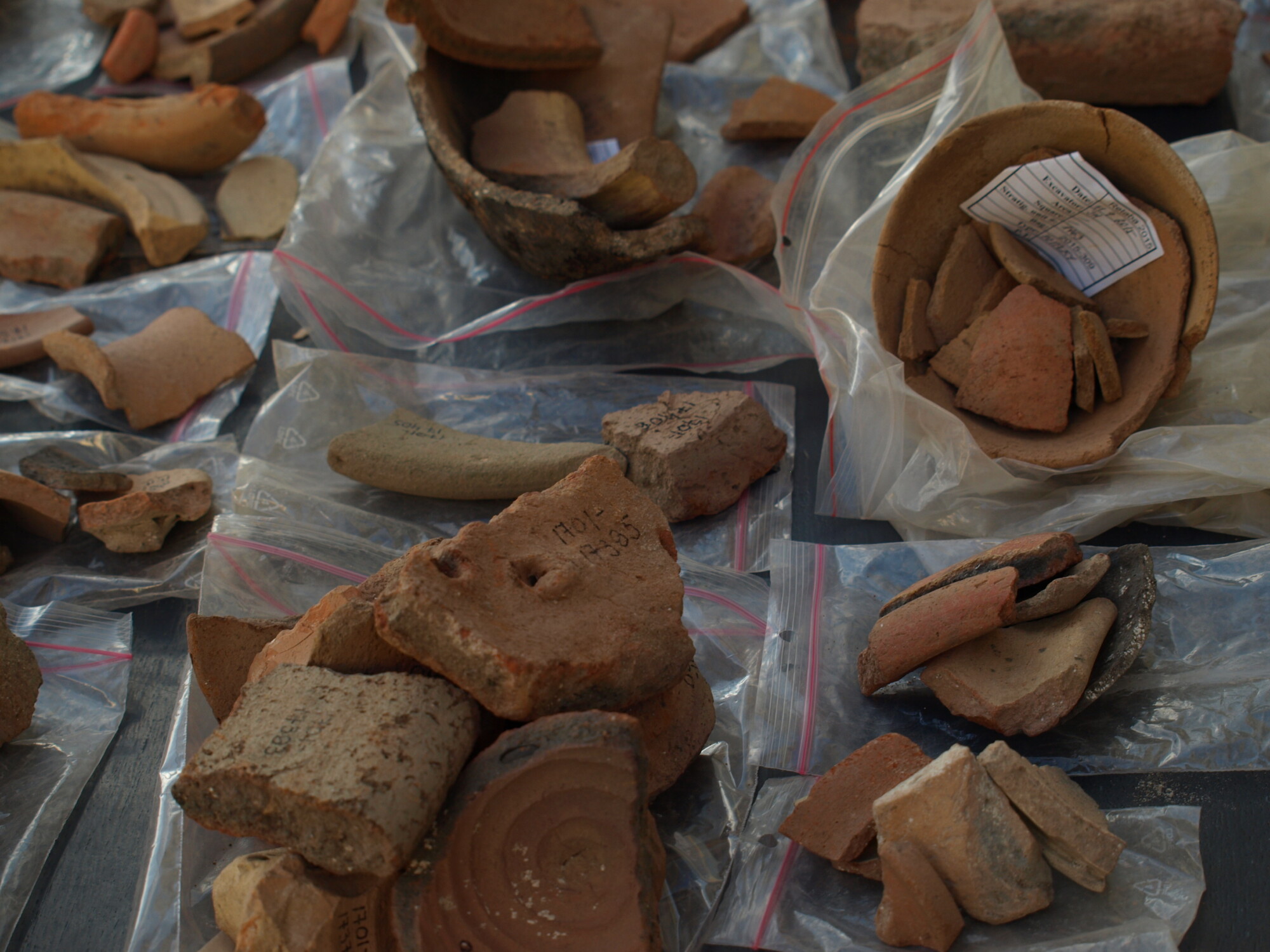
© A. Wodzińska, licensed under CC BY-SA 4.0
A Kitchen at the Crossroads of Cultures: Ceramics from the Hyksos Period
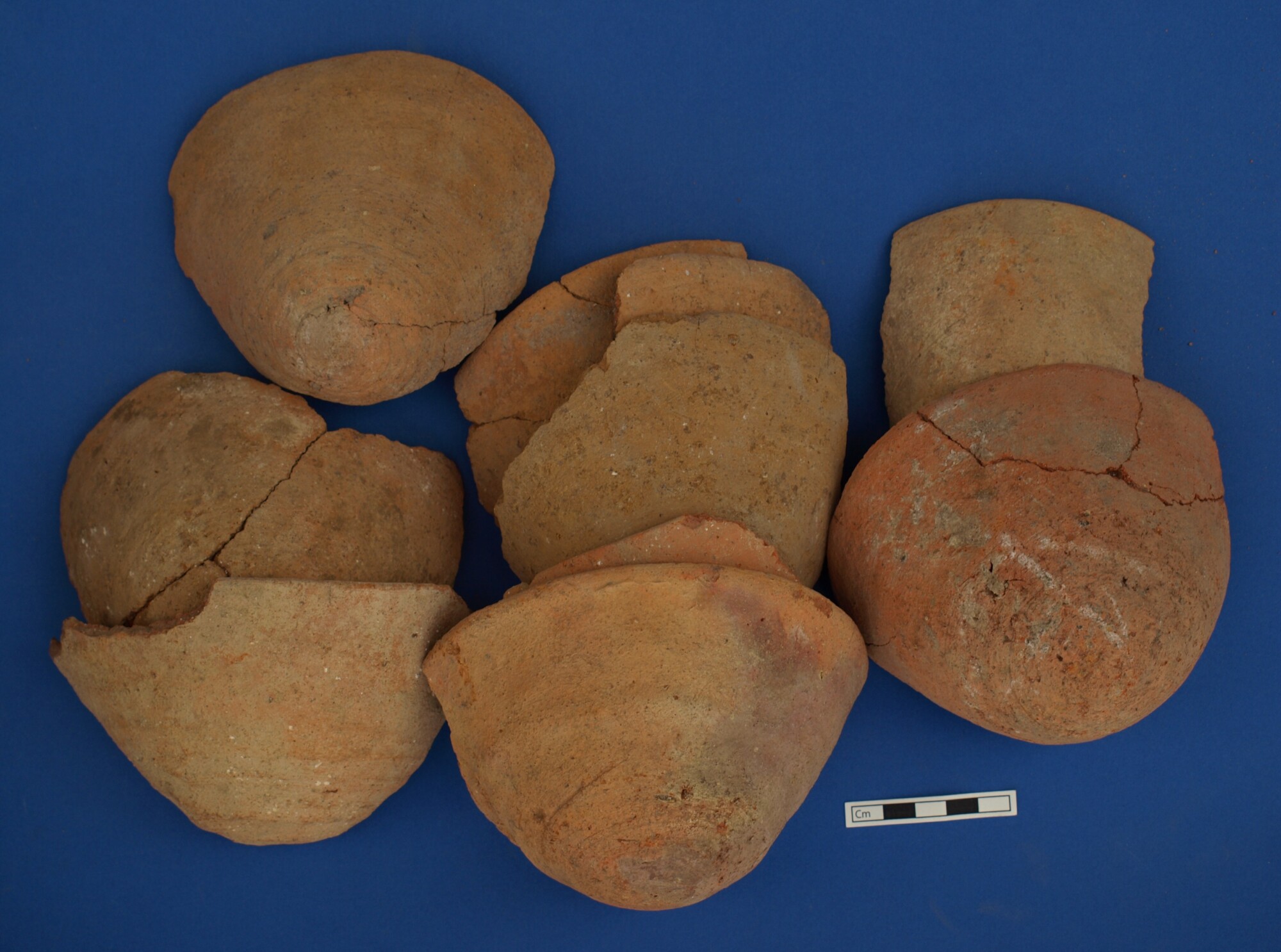
The earliest ceramics from Tell el-Retaba date to the beginning of the 15th Dynasty, during the Hyksos rule, who introduced new types of vessels to Egypt. These were hand-built, irregularly shaped vessels, most likely used for cooking and baking. Large storage containers zirs, which were intended for storing water. Among the finds are bowls and plates with a smoothed, red surface, as well as small black jugs with a single handle and stamped decoration, known as Tell el-Yahudiya ware. These were often placed in tombs, serving as containers for oils and perfumes.

© B. Jakubowska, A. Wodzińska, licensed under CC BY-SA 4.0
A particularly interesting period is the late 15th Dynasty, when tombs with Hyksos architectural features contain vessels already made according to Egyptian models. The question of who was buried – Hyksos who had adopted Egyptian ceramics, or Egyptians themselves – illustrates the complexity of cultural transformations at the time. It stands as evidence of exchange and mutual influence between traditions.
Ceramic Echoes of the New Kingdom
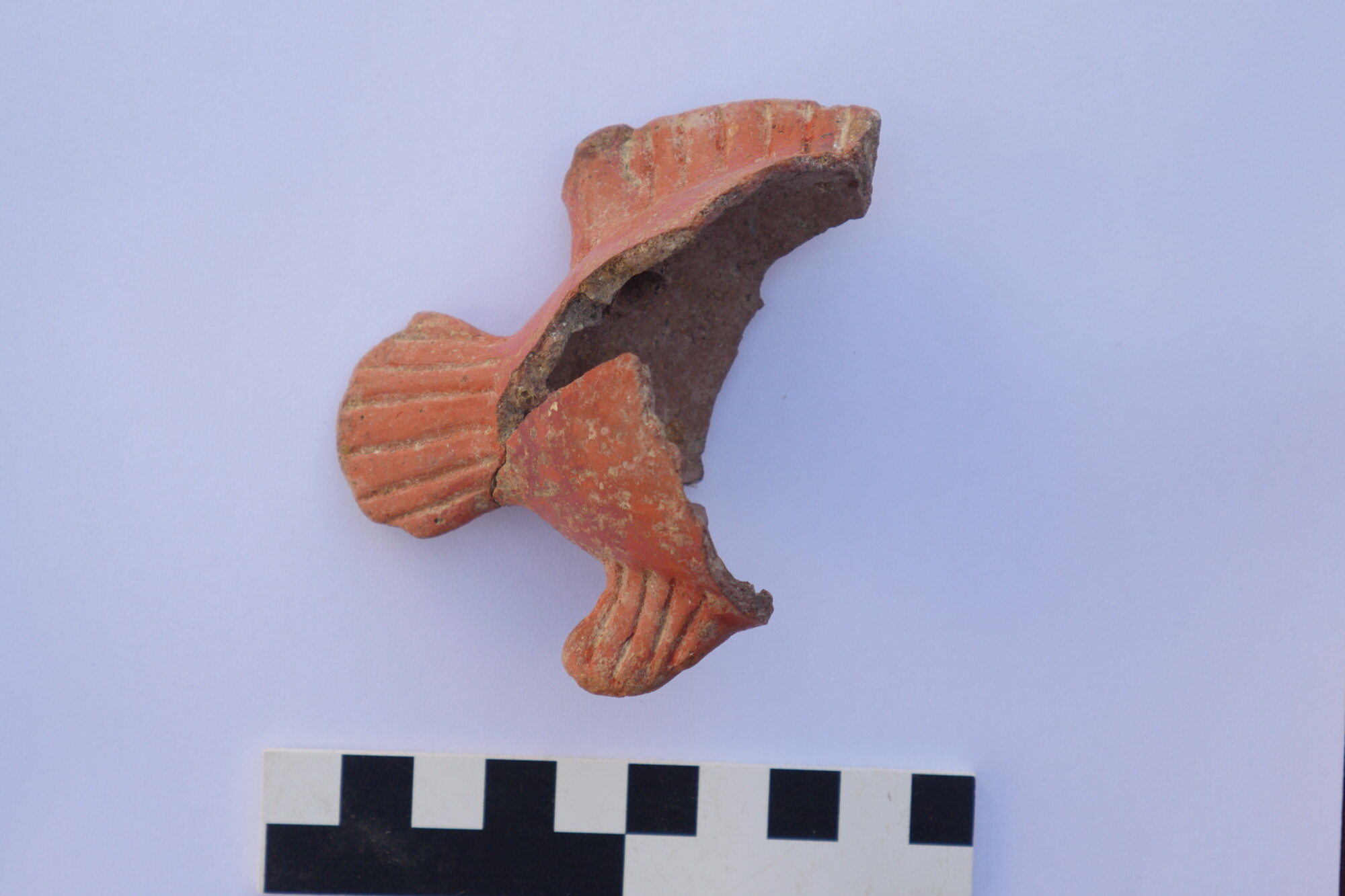
The early 18th Dynasty saw a return to typically Egyptian ceramic forms. Small red clay bowls with black painted rims appeared, along with faience vessels used as everyday tableware. Their decorations included wavy lines, geometric motifs, and depictions of birds and plants.
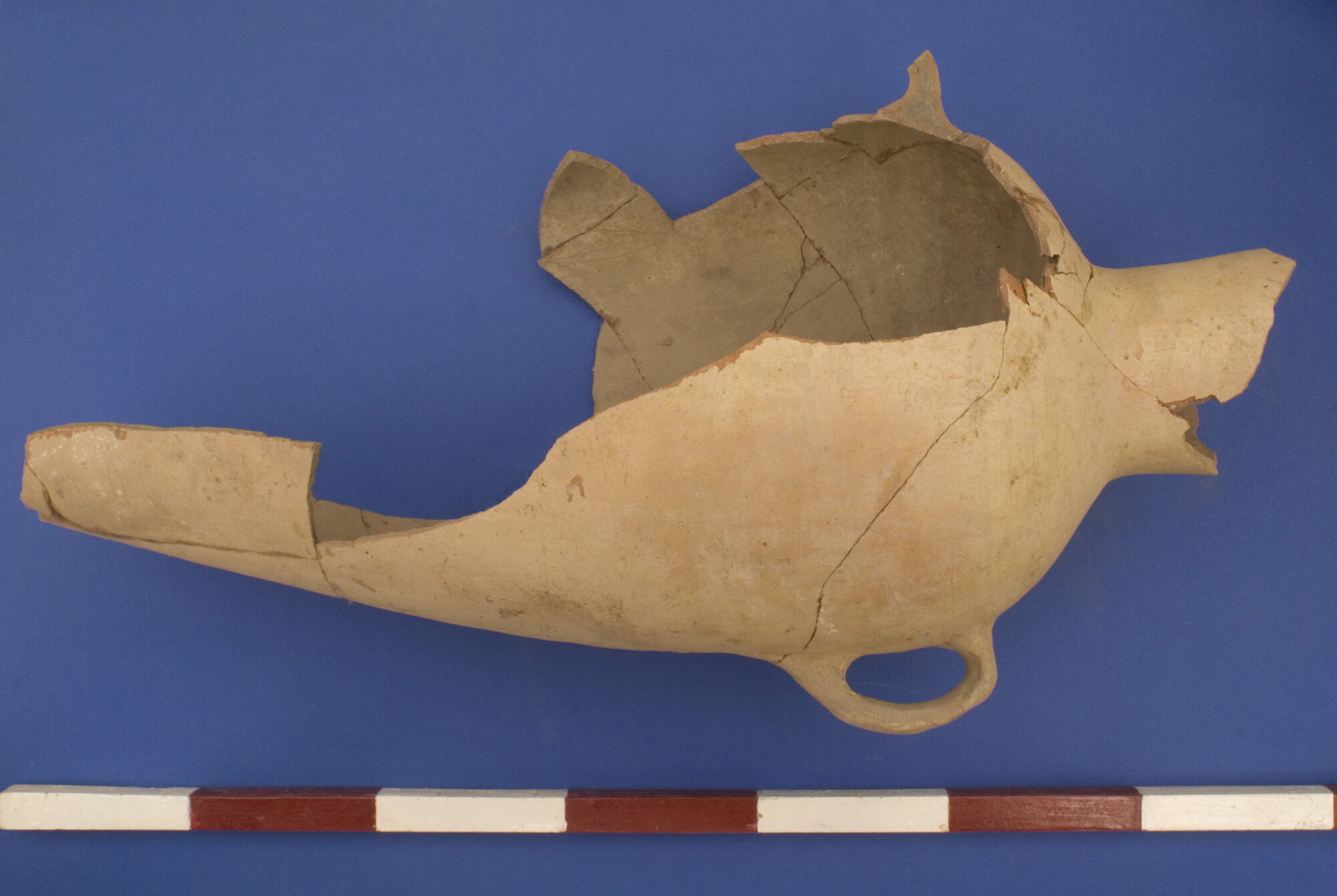
© S. Rzepka, A. Wodzińska, licensed under CC BY-SA 4.0
At this time, distinctive amphorae with slender, conical shapes and two handles also began to appear, designed for the transport and storage of liquids, mainly wine and olive oil. Mediterranean influences are evident in both imports and decorations, particularly those originating from Crete, Cyprus, Cilicia (southern Turkey), and the Levant.

© B. Jakubowska, A. Wodzińska, licensed under CC BY-SA 4.0
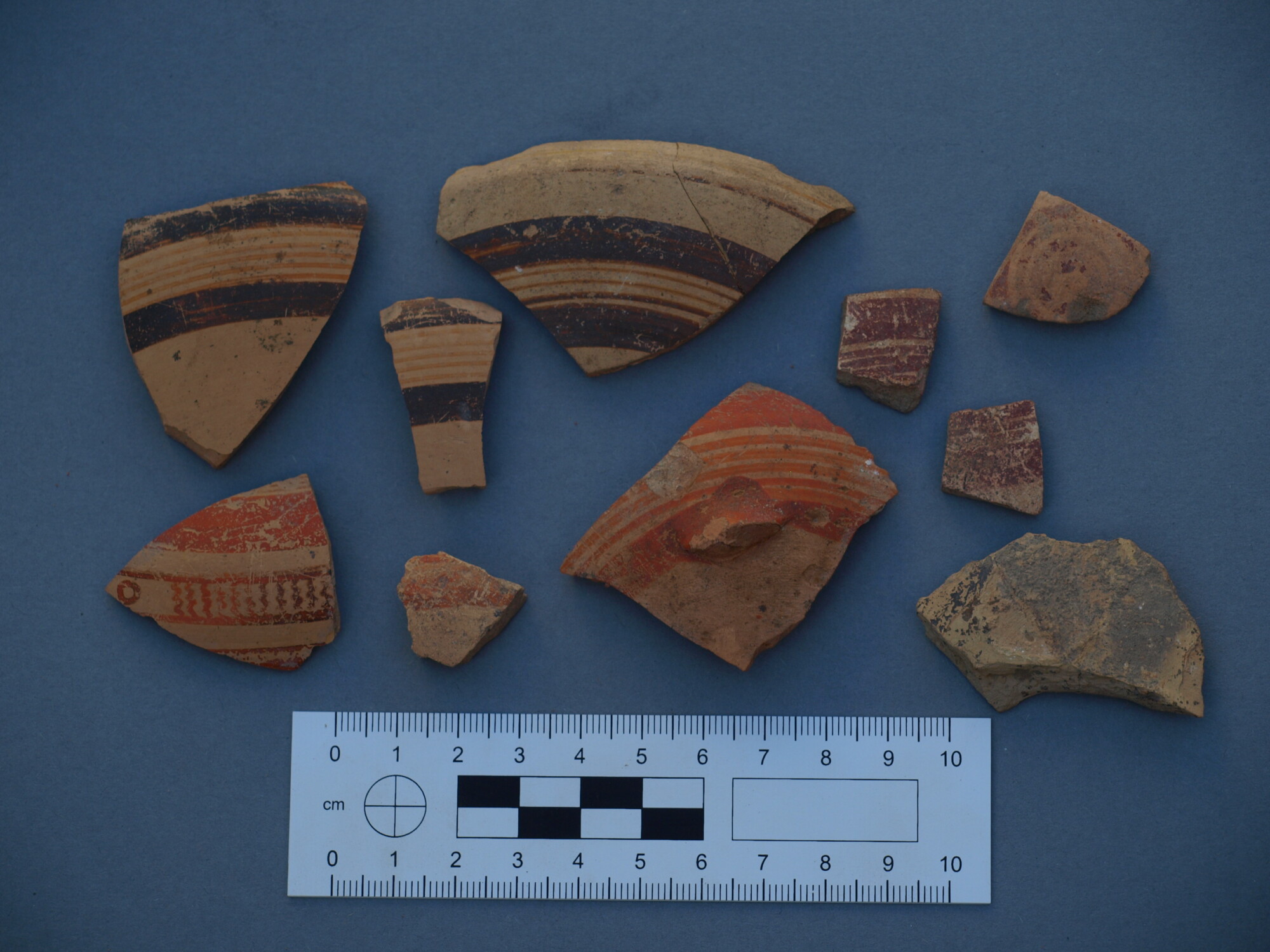

© P. Sójka, A. Wodzińska, licensed under CC BY-SA 4.0
Although these vessels often lack a clear archaeological context, at least some of them can be linked to the so-called Tower Houses, the remains of which have been uncovered at the site. A tower house is a type of multi-storey mudbrick residential building characteristic of the Late Period in Egypt. Its tower-like form reflected the increasing density of urban settlement and changes in the organization of urban space.
Tell el-Retaba in the Ptolemaic Style
During the Ptolemaic period, ceramics at Tell el-Retaba underwent another transformation. Some forms can be traced back to the 17th Dynasty, while other vessels represent local production inspired by foreign models, primarily Greek. For example, oinochoe-style jugs appear, usually without decoration—Ptolemaic ceramics from Tell el-Retaba are rarely decorated.
Some vessels were imports, particularly wine amphorae, which reached Egypt in response to the growing demand for this beverage. As in the Late Period, wines from Chios and Rhodes were the most popular. One amphora from Rhodes even bears a stamped mark directly indicating its place of origin. In addition to amphorae, imported Attic vessels with black glossy slip, crafted with exceptional care, have been found. These items were clearly luxury goods in their own right, rather than mere containers for commodities.
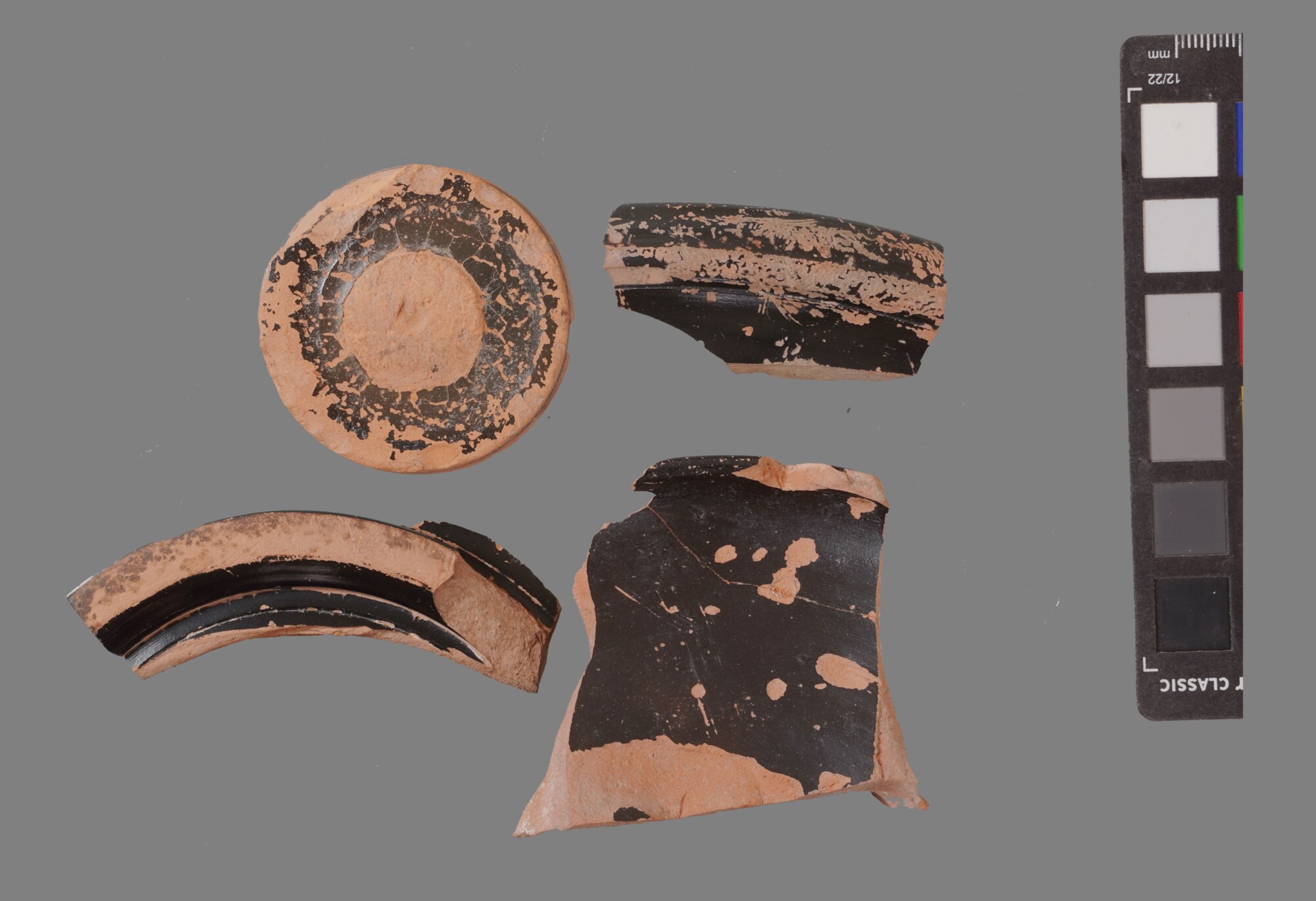
© P. Sójka, A. Wodzińska, licensed under CC BY-SA 4.0
Amphorae continued to be imported from the Levant, carrying a wide variety of contents: wine, olive oil, resins, and possibly even raisins.
Tea and Tobacco Among the Ruins – Echoes of Ottoman Settlement
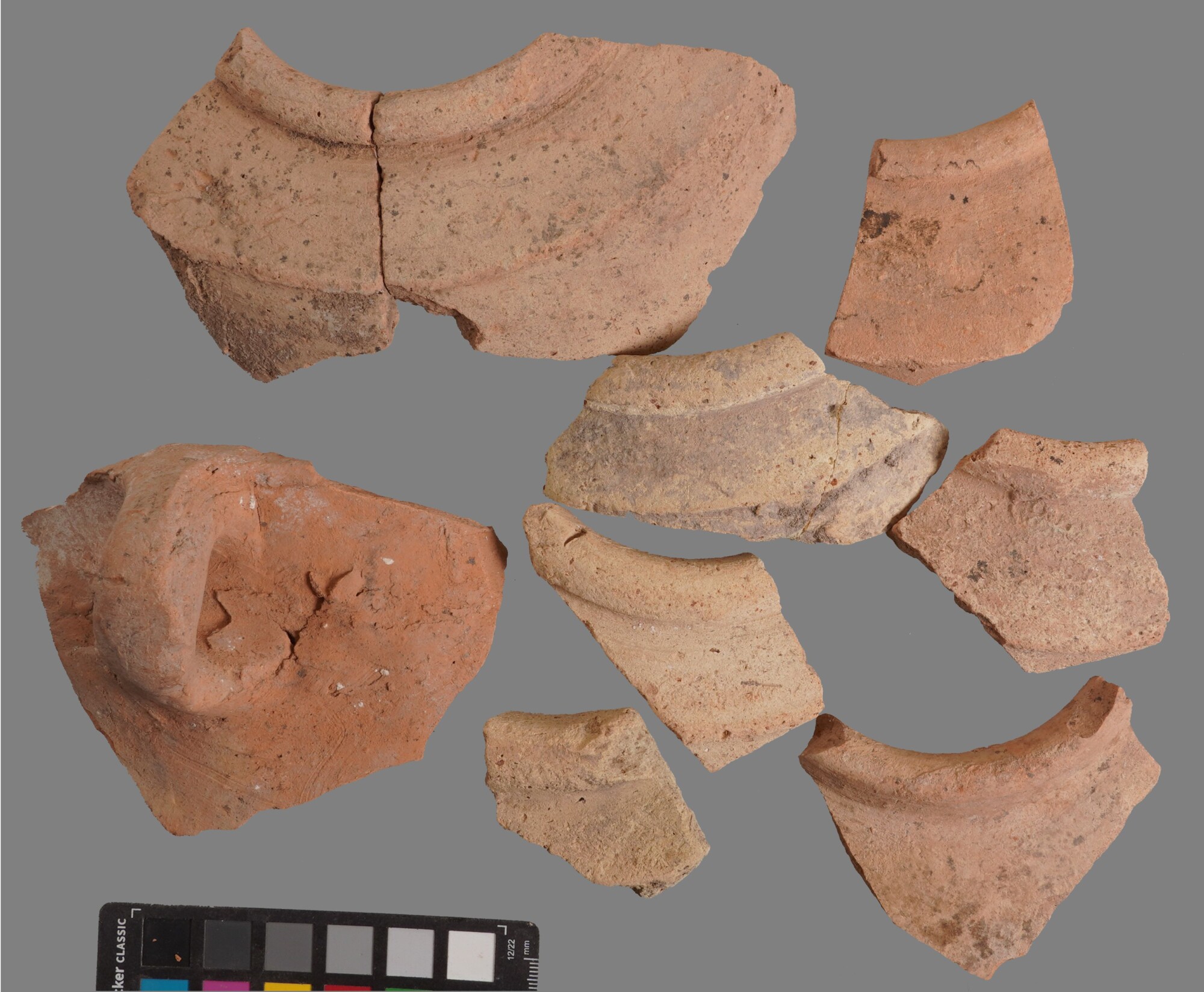
One of the final chapters in the history of Tell el-Retaba’s occupation is the Ottoman period, specifically the early 19th century. Although the site was by then the ruins of a former town, individual inhabitants likely took shelter among the remaining walls. Their presence is evidenced by ceramic finds—primarily tea kettles and hand-built cooking vessels.
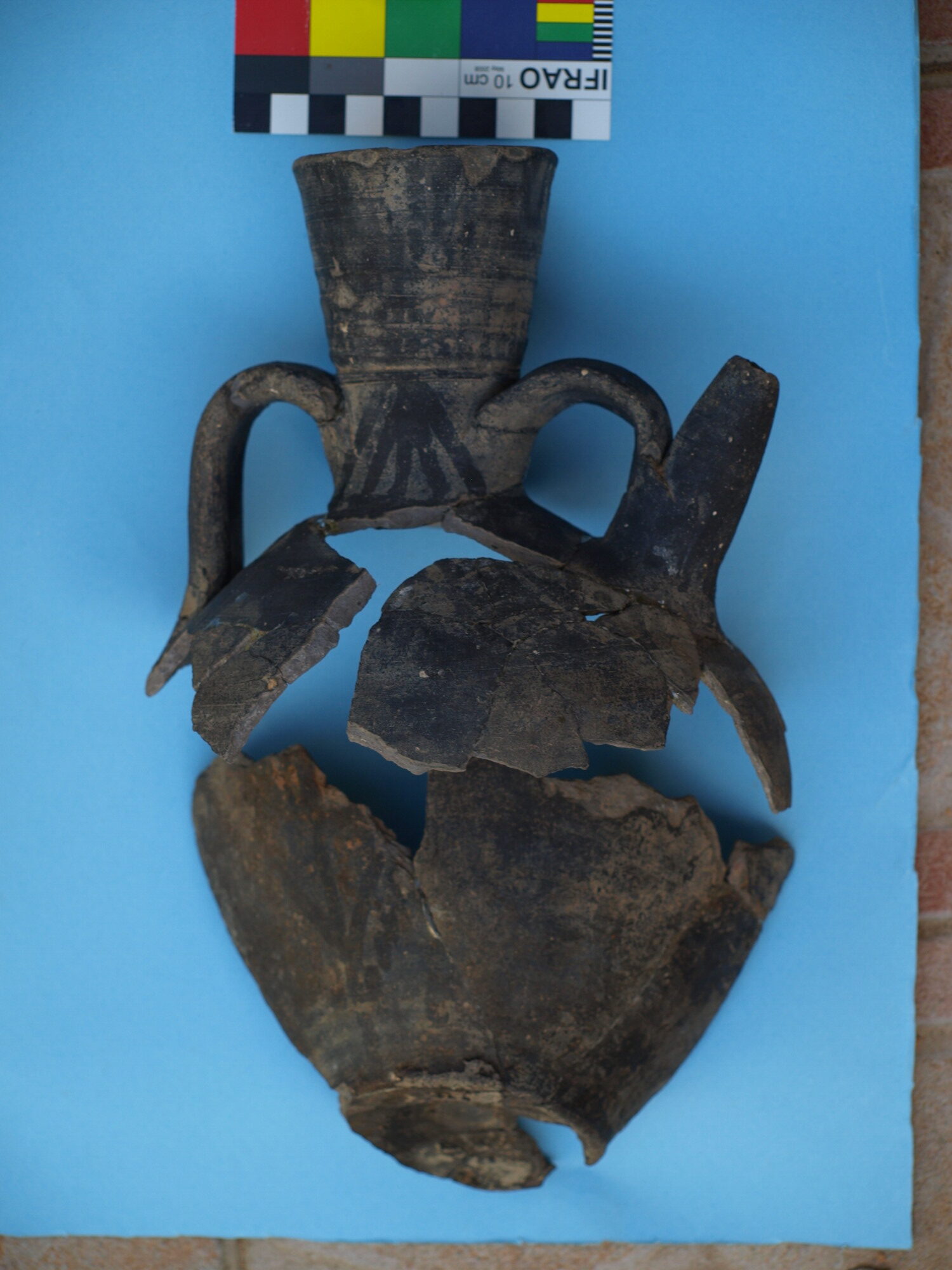
© B. Jakubowska, A. Wodzińska, licensed under CC BY-SA 4.0
A particularly surprising discovery was a jar containing a large quantity of tobacco seeds. At first glance, this may seem odd, but it fits well with other evidence from the site such as tobacco pipes also found there. These unassuming finds are truly exciting, showing that even when the ancient town had become a shadow of its former self, people still visited, drank tea, and engaged in daily rituals.
Speaking Vessels – A Summary
The ceramics of Tell el-Retaba are not just archaeological material. They are a living document of the site’s history, which functioned for over fifteen centuries as a hub of contact, trade, and daily life. Clay preserved everything: the customs of its inhabitants, trade routes, technological developments, and cultural transformations.
Through ceramic studies, we know that Tell el-Retaba held strategic significance, controlling trade routes and serving as a venue for multicultural interactions. From hand-built Hyksos pots, to the slender amphorae of the New Kingdom, to Ottoman tea kettles—every fragment tells its own story.
It is ceramics, often overlooked at first glance, that most fully capture the rhythm of life of ancient Egypt’s inhabitants.
Author: Anna Wodzińska – archaeologist and ceramologist, habilitated doctor, researcher at the Department of Egyptian and Nubian Archaeology, Faculty of Archaeology, University of Warsaw. For over two decades, she has conducted research on ancient Egyptian ceramics, participating in numerous international archaeological projects, including Giza, Tell el-Retaba, Hermopolis, and Tarkhan. She has also worked in Turkey studying Assyrian ceramics and in Sudan focusing on Nubian pottery. Her research interests center on the production, distribution, and use of vessels in the daily life of ancient Egyptians. She is the author of the four-volume Manual of Egyptian Pottery (AERA, Boston), one of the foundational works on Egyptian ceramics.