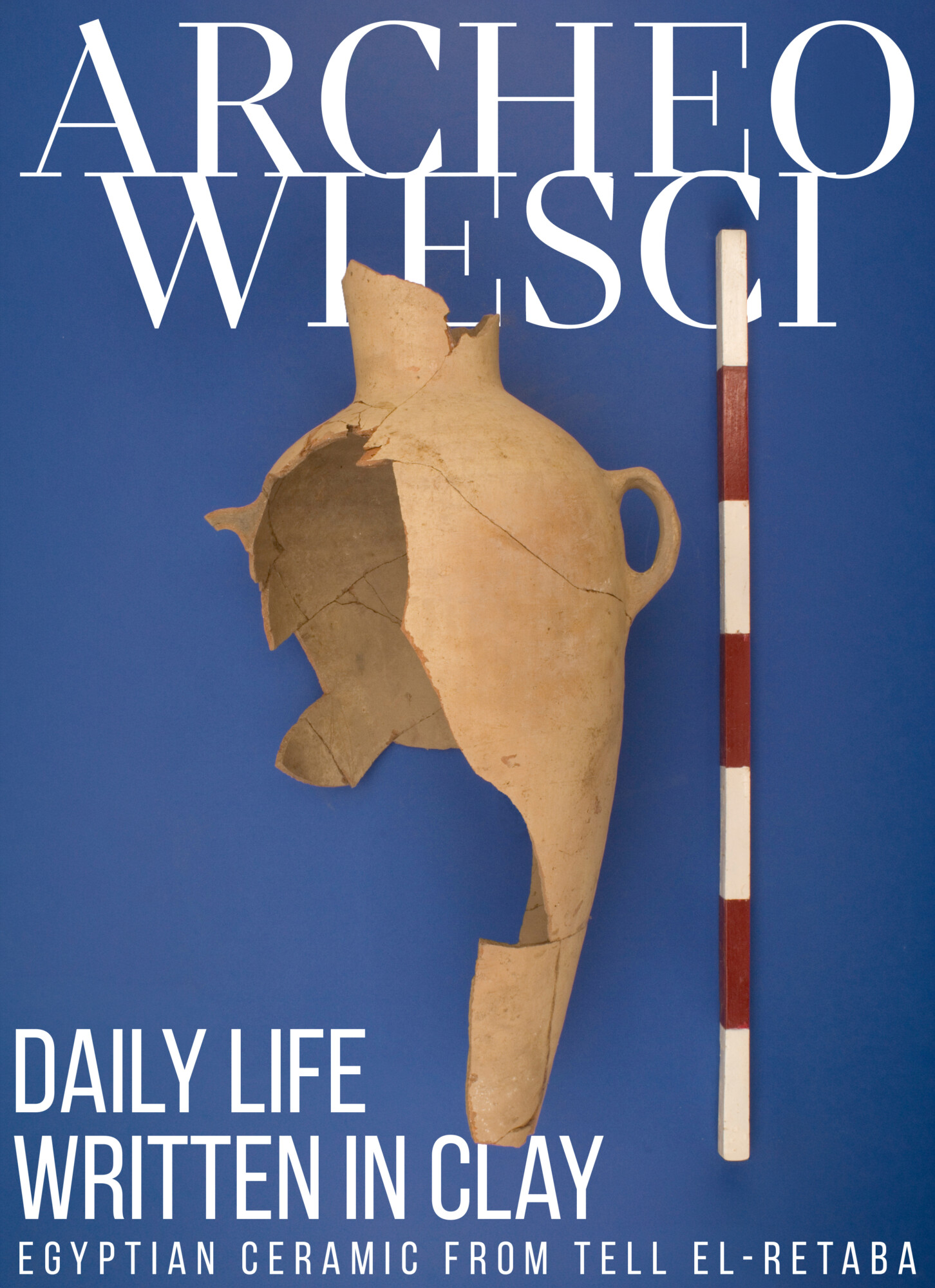
Ceramic vessels, though often perceived merely as broken shards, constitute an invaluable source of knowledge about ancient Egypt. At archaeological sites such as Tell el-Retaba in the eastern Nile Delta, they are the most numerous category of finds. Each excavation season yields thousands, sometimes even millions, of pottery fragments. They may appear as a chaotic mass, but to a ceramologist—a specialist in the study of ceramics—every fragment is a testament to daily life, production technology, and trade networks from thousands of years ago.
Analysis of ceramics allows researchers not only to establish the chronology of archaeological layers, but also to determine the functions of the buildings in which the vessels were found. From storage rooms and workshops to dining areas. Differences in shapes, clay types, manufacturing techniques, and surface finishes also reveal much about the social status of the vessel users and far-reaching trade connections, both within Egypt and beyond its borders.
Continue reading “Daily Life Written in Clay – Egyptian Ceramic from Tell el-Retaba”