One of the most famous quotes about Ancient Egypt comes from Herodotus. He states that Egypt is “a gift of the Nile.” He explains the reasons for this statement, among which he mentions easy access to fish. It seems, therefore, that fish should have been an important part of the ancient Egyptians’ diet. However, this contradicts references by other ancient authors who mention the existence of a taboo on eating fish in Egypt. So did the Egyptians eat fish?
Taboo during the Pharaonic period
It turns out that the answer to this question is more complicated than it might seem at first glance. Unfortunately, for most of the Pharaonic period, we lack sources that could confirm whether a taboo on fish existed at that time. Fish bones indicate that they were food for the living. They are commonly found in many settlement sites. The situation was different when it came to food in a ritual and funeral context. Researchers point to the absence of fish on lists of grave gifts as early as the Old Kingdom. References in magical texts, such as the Book of Exodus, indicate that fish were considered unclean. This gave rise to the hypothesis that the taboo applied to the dead, who could not receive fish as gifts.
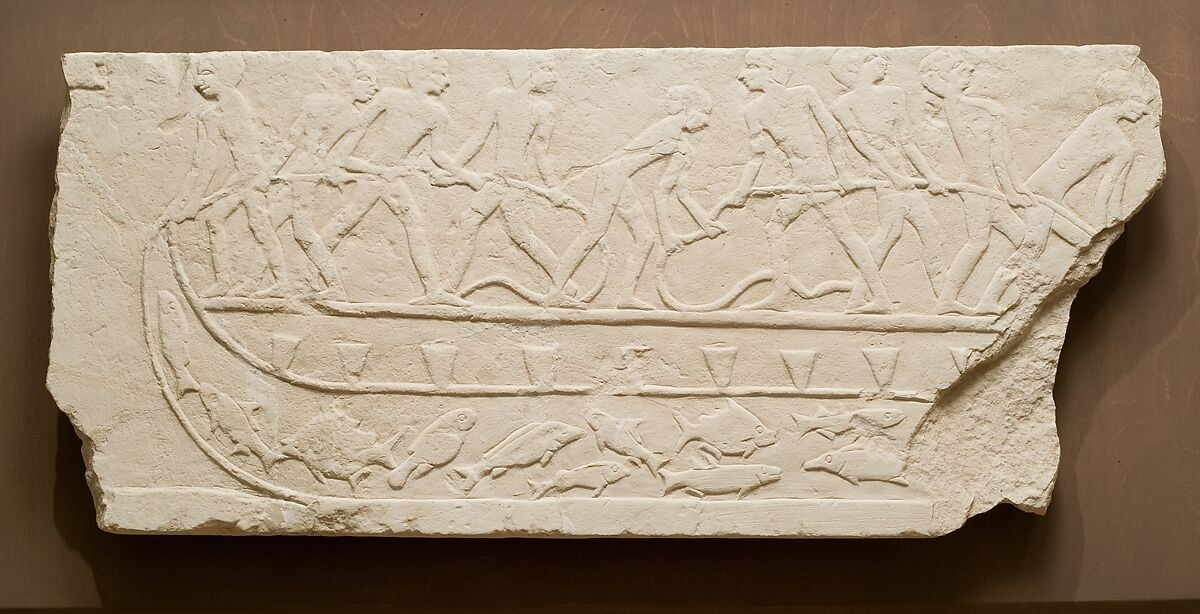
However, depictions of fishing often appeared on the walls of tombs in so-called scenes of everyday life. The purpose of such depictions was to ensure that specific products would be available to the deceased for eternity. The fairly common presence of such scenes in tombs may indicate that ensuring access to fish for the deceased was indeed important. It can therefore be concluded that the attitude towards fish was ambivalent, but there are no clear signs of a taboo for the living during most of the Pharaonic period. However, this did not prevent fish from being offered to temples, as indicated by their presence in the gift lists of Ramses III.
MET Museum,
Public Domain
The area of the taboo’s existence
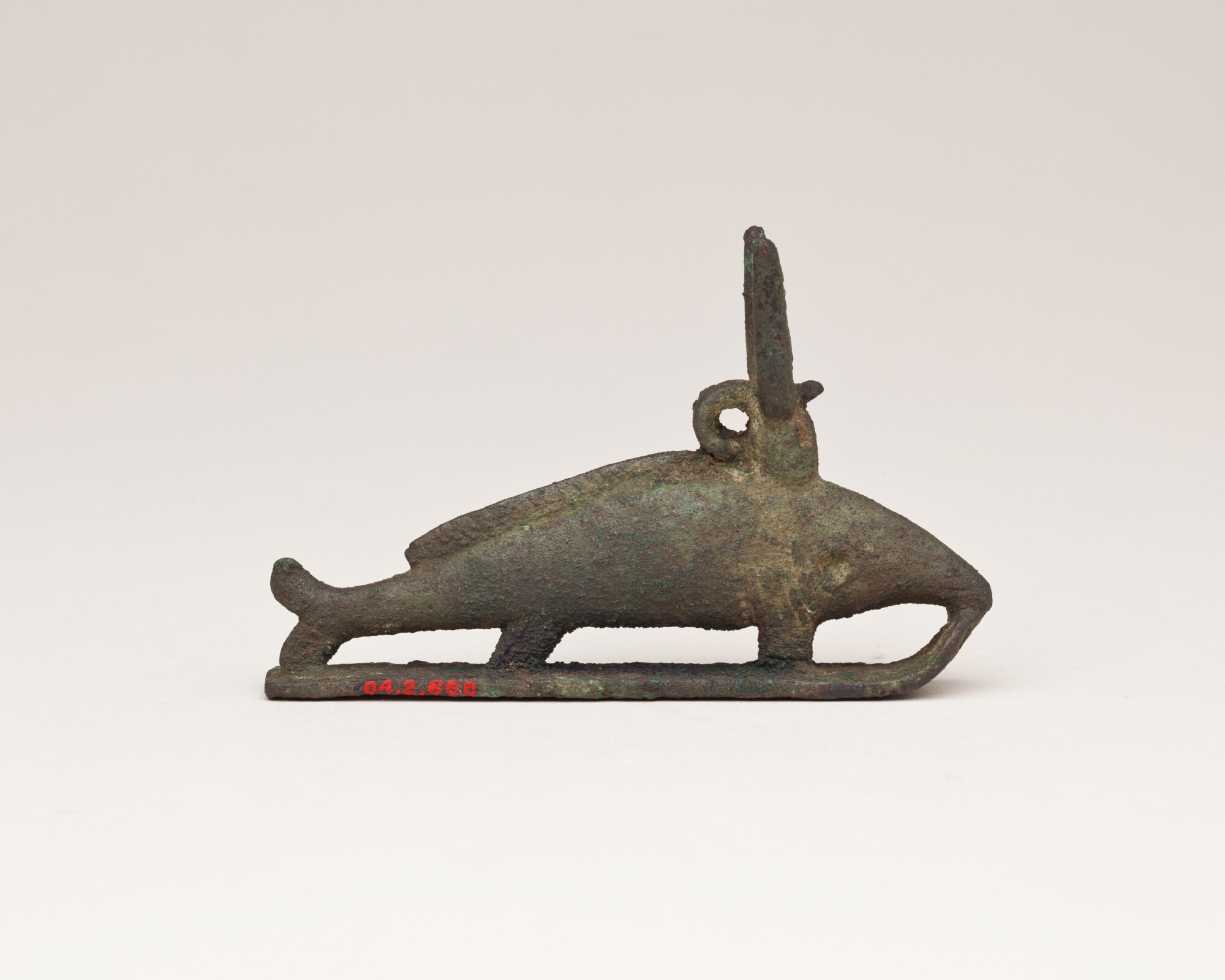
More sources appear from the Late Period onwards, and they seem to further complicate the picture. Based on them, we can conclude that the taboo never applied to the whole of Egypt. Each religious center had its own rules and main deities. Sometimes, the beliefs in specific centers were mutually exclusive. Cosmogonies are an example of this. Each major center wanted its deity to play a key role in the creation of the world. This led to the emergence of many alternative versions. The same was true for the worship of animals, including fish. In some temples, certain species of fish were considered sacred, which resulted in a ban on fishing and, consequently, eating them. Plutarch recounts the story of the conflict between Kynopolis and Oxyrynchos, which clearly illustrates the differences in approach to this issue. These cities were located in Middle Egypt, relatively close to each other. The sacred animal of Kynopolis was the dog, and that of Oxyrynchos was a certain species of fish. The inhabitants of Kynopolis ate the sacred fish of Oxyrynchos, which resulted in retaliation by that city and the eating of their dog. The conflict began to escalate, forcing the Romans to intervene. As can be seen, the issue of diet could lead to serious neighborly antagonisms. At the same time, it can be noted here that the fish taboo concerned the local level of worship rather than the whole of Egypt, and it differed significantly.
MET Museum,
Public Domain
Did the taboo apply to all species?
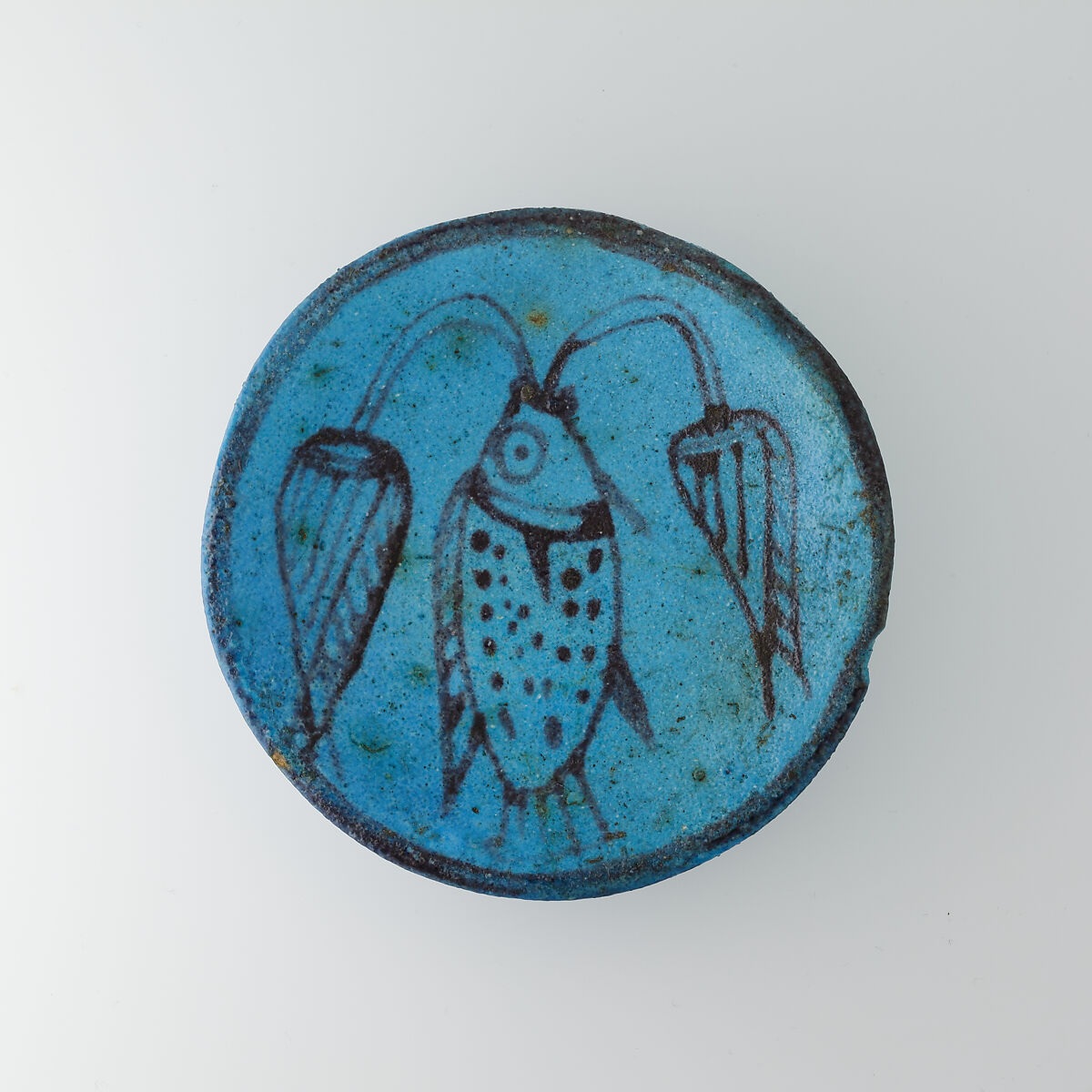
The preceding story also raises another issue. The taboo did not necessarily apply to all fish. It is due to the fact that the sanctity of fish was related to both their species and a specific area. Not all of them were covered by the ban, and certainly not everywhere. One of the important fish in Egyptian beliefs is tilapia (Tilapia nilotica). It often appears in scenes of fishing in tombs. Fish of this species keep their eggs in their mouths until they hatch, and in case of danger, young fish also find shelter there. The Egyptians interpreted this as rebirth and linked it to their beliefs about the afterlife.
In addition, there are several other species known to be associated with the myth of Osiris. After his death, Osiris’ body was dismembered and thrown into the Nile. His wife, Isis, found most of the pieces and put them back together. The only part she could not find was his phallus, which had been eaten by a fish. Several species are mentioned in this role, including Oxyrynchus, Lepidotus, and Phagrus. Their Greek names are known, but their species affiliation (except for Oxyrynchus) is still a subject of debate among researchers.
MET Museum,
Public Domain
Priests and taboos
Another mention by ancient authors indicates that priests were completely forbidden to eat fish. Archaeological research of the priestly quarters at Karnak seems to confirm this information. Few fish bones were found on the three levels corresponding to the period from the Third Intermediate Period to the Ptolemaic era. The few that were found there are interpreted as having been brought in with silt from the Nile. However, these data refer to only one temple. It turns out that the situation may not have been the same in all temples. An examination of a temple in Elephantine from the 25th Dynasty showed no traces of a taboo on fish in this place. It is therefore possible that this again depended on the region and the specific temple.
So, was there a taboo on fish in Egypt? That depends on many cultural, chronological, and territorial factors. Numerous sources indicate that it existed to some extent. However, it does not seem to have functioned in the same form throughout the entire period. Nor did it apply to the whole of Egypt but was rather associated with local cults. In some periods, it may have been more related to the cult of the dead and not necessarily concerned with a dietary prohibition for the living. Unfortunately, this complexity makes it more difficult to identify the existence of taboos in archaeological material. Without textual data, the absence of a single species in bone material will not be considered a sign of a taboo. However, this provides an area for further research that may help to better understand the role of fish in the diet of the ancient Egyptians.
Bibliography
Brewer, Douglas J., Friedman, Renee F., 1989, Fish and Fishing in Ancient Egypt, The Natural History of Egypt: Volume II, Warminster.
Chaix, Louis, 2021, Le monde animal, [w:] Masson-Berghoff, A. (red.) Le quartier des
prêtres dans le temple d’Amon à Karnak, Leuven, 217-243.
Darby, William J., 1977, Food: the Gift of Osiris, London, New York, San Francisco.
Houlihan, Patrick F., 1996, The Animal World of the Pharaohs, London.
Galpaz-Feller, Pnina, 1995.,The stela of king Piye: a brief consideration of “clean” and
“unclean” in ancient Egypt and the Bible, Revue Biblique 102 (4), 506-521.
van Neer, Wim, Gonzales, Jerome, 2019, A Late Period fi sh deposit at Oxyrhynchus (el-Bahnasa, Egypt), Documenta Archaeobiologiae 15, 311-342.
Author:
Beata Zaborowska – second-year student of the second cycle of studies in Archaeology at the University of Warsaw, writing her master’s thesis on ancient Egypt.
This article may be reprinted free of charge, with photos, provided the source is acknowledged.
The text was written as part of the project “Campaign promoting the research of the Faculty of Archaeology of the University of Warsaw in the Nile Valley” co-financed by the Initiative of Excellence – Research University program.
Editing: J.C.
Translation: A.B.