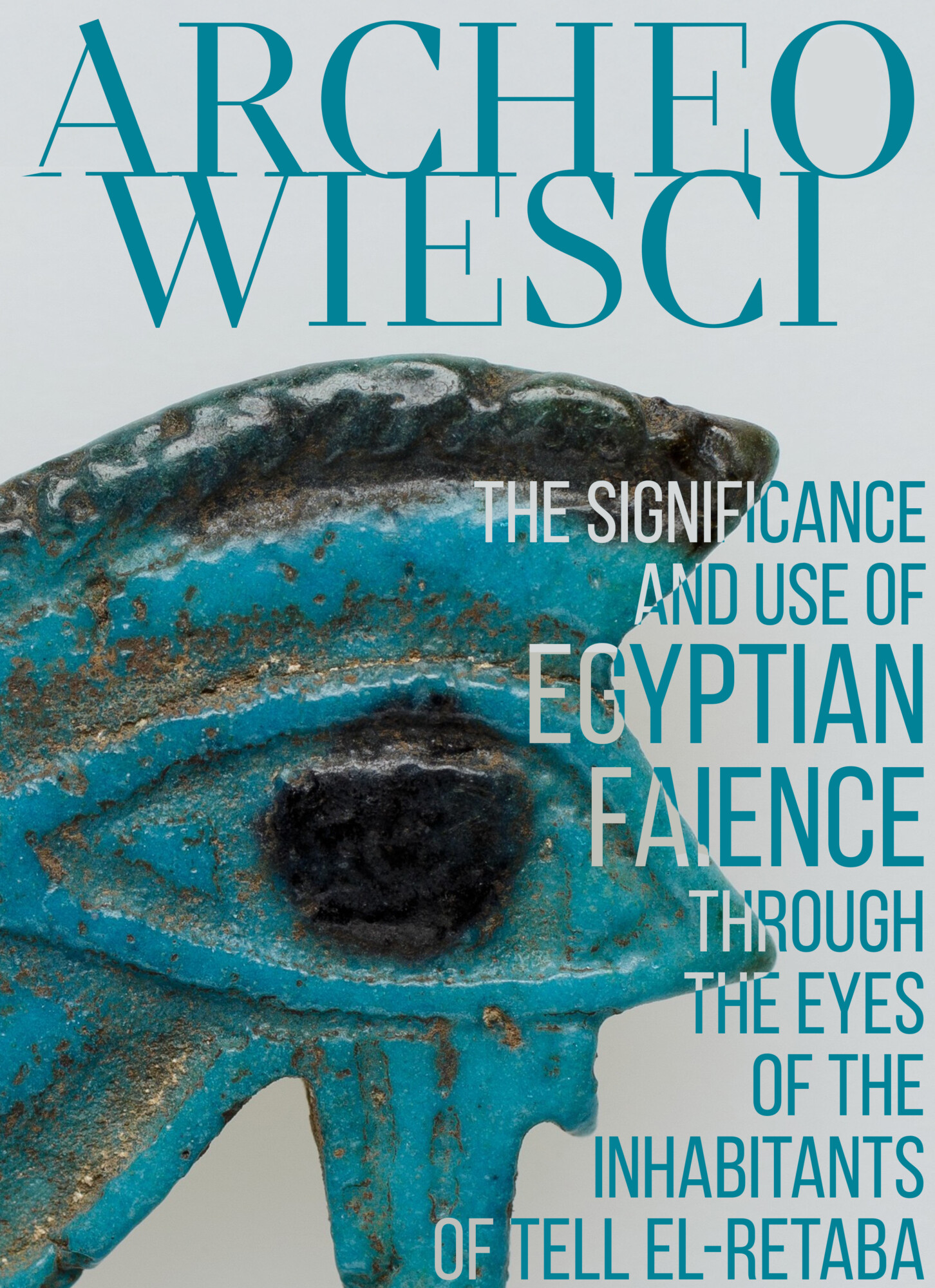
In Ancient Egypt, faience was a material commonly used to produce a wide variety of objects. Today, it is mainly associated with small, blue-green exhibits found in museum displays. However, for the ancient Egyptians, faience was more than just a utilitarian material. During the excavations carried out by the Polish-Slovak Archaeological Mission at the Tell el-Retaba site in northeastern Egypt in the 2017-2023 seasons, several dozen faience artifacts were discovered. All the objects made of faience were found in a settlement dating back to the Third Intermediate Period. Analysis of these finds confirms that, in addition to its practical function, faience may have had symbolic or ritual properties. But can the material itself tell us more about the community that inhabited the Tell el-Retaba settlement at the beginning of the 1st millennium BCE?
What is Egyptian faience?
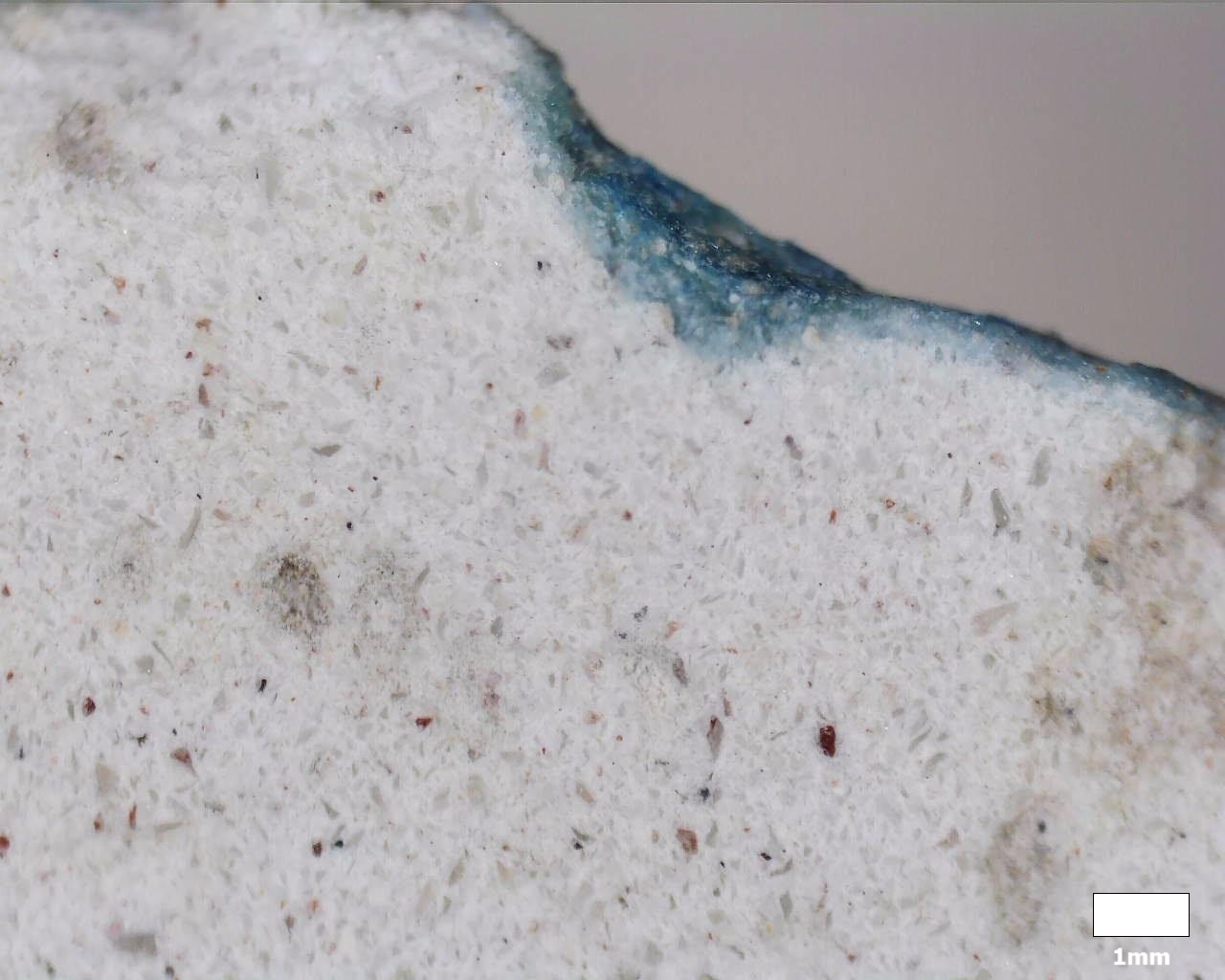
Due to its composition, Egyptian faience resembles glass, but iin fact it is a glazed material, which has been produced in Egypt since the earliest Pharaonic times, and it significantly differs from actual European faience. The latter material owes its name to the Italian city of Faenza, where the production of this ceramic began in the late Middle Ages. Egyptian faience consisted mainly of silica, which was most often obtained from sand or quartz pebbles. In addition, alkalis in the form of soda or plant ash were added during production. These raw materials were the main ingredients that combined to form the core of the object. However, contrary to what we see on the outside, the core was not blue, but instead ranged in color from white to gray and even yellow-brown. Another key ingredient in faience was lime, and copper oxide had to be added to achieve the blue-green color of the glaze. It is this glaze that covers the core of the faience object and gives it its vivid color. Importantly, faience glaze was not limited to blue and green shades, as from the New Kingdom onwards it became common to produce faience objects in other colors, such as red.
© M. Masztalerz, licensed under CC BY-NC 3.0
The significance of faience for the ancient Egyptians
First, let us consider how faience was perceived and what value it had in ancient Egypt. Researchers disagree on the social status of faience. Some view Egyptian faience as a luxury item, while others see it as a common material associated with the lower social classes. On the one hand, some publications emphasize its exclusive nature, resulting from aesthetic and symbolic reasons, which may suggest that it was reserved for the elite. On the other hand, due to the color of objects made of faience, its function as a cheaper substitute for hard-to-find materials such as lapis lazuli and its relatively simple production process are also pointed out. Both issues could indicate the widespread use of faience among less affluent people. So how should we perceive faience: as a luxury good or rather as an everyday material?
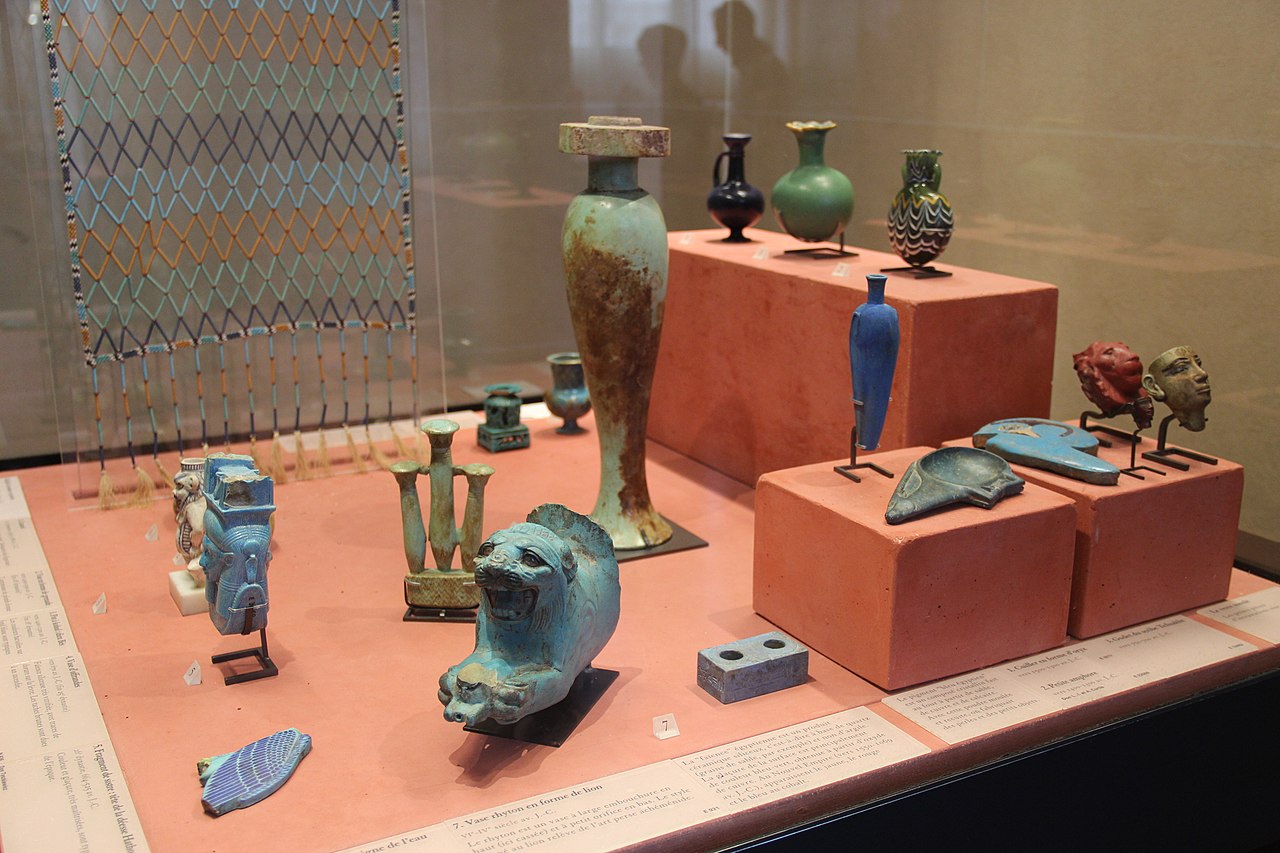
Well, when analyzing artifacts from both burial and settlement contexts, as well as artifacts belonging to people from different socioeconomic classes, it can be concluded that faience was not just a substitute for more expensive products. So what was the purpose of the Egyptians in using faience? To answer this question, one must pay attention to the symbolic nature of this material, and in fact its blue color, which was symbolically associated with life and health. The Egyptians also had their own term for faience, which was etymologically related to words meaning brightness or shine. Combining this with Egyptian mythology, we can look for further symbolic meanings of faience, which were most likely rebirth and eternal life.
Public domain
Faience artifacts from Tell el-Retaba
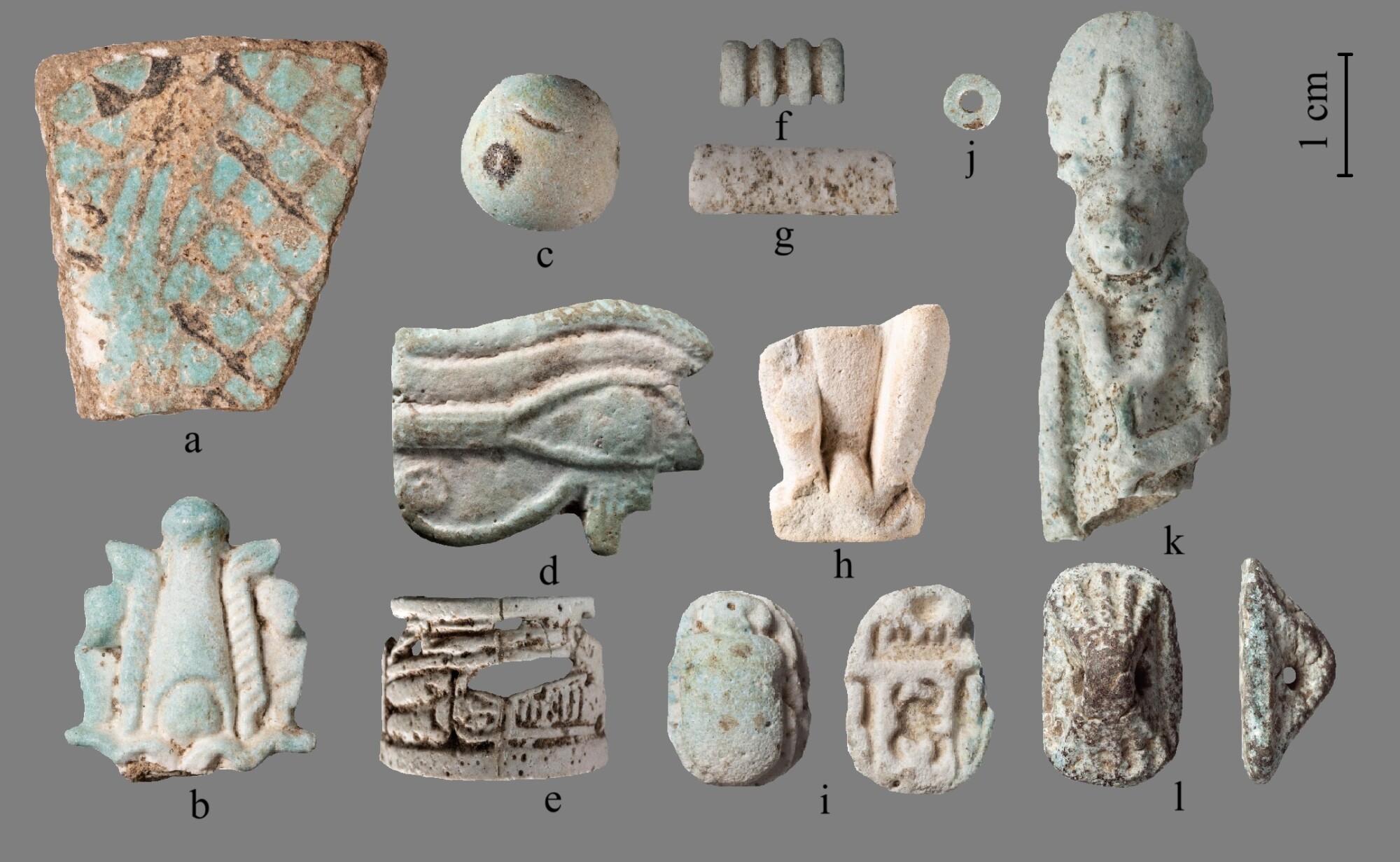
During several seasons of excavations in Tell el-Retaba, dozens of faience artifacts were discovered, including amulets, vessels, and various types of decorations—beads, rings, scarabs, and even scaraboids, which are similar to scarabs in terms of their structure, but have different forms on their upper surface instead of a beetle. However, the most numerous group are faience beads, which, due to their size, are very mobile, and thus constitute a very large category of artifacts found in a wide variety of contexts. These individual beads were certainly part of some jewelry or larger composition.
Faience vessels, on the other hand, are a diverse group because of their forms. Although in the case of faience vessels found in Tell el-Retaba, due to their fragmentary preservation, the vast majority of vessel forms remain unidentified. Amulets were intended to protect their owners from evil forces, but at the same time they could serve a decorative function or indicate the social status of their owner. The faience amulets discovered at Tell el-Retaba are a very interesting group of artifacts, based on which we can say more about the community of the settlement. The scarab is one of the most popular symbols that come to mind when we think of ancient Egypt, which also had protective functions. Skarabs could be hung on a string as a decoration similar to beads, but they could also be attached to a ring, and some of them had inscriptions on the bottom and served as seals. The same applies to scaraboids.
Tell el-Retaba and other sites in the context of faience
In order to better understand the nature and significance of the faience finds from Tell el-Retaba, the collection was compared with faience material from two well-studied settlement sites in Egypt – Memphis and Tell el-Amarna. Since both sites were royal cities, their repertoire of faience artifacts is richer in terms of number and variety compared to Tell el-Retaba. It is worth noting that evidence of workshops producing faience objects has been found in both Memphis and Tell el-Amarna, which is not the case in Tell el-Retaba. The lack of local production may partly explain the differences in the repertoire of artifacts. Nevertheless, there are noticeable similarities between the two archaeological sites. Many categories of artifacts found in Memphis and Tell el-Amarna overlaps with those from Tell el-Retaba, including jewelry, vessels, and amulets. The comparison confirms that Egyptian faience should not be associated exclusively with the lower social classes, and due to its ease of production and symbolism, it could have been used in the lives of all ancient Egyptians.
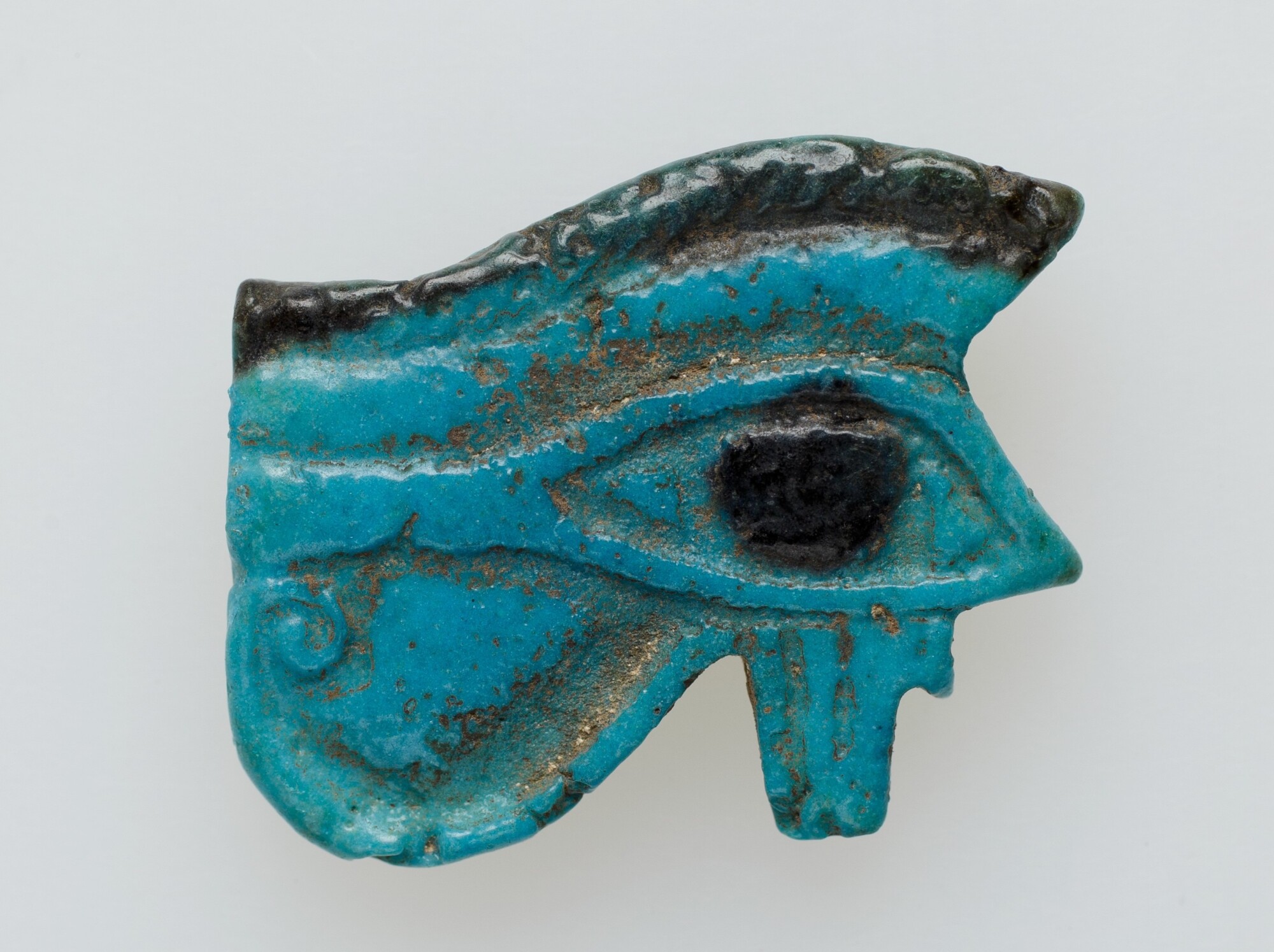
In her doctoral thesis, Urška Furlan focuses on comparing types of amulets from the 1st millennium BC found at 19 sites in the Nile Delta. By analyzing the forms, raw materials, and trends in the selection and use of amulets, the researcher showed that faience was the most common material used for the production of amulets in ancient Egypt. She distinguished 10 most common representations on amulets. The most common motif appearing on Egyptian amulets is the udjat eye. The top ten also included depictions of deities associated with the hearth (Pataikos and Bes) and goddesses such as Taweret, as well as general cat and lion-headed forms, which are difficult to match to a specific deity. In addition, the list includes depictions of falcons, child deities, uadż columns, and hearts. In the collection of amulets from Tell el-Retaba, after adding finds from previous excavation seasons and Petrie’s 20th-century excavations at this site, we find seven representations classified as the most popular. This result suggests that the inhabitants adhered to tradition and that the process of creating amulets was standardized.
Public domain
In summary, the faience finds from Tell el-Retaba confirm that this glazed material not only had a practical function, but also a symbolic and ritual significance deeply rooted in Egyptian religion, regardless of the social status of its owners. A comparative analysis of amulets in a broader cultural context provides insight into traditions related to religion and ritual. The inhabitants of Tell el-Retaba did not belong to the faience avant-garde and stuck to their traditions and beliefs, which is why the amulets were intended to help protect families and provide spiritual support, and the use of faience could have been a complement to this.
Bibliography
Andrews, C., 1994. Amulets of Ancient Egypt. British Museum Press, Londyn.
Friedman, F.D., Borromeo, G., 1998. Gifts of the Nile: ancient Egyptian faience. The Cleveland Museum of Art, Nowy Jork.
Furlan, U., 2022. Amulets of the first millennium BCE in the Nile Delta: continuity and change through production, consumption, and circulation. Tom 1-2 (praca doktorska). Swansea University.
Giddy, L.L., 1999. The survey of Memphis: the New Kingdom and post-New Kingdom objects, Excavation memoir. Egypt Exploration Society, Londyn.
Kemp, B.J., Stevens, A., 2010. Busy lives at Amarna: excavations in the main city (grid 12 and the house of Ranefer, N49.18), Excavation memoir. Tom 2. Egypt exploration society Amarna Trust, McDonald Institute for Archaeological Research, Londyn, Cambridge.
Nicholson, P.T., 2009. Faience Technology. w: UCLA Encyclopedia of Egyptology. red. Willeke Wendrich. Dostęp online: https://escholarship.org/uc/item/9cs9x41z
Stevens, A., 2006. Private religion at Amarna: the material evidence, BAR. Archaeopress, Oxford.
Sulecki, D., 2017. Znaleziska fajansowe ze stanowiska Tell el-Retaba (praca licencjacka). Uniwersytet Warszawski, Warszawa.
Author: Małgorzata Masztalerz
Editing and translation: A.B.