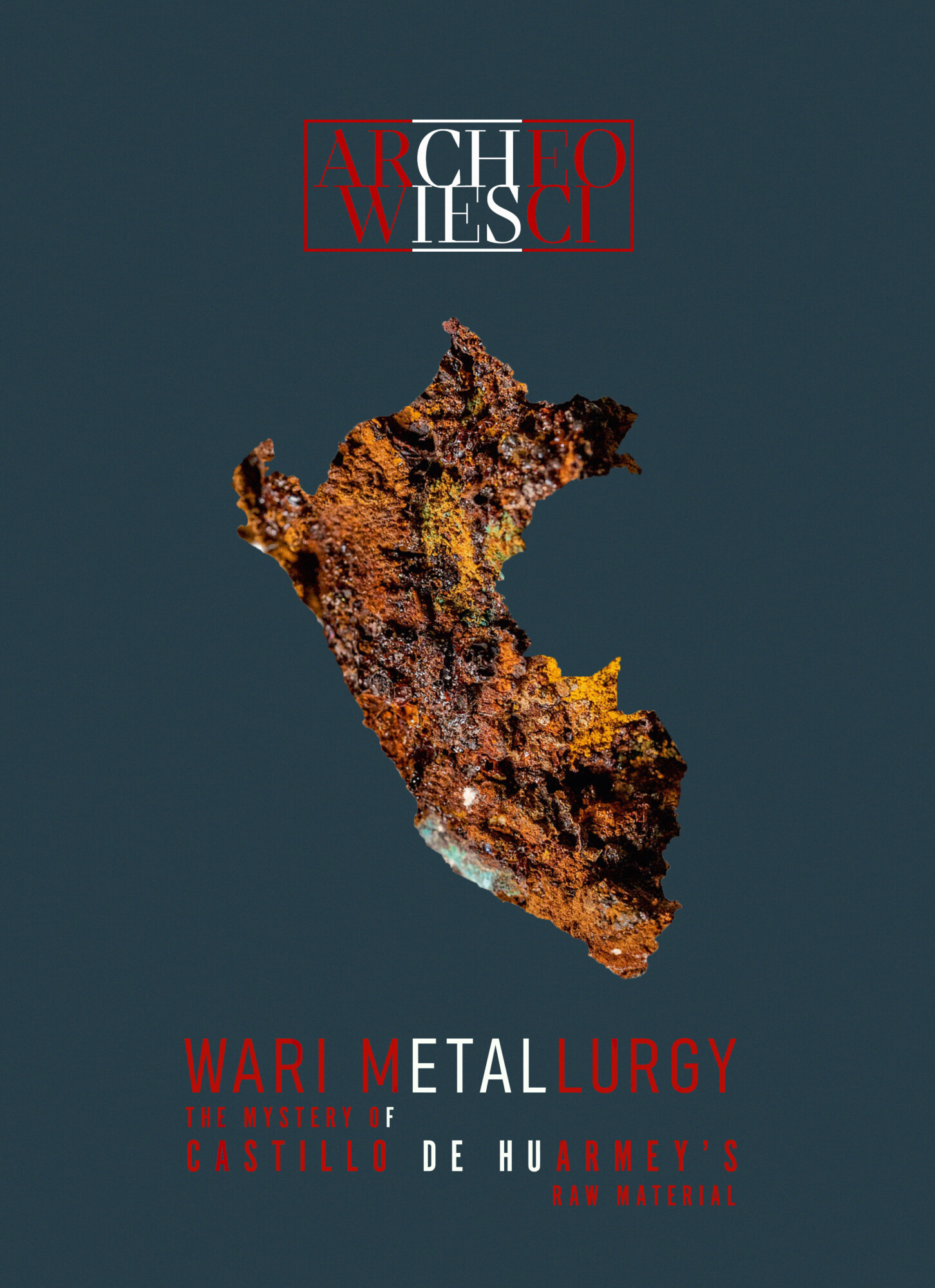
Wari metallurgy at Castillo de Huarmey left behind not only spectacular ornaments and copper-alloy objects, but also far less visually striking traces of ancient technologies. One of them is a small, irregular fragment of material formed during metallurgical processes, found in the burial of a young man equipped with copper-alloy objects.
Although it does not look like a typical artefact, it turned out to be an important source of information. First, it allowed researchers to identify traces of a technology connected with arsenical metals. Then it became the starting point for another question: where could the raw material whose geochemical trace survived in this fragment have come from?
New lead isotope analyses indicate that this material best matches the south-central Andes. The strongest candidate is the Pulacayo region in present-day Bolivia, although the authors of the study stress that this does not automatically mean that raw ore was transported to Huarmey. What may have circulated instead were semi-products, finished objects, fragments of technological materials, knowledge, and even specialists.
Continue reading “Wari Metallurgy: The Mystery of Castillo de Huarmey’s Raw Material”