The city on the Genil River (In Roman Baetica: — modern Andalusia, in the province of Seville, Spain) has existed for at least three millennia and continues to surprise archaeologists. Recent salvage excavations in the heart of the modern city of Écija revealed a complex of domestic baths with a one-of-a-kind mosaic dating to the Roman era. Far from being just another opus tessellatum, this unique find tells a story of continuity as old as the city itself.
Eternal Settlement
The settlement, lying on the fertile plains within a bend of the Genil River, has been occupied since the Bronze Age. Its convenient location and strong agricultural potential resulted in rapid population growth as early as the ninth century BCE. Before the arrival of the Romans, the future Astigi was a fortified settlement (oppidum) inhabited by the Turdetani, the indigenous pre-Roman population of the southern Iberian Peninsula. After claiming control over Baetica following the Second Punic War at the end of the third century BCE, the Romans intensively developed agriculture and accelerated the urbanization of the region. Pliny the Elder — the Roman historian and writer who lived in the first century CE — praised Baetica in the following words:
“(Baetica) … stands first among the whole of the provinces in the richness of its cultivation and in a sort of peculiar fertility and brilliance of vegetation”
Pliny the Elder, Natural History 2.7.
The former oppidum was transformed into a Roman colony by Emperor Octavian Augustus in 23–22 BCE. He settled his army veterans there and named the new city Colonia Augusta Firma Astigi.
The city prospered peacefully throughout the Roman era, expanding and becoming an important civic center of central Baetica. This peaceful existence was interrupted by the Visigothic invasions in the fifth century CE. During Late Antiquity, the city underwent significant transformation, only to face another political and cultural upheaval two centuries later. At the beginning of the eighth century CE, the Iberian Peninsula fell under the rule of a new global power: the Arabs who, led by the talented general and conqueror Tariq ibn Ziyad, seized control of Baetica. The city’s name changed once again, from Astigi to the Arabic Istiǧǧa.
A Roman City at its Finest
Thanks to numerous salvage excavations carried out throughout the city, archaeologists are now able to reconstruct the remarkably complete urban landscape of Imperial Astigi. Planned according to a regular Hippodamian grid, the city contained all of the architectural features expected in a Roman civic center: a sacred precinct with temples and shrines (temenos), spaces for trade and civic gatherings such as the forum and basilicas, and monumental entertainment structures including an amphitheater and a circus.
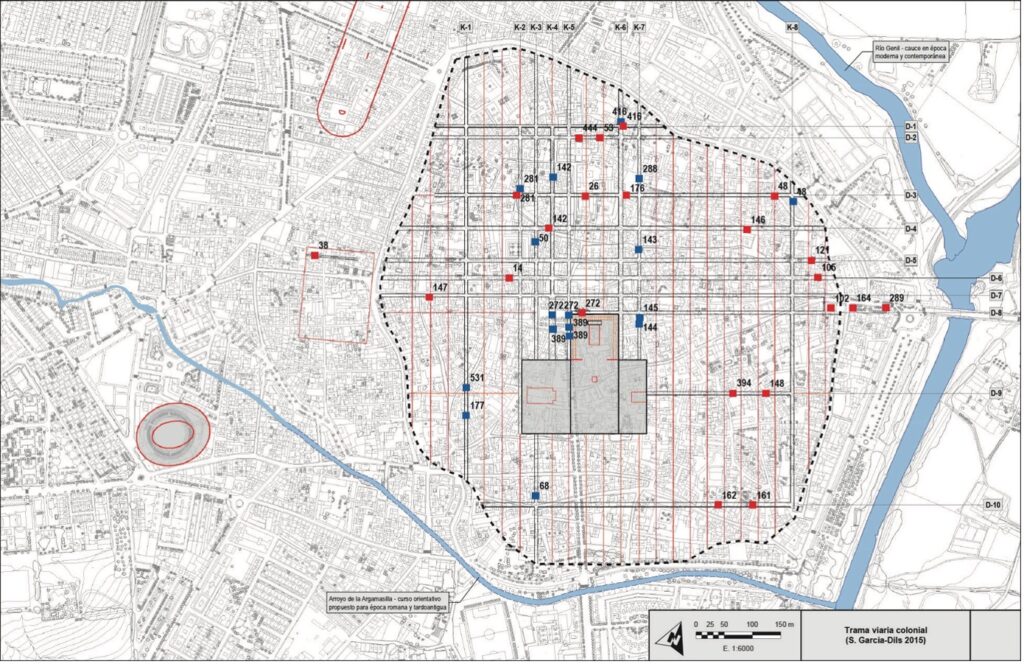
Boundaries of the Roman colonia Augusta Firma Astigi.
After: García Dils de la Vega 2021: 30.
Above all, however, Astigi was a city inhabited by people. Long-term excavations near the modern Plaza de Armas del Alcázar Real uncovered an exceptional residential quarter occupied by Roman domus: large urban houses. This part of the city preserves the longest archaeological sequence yet identified, extending back to the Bronze Age. The Roman phase, however, is represented in the most monumental form. During excavations in the so-called Domus 1, archaeologists uncovered an exquisite mosaic depicting mythological romances of Zeus/Jupiter (los amores de Zeus). The scenes constitute one of the finest examples of the intricate craftsmanship achieved by artisans of the period.
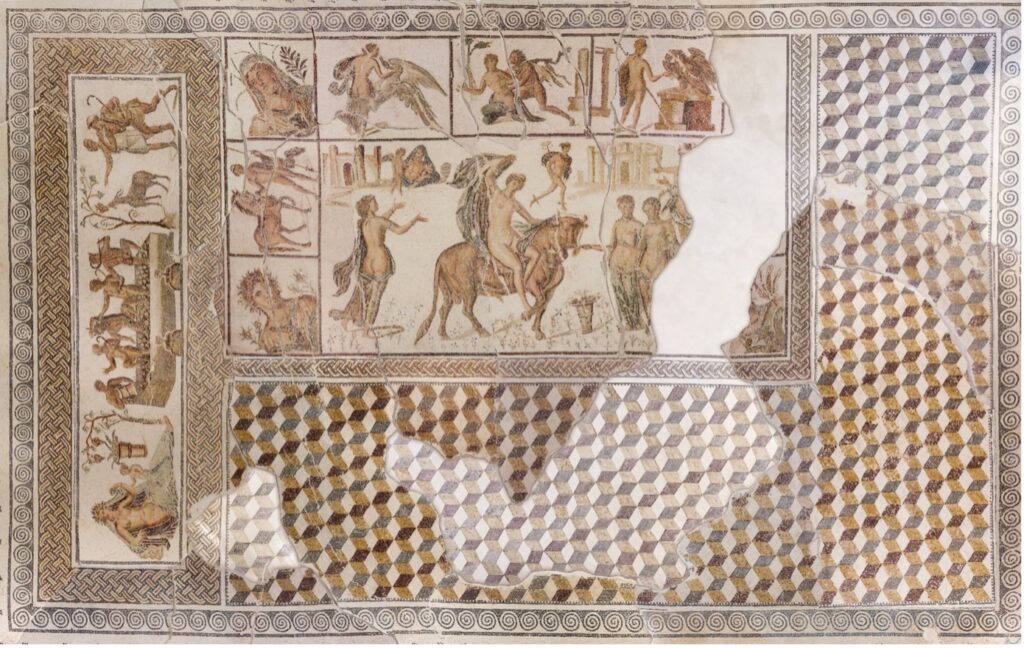
Domus 1 is not an isolated case. Many domestic structures in Roman Astigi were richly decorated, such as the domus at Plaza de Santiago, whose opus tessellatum — a mosaic composed of small square stone tesserae — depicts the mythological scene of the Triumph of Bacchus, or the mosaic uncovered in a domus on Avenida Miguel de Cervantes portraying the Allegory of Spring.
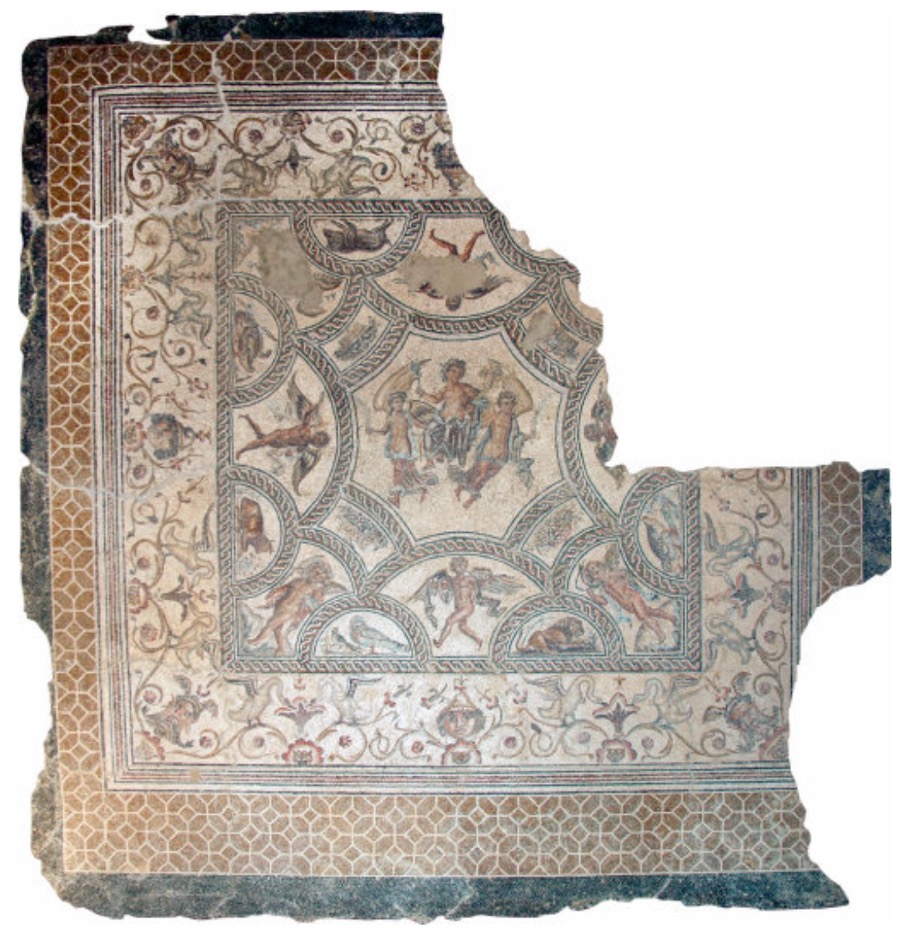
Author: Sergio García Dils de la Vega. After García Dils de la Vega & Ordoñez 2023: 206.
Lavish Mosaics… Everywhere!
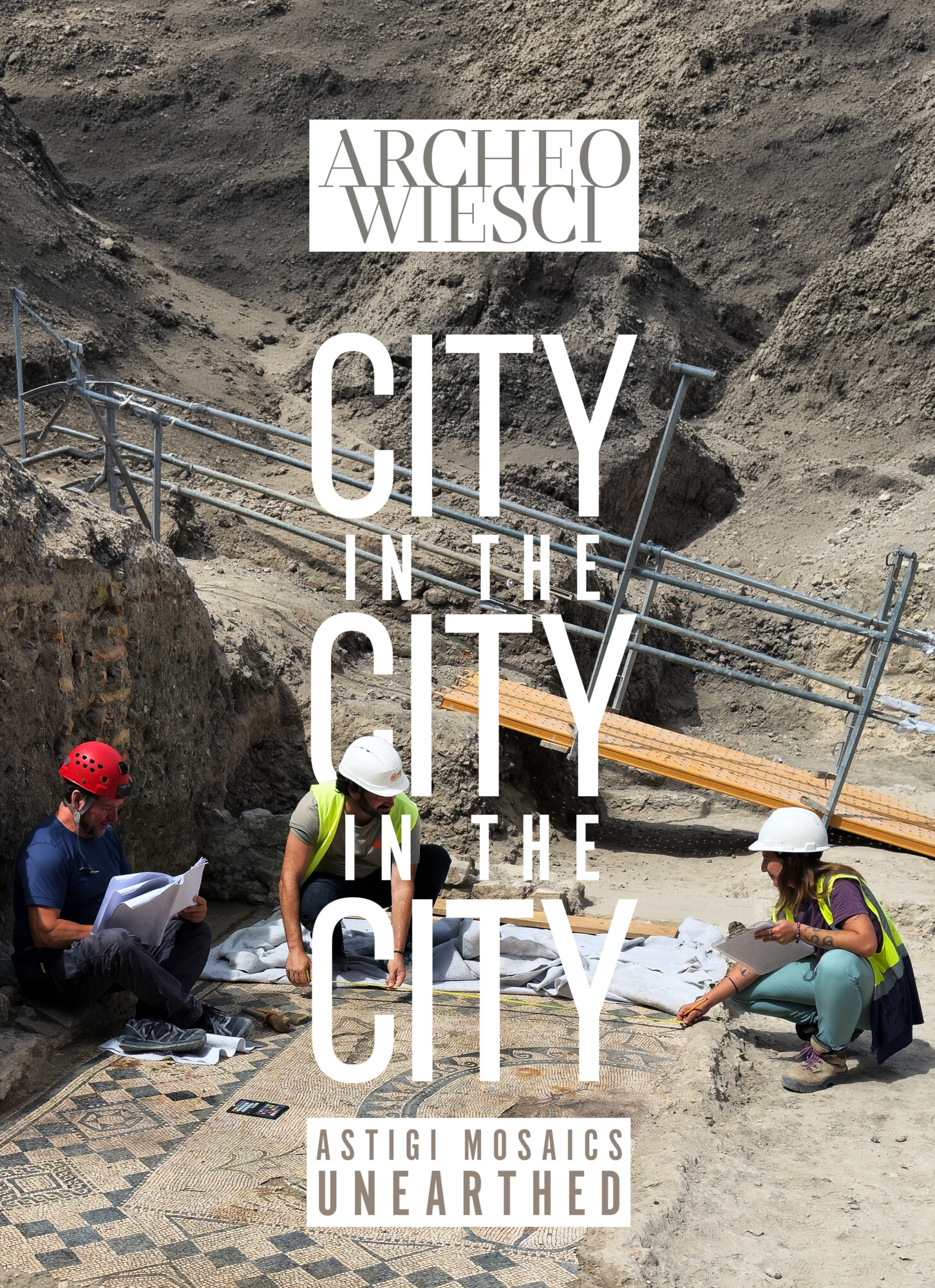
And finally, only a few weeks ago during salvage excavations at the Casas Consistoriales in the heart of modern Écija, a team of local archaeologists and conservators uncovered yet another residential sector. Part of a new Roman domus was revealed, including a complex of private baths with richly decorated floors.
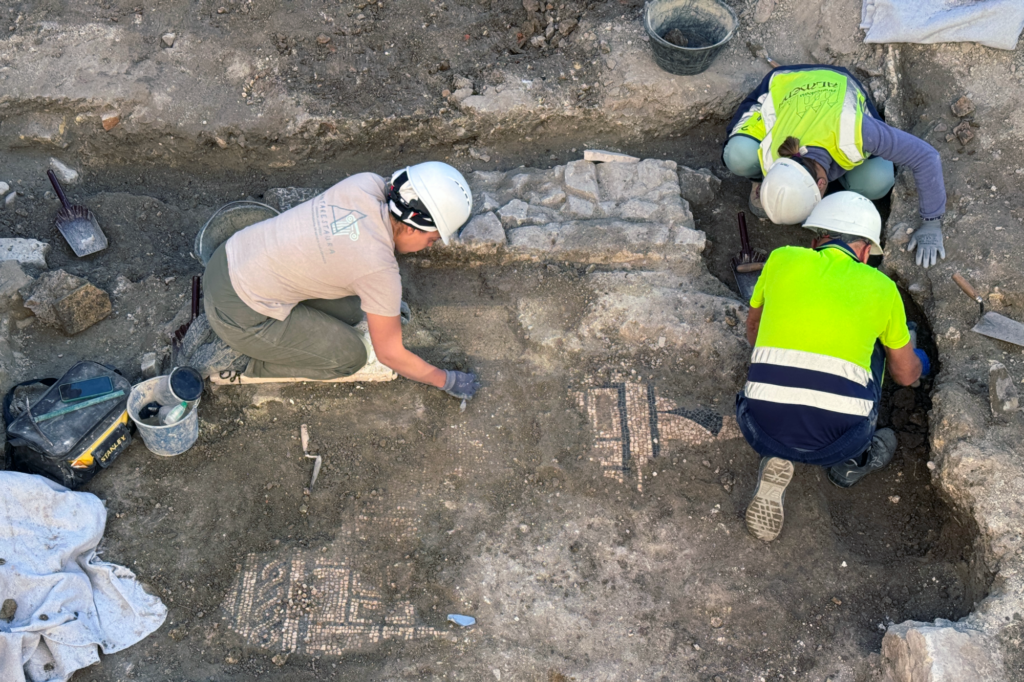
Author: Sergio García Dils de la Vega. License: CC BY NC 4.0.
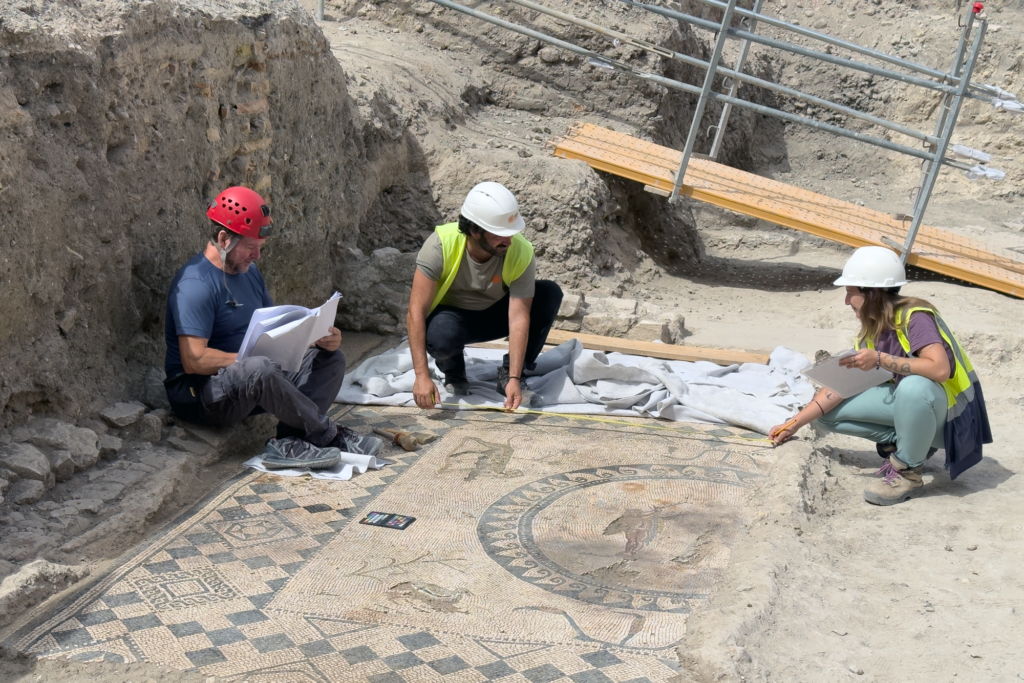
Author: Sergio García Dils de la Vega. License: CC BY NC 4.0.
“What we have here is a geometric pattern decorating the outer part of the mosaic, with a three-dimensional swastika motif surrounding the figurative central panel. Most probably, it illustrates the seasons of the year”
– Sergio García Dils de la Vega, the principal archaeologist of the municipality of Écija.
Allegorical depictions of the seasons are well known from other structures not only in Écija, but throughout the entire Genil River region. According to archaeologists, the construction of this 5m wide opus tessellatum mosaic dates to the second half of the second century CE. In addition, the excavation revealed an extensive system of underfloor hydraulic installations designed to channel water into the basins and circulate hot air to heat the baths.
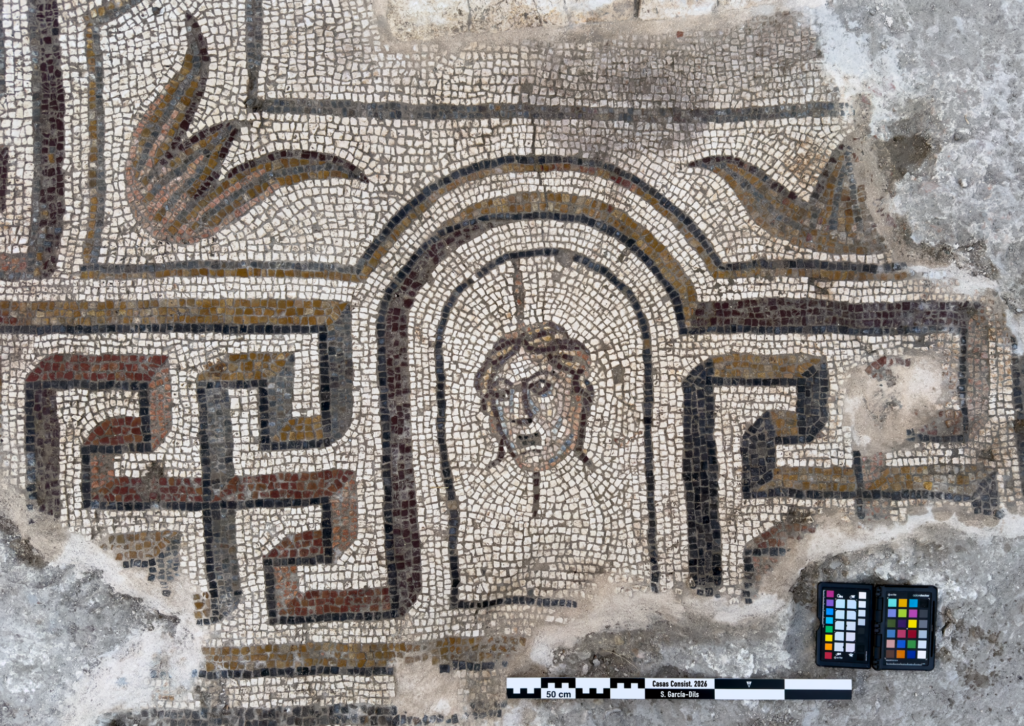
Author: Sergio García Dils de la Vega. License: CC BY NC 4.0.
Life in the house, however, did not end with the abandonment of the baths. The archaeological material tells a story that extends into the pre-modern era. During Late Antiquity, the abandoned domus was reused as a refuse dump. Later, the central part of the mosaic — already buried beneath layers of earth and rubble from the medieval city — was damaged by the foundations of sixteenth-century buildings. Even today, the story continues to unfold as the modern inhabitants of Écija, including archaeologists themselves, attempt to understand the city’s long history by uncovering the past of Astigi inch by inch.
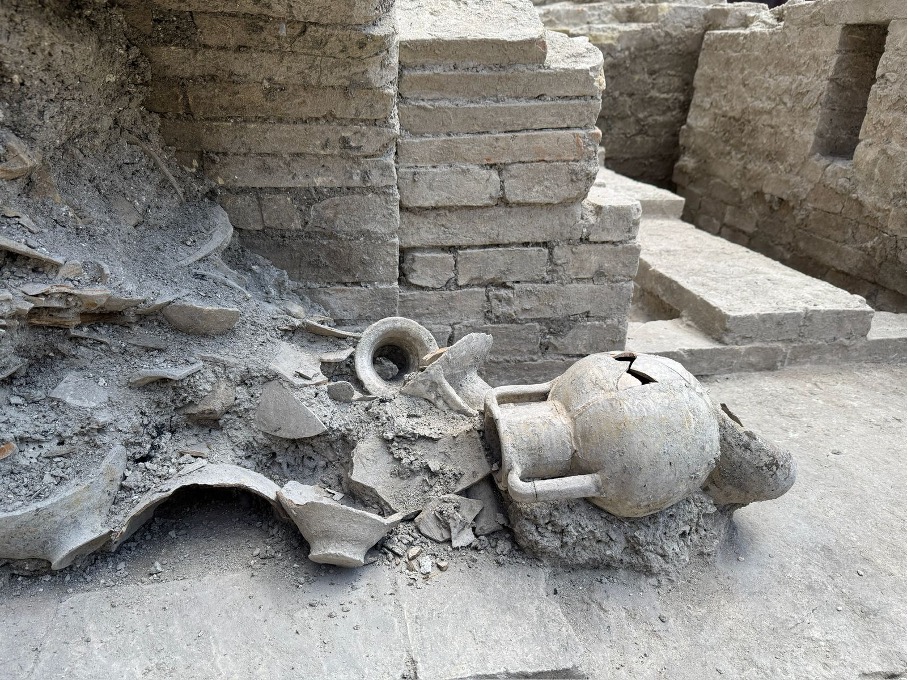
Author: Sergio García Dils de la Vega. License: courtesy of Sergio García Dils de la Vega.
This article can be re-printed with photographs free of charge provided that the source is cited
References:
García-Dils 2021: Sergio García-Dils de la Vega. “Colonia Augusta Firma – Astigi”. En Trinidad Nogales Basarrate (ed.). Ciudades Romanas de Hispania. Cities of Roman Hispania. Roma-Bristol: “L’Erma” di Bretschneider, pp. 213-226.
García-Dils & Ordóñez 2023: Sergio García-Dils de la Vega y Salvador Ordóñez Agulla. “The Mosaics of the Domus I of the Plaza de Armas of the Royal Alcazar in Roman colonia Augusta Firma – Astigi (Écija, Seville, Spain) – II”. JMR 16, pp. 201-238
Author: Jerzy Oleksiak
Proofreading: S.A.