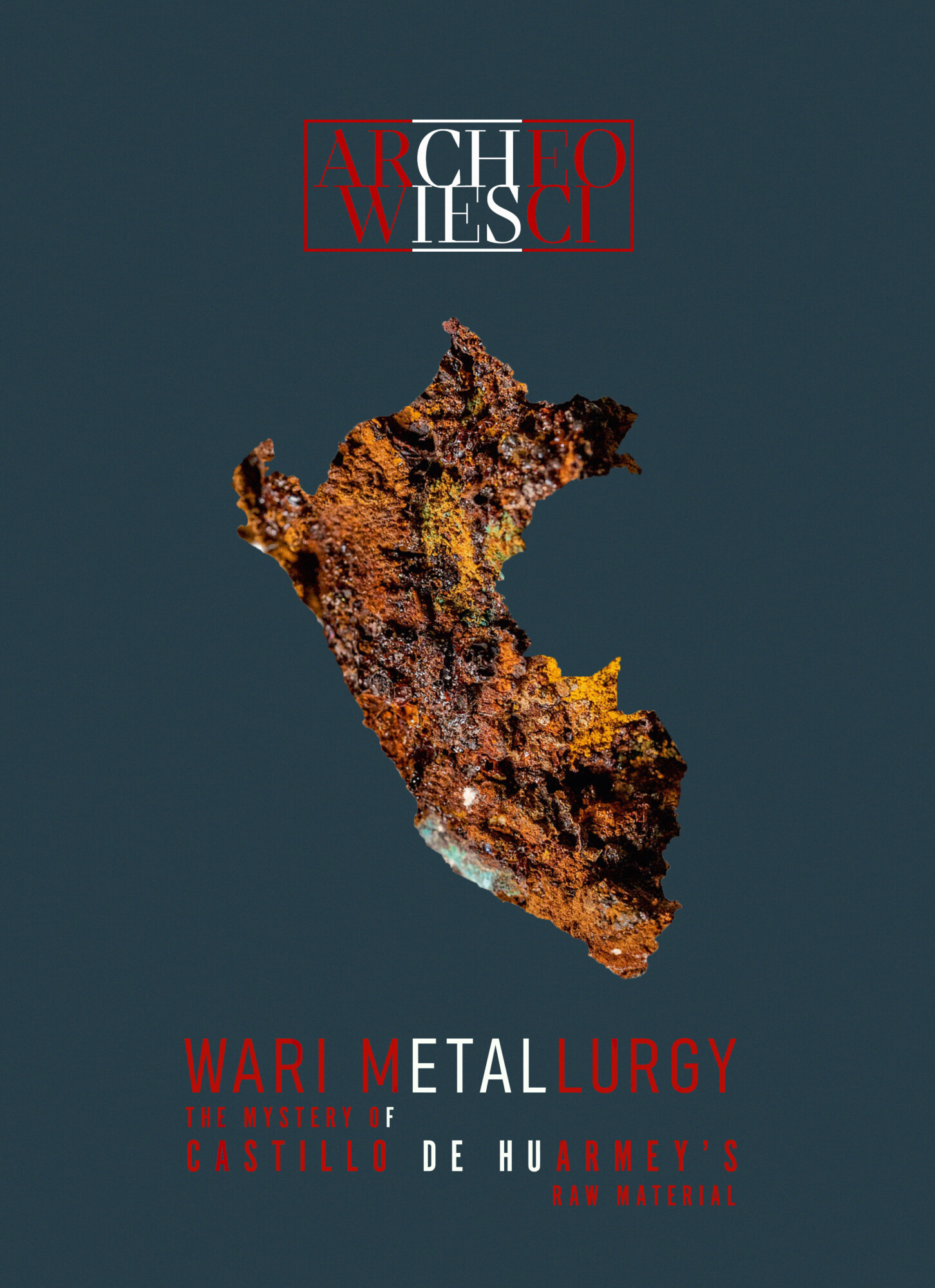
Wari metallurgy at Castillo de Huarmey left behind not only spectacular ornaments and copper-alloy objects, but also far less visually striking traces of ancient technologies. One of them is a small, irregular fragment of material formed during metallurgical processes, found in the burial of a young man equipped with copper-alloy objects.
Although it does not look like a typical artefact, it turned out to be an important source of information. First, it allowed researchers to identify traces of a technology connected with arsenical metals. Then it became the starting point for another question: where could the raw material whose geochemical trace survived in this fragment have come from?
New lead isotope analyses indicate that this material best matches the south-central Andes. The strongest candidate is the Pulacayo region in present-day Bolivia, although the authors of the study stress that this does not automatically mean that raw ore was transported to Huarmey. What may have circulated instead were semi-products, finished objects, fragments of technological materials, knowledge, and even specialists.
A burial with a metallurgical trace
Castillo de Huarmey is located on the north-central coast of Peru, about 300 km northwest of Lima. The site became widely known after the discovery, in 2012, of an undisturbed royal mausoleum of Wari elites. The tomb contained the remains of 58 mummified aristocratic women, six human sacrifices, and more than 1,300 artefacts made, among others, of silver, gold, copper, arsenic bronze, semi-precious stones, alabaster, and wood.
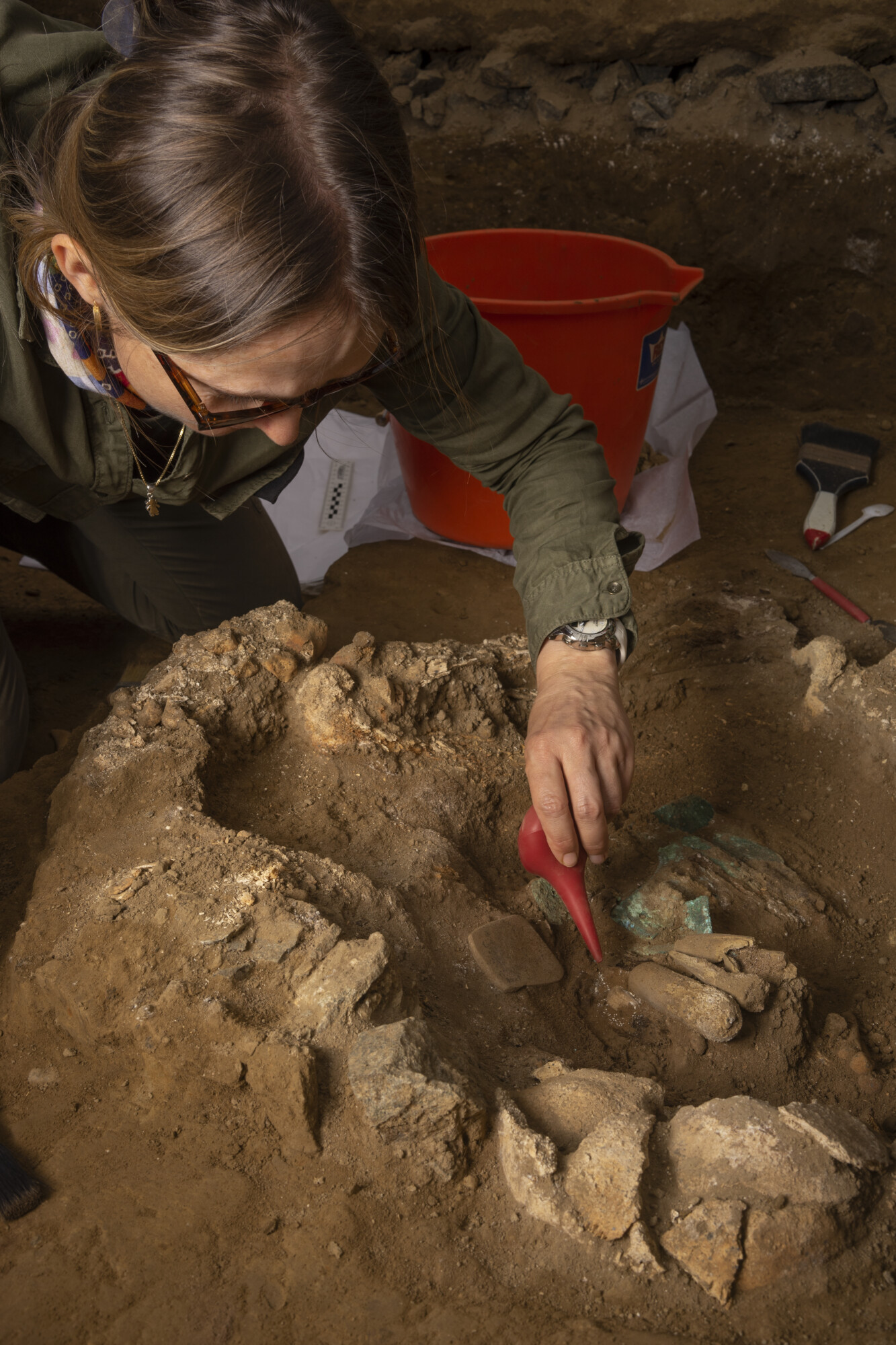
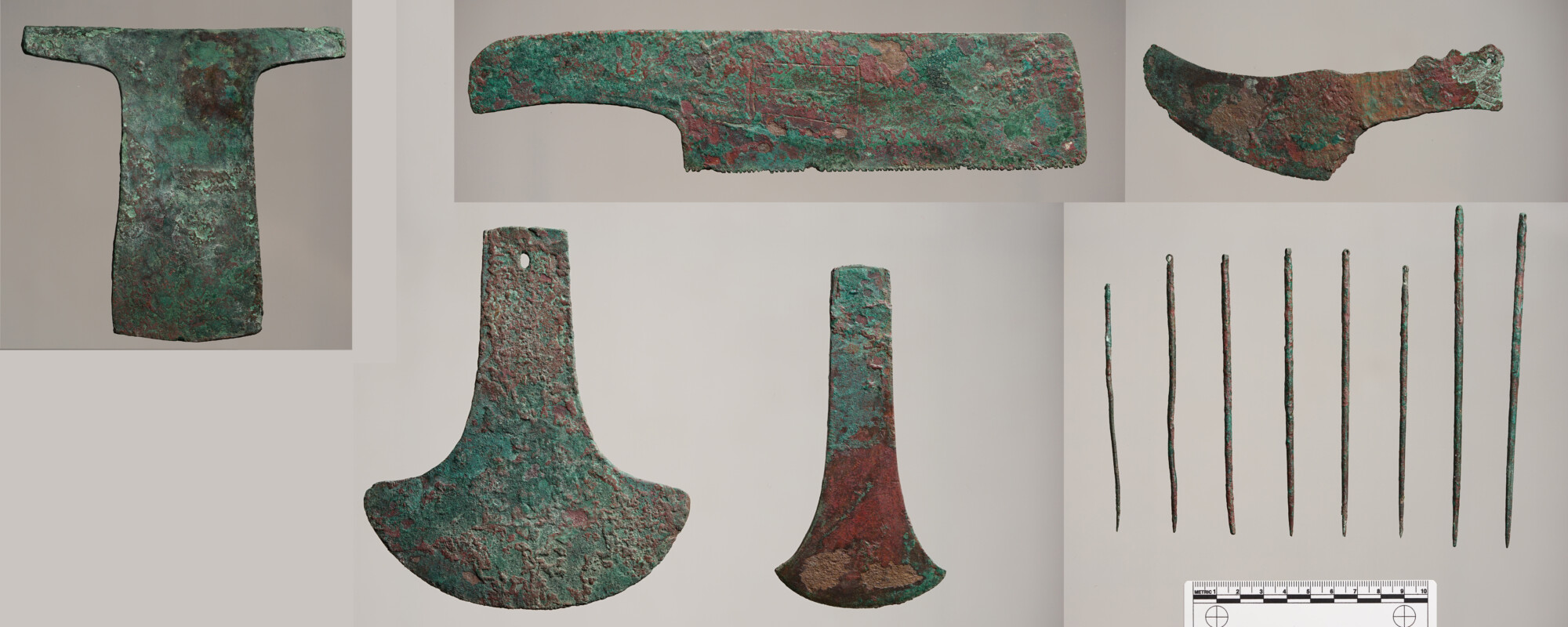
In subsequent field seasons, archaeologists also uncovered burials of specialised craftspeople. In 2018, a separate burial of a young man was discovered. It contained an unusual set of copper-alloy objects and a fragment of material later identified as speiss/matte. This was not a finished object, but a metallurgical waste product formed during smelting.
© M.Giersz, na licencji CC BY-NC-SA 4.0
A burial with a metallurgical trace
Castillo de Huarmey is located on the north-central coast of Peru, about 300 km northwest of Lima. The site became widely known after the discovery, in 2012, of an undisturbed royal mausoleum of Wari elites. The tomb contained the remains of 58 mummified aristocratic women, six human sacrifices, and more than 1,300 artefacts made, among others, of silver, gold, copper, arsenic bronze, semi-precious stones, alabaster, and wood.
In subsequent field seasons, archaeologists also uncovered burials of specialised craftspeople. In 2018, a separate burial of a young man was discovered. It contained an unusual set of copper-alloy objects and a fragment of material later identified as speiss/matte. This was not a finished object, but a metallurgical waste product formed during smelting.
This fragment became the focus of two stages of research. In the first, scientists examined what it actually was and what technology it was connected with. In the second, they went a step further and asked: where could the raw material whose trace survived in this fragment have come from?
© M.Giersz, na licencji CC BY-NC-SA 4.0
Wari metallurgy under the laboratory lens
The analysed object does not resemble an eye-catching museum artefact. It is shapeless and consists mainly of iron arsenides and arsenates, with an admixture of copper sulphides. This composition indicates that it was neither an ornament nor a tool, but a material connected with an ancient technological process.
This is precisely why the fragment is so important. Finished metal objects could have been repaired, remelted, inherited, or moved from place to place over a long period of time. Material connected with the production process can provide a different kind of information: about technology, raw materials, and the possible background of craft production.
To investigate the possible origin of the raw material, researchers carried out lead isotope analyses. In archaeometallurgy, this method works somewhat like comparing geochemical ‘fingerprints’. Different ore deposits have different proportions of lead isotopes. If we measure them in the material under study and compare them with data for ores, rocks, and artefacts from different regions, we can indicate the most likely areas of origin.
In this case, the sample was compared with a large dataset covering materials from Peru, Bolivia, Chile, Argentina, Ecuador, and Colombia. However, the authors did not limit themselves to simply pointing to the closest match. They also compared the isotopic data with the geology, mineralogy, and chemical composition of the sample.
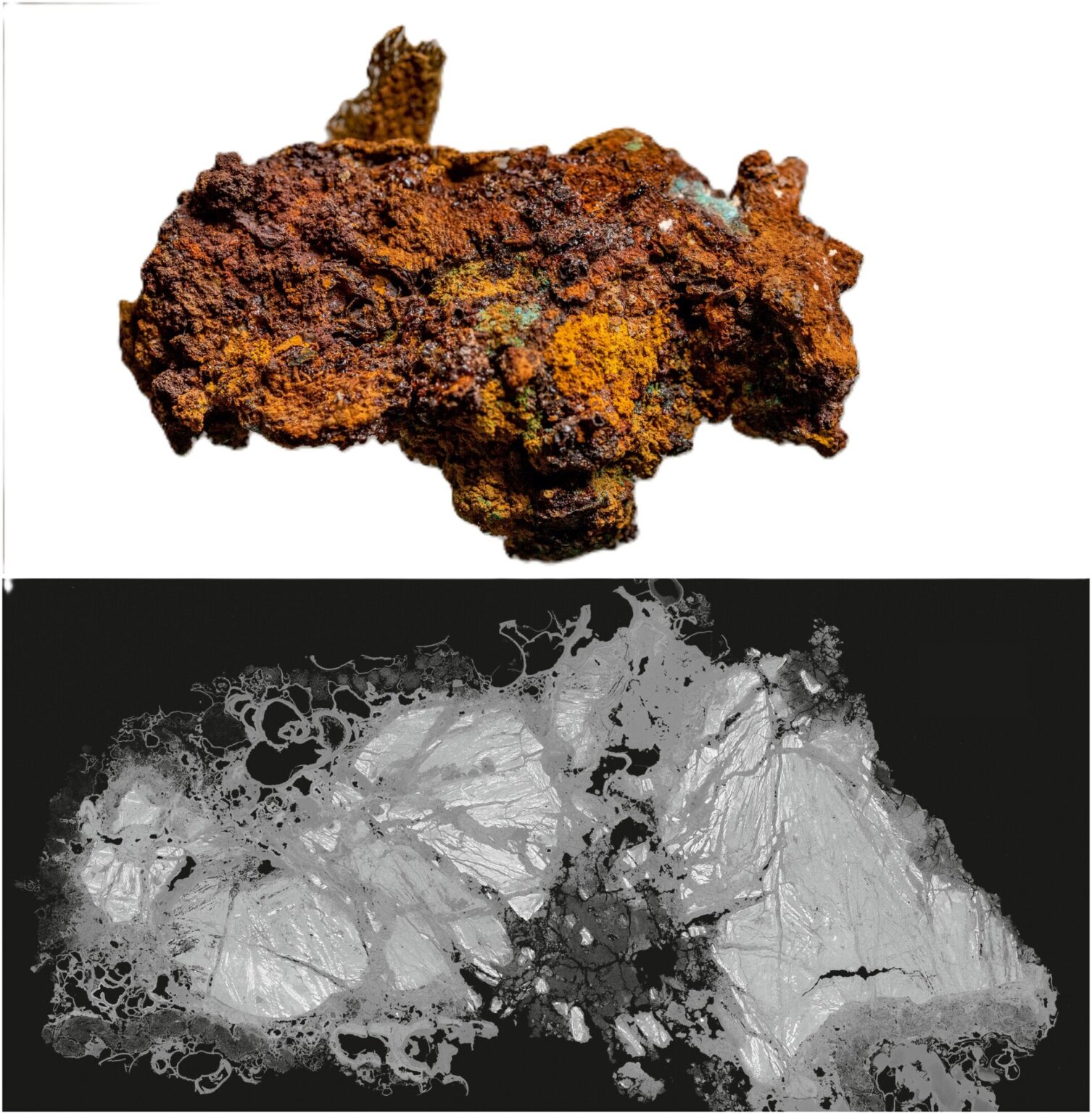
Warchulski et al. 2025
Isotopes lead south
The results showed that the fragment from Castillo de Huarmey fits well within the south-central Andean lead isotope field. Good or very good matches were obtained for several regions, including Orcopampa–Arcata in southern Peru, as well as Coro Coro and Pulacayo in Bolivia.
Pulacayo emerged as the most interesting candidate. Although this region is mainly associated with silver mining, archaeological data indicate that copper-related production activities were also carried out there during the Middle Horizon. The combination of isotopic results with the composition of the analysed fragment makes Pulacayo the best overall match currently available for the material from Castillo de Huarmey.
This does not mean, however, that the matter is definitively settled. Other regions remain possible on the basis of isotopes alone, although they become less convincing once the composition of the sample is taken into account. The authors emphasise that provenance studies in the Andes should be treated as probabilistic interpretations, not as absolute identifications of a single deposit.
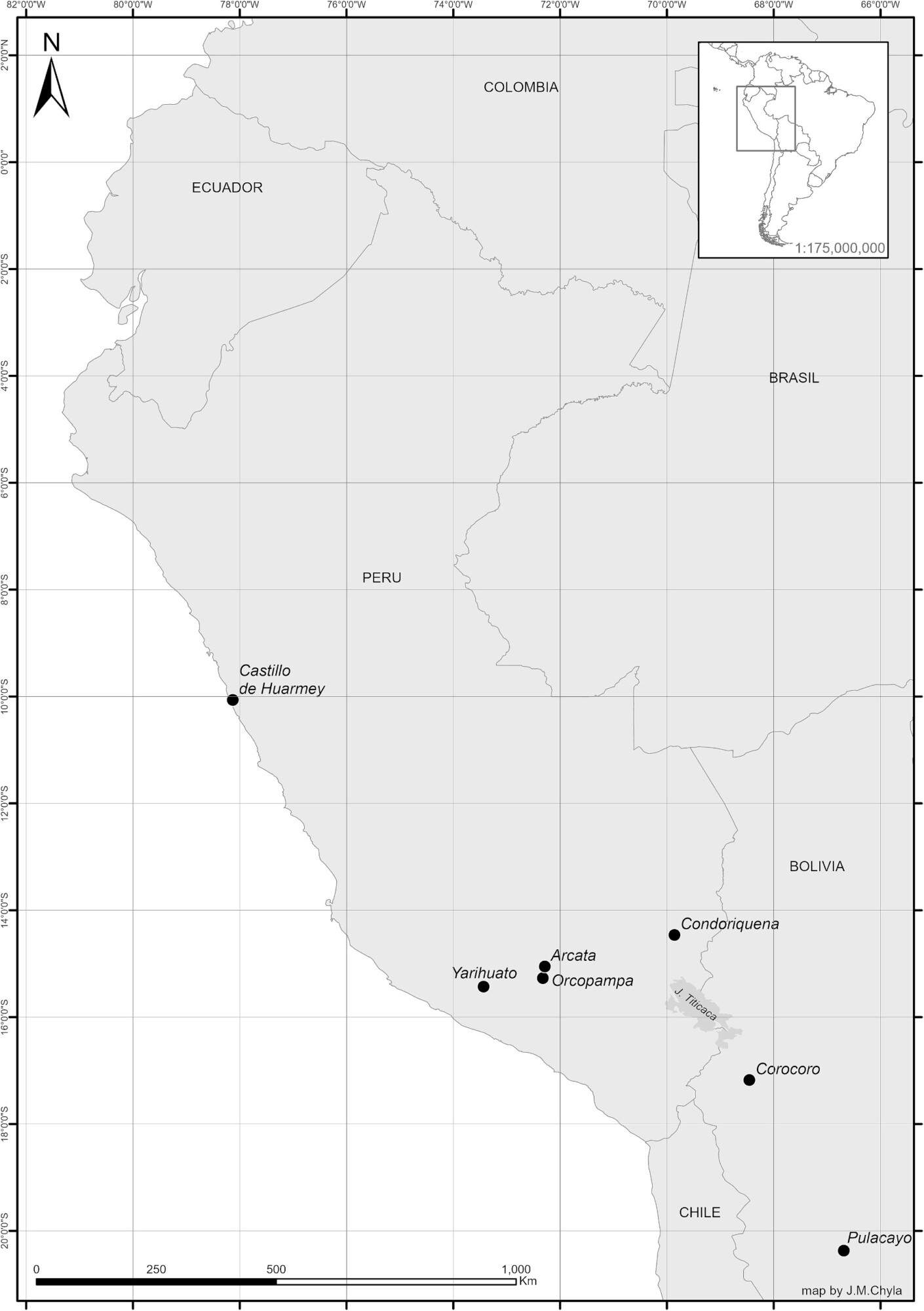
Kałaska et al. 2026
Raw material, technology, or a person?
The key question is therefore not only where the isotopic signal points, but what actually moved across these networks: ore, finished metal, semi-products, specialist knowledge or perhaps simply this particular fragment of technological material?
The authors of the article clearly point out that a southern isotopic signal does not necessarily mean that raw ore was transported to the Peruvian coast. oving ore in bulk would have been both difficult and inefficient: ores are heavy, and much of their mass is rock rather than usable metal. In the Andean world, what moved through exchange networks may instead have included finished objects, semi-products, selected ore-rich materials, metallurgical residues, craftspeople, and technological traditions.
This is important because, so far, no clear evidence for a local Middle Horizon smelting workshop has been found at Castillo de Huarmey, such as furnaces or large concentrations of slag. Local production therefore remains possible, but unconfirmed. The fragment from the burial may be a trace of small-scale smelting, an object brought from another place, a marker of craft identity, or an element of wider exchange networks.
This is why the find is so interesting. It does not provide one simple answer, but opens several possible scenarios. Each of them shows that Wari metallurgical craft was connected with long-distance contacts, specialist knowledge, and the movement of materials between distant regions of the Andes.
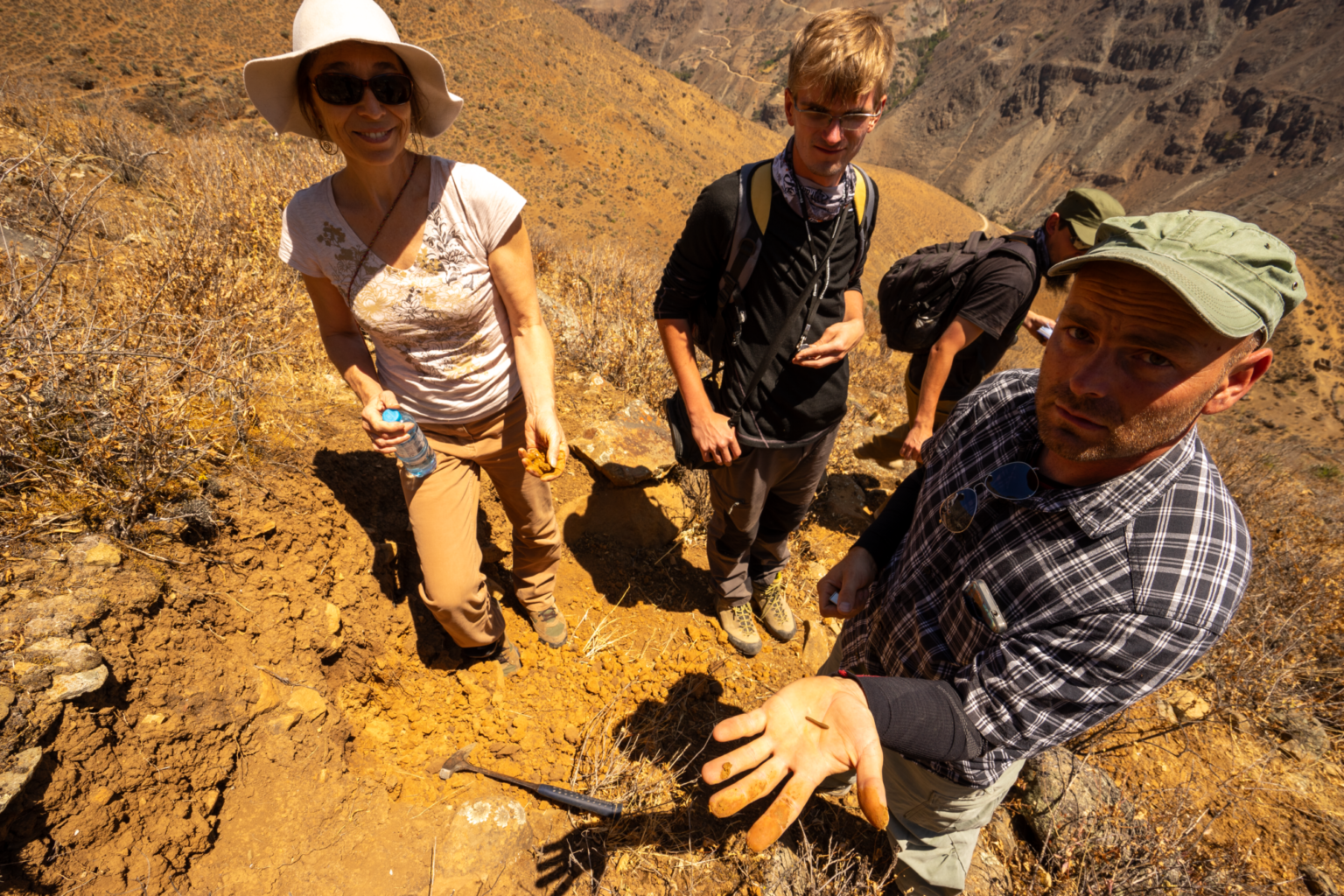
© M.Giersz, na licencji CC BY-NC-SA 4.0
Wari, Tiwanaku, and exchange networks
The best-matching regions are located in the southern Andes, in areas connected with the sphere of influence of two major Middle Horizon political entities: the Wari and the Tiwanaku. This does not mean that a single fragment from a burial proves direct political contact between them. It does show, however, that technologies, raw materials, or objects could cross the boundaries of regions and traditions.
In this view, Castillo de Huarmey was not an isolated necropolis on the desert coast. It was part of a world in which elites, craftspeople, llama caravans, coastal transport, and long-distance exchange networks connected distant places.
In the case of metals, the raw materials themselves may not have been the only important factor. Equally significant was the ability to recognise them, process them, and incorporate them into local social practices. The material from the burial at Castillo de Huarmey may therefore speak not only of the movement of things, but also of the movement of technological knowledge.
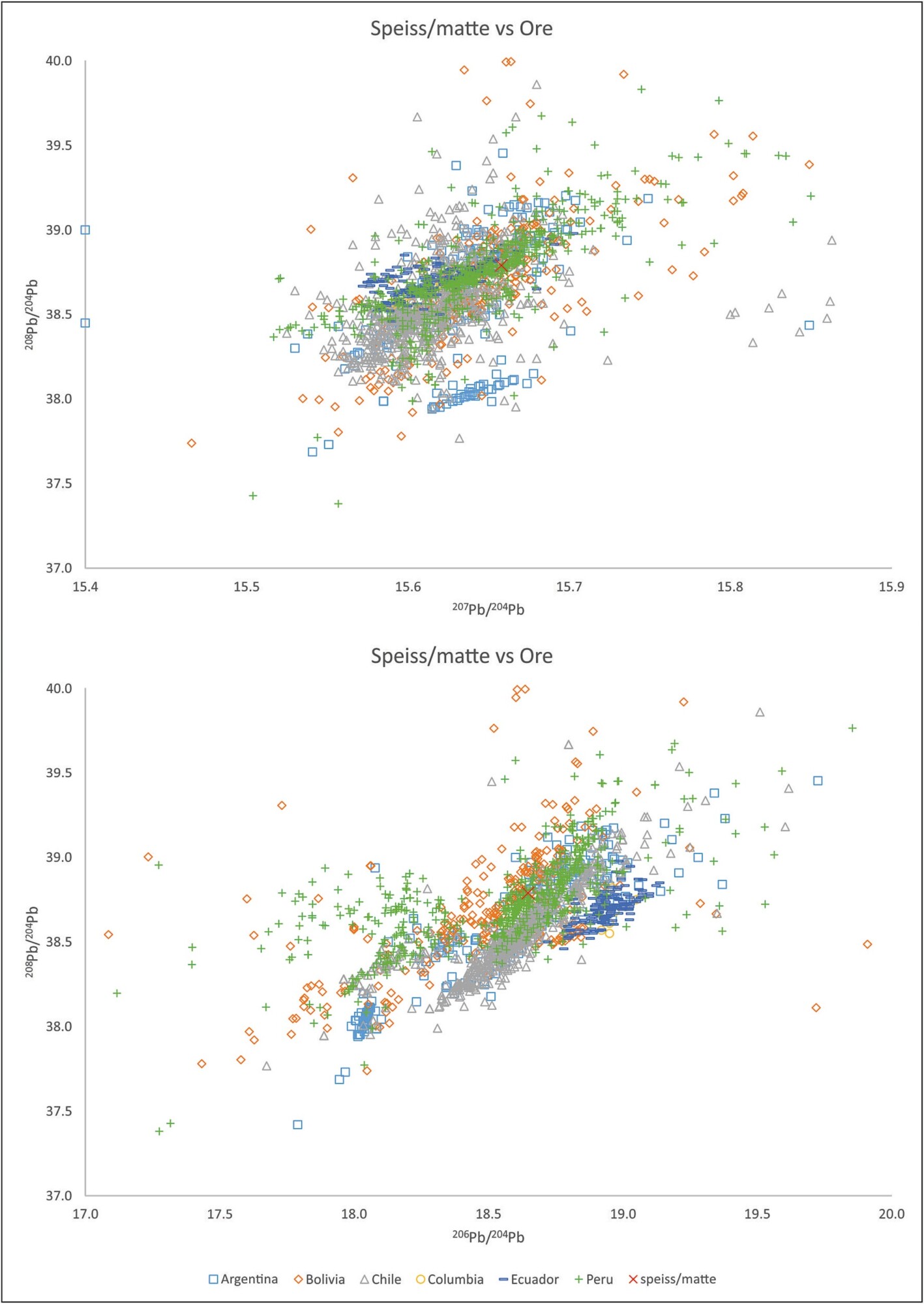
Kałaska et al. 2026
From an unassuming fragment to a history of contacts
The speiss/matte fragment from the burial at Castillo de Huarmey is not a spectacular artefact. It does not shine like gold and does not catch the eye like the richly decorated vessels from the royal mausoleum. Yet it is precisely this fragment that allows us to tell a story about technology, specialists, and long-distance contacts from more than a thousand years ago.
First, archaeologists found the burial. In it: a person equipped with copper-alloy objects. Beside them: a mysterious fragment connected with a metallurgical process. Then came laboratory analyses, lead isotope results, and comparisons with the geological map of the Andes.
From this sequence emerges an image of Castillo de Huarmey as a place embedded in extensive exchange networks. A small fragment of technological material leads us from the burial of one person to questions about contacts between the Wari and Tiwanaku, the routes through which metals moved, and the importance of specialist knowledge in ancient Andean societies.
In archaeology, sometimes what looks like waste turns out to be the key to the biggest questions.
Based on
Warchulski, R.M., Kałaska, M., Rizzuto, B.C., Sierpień, P., Pisarek, M., Kaproń, G., Marciniak-Maliszewska, B., Jokubauskas, P., Kotowski, J., Środek, D., Prządka-Giersz, P., & Giersz, M. 2025. In-depth study of a speiss/matte sample from Castillo de Huarmey, North Coast of Peru, and its implications for the pre-Columbian production of arsenic bronze in the Central Andes. Archaeometry, 67(1). https://doi.org/10.1111/arcm.13000
Kałaska, M., Warchulski, R., Tetfejer, K., Karasiński, J., Sierpień, P., Kamenov, G., Mathur, R., Prządka-Giersz, P., Chyla, J.M., & Giersz, M. 2026. Where did the ore come from? Pb isotope provenance of a Pre-Columbian speiss/matte fragment from the Metallurgist’s Burial at Castillo de Huarmey (Peru). Journal of Archaeological Science: Reports, 74, 105893. https://doi.org/10.1016/j.jasrep.2026.105893
Author: J.C.
Proofreading: A.S.