The cemetery at Tarkhan was established around 3300 BCE, during the Naqada IIIA2 period, and provides evidence of the mobility of the Naqada population. The Naqada culture, which initially developed in Upper Egypt near the present-day town of Naqada, expanded its territories northward. In the Fayum oasis region, other important cemeteries associated with the Naqada community can be found, such as Abusir el-Melek and el-Gerza, with the latter located just a few kilometers south of Tarkhan, the focus of today’s story.
© Anna Wodzińska, licensed under CC BY-SA 4.0
During the Naqada IIIB period at Tarkhan, the number of graves increased, but in the following Naqada IIIC1 phase, their quantity noticeably declined. Interestingly, during this later period, three massive mastabas were constructed, resembling examples found elsewhere in Egypt. The most spectacular contemporaneous mastabas are located at Naqada and Saqqara. These monumental tombs likely belonged to local administrators acting as regional governors under the authority of the king of a unified Egypt. Afterward, Tarkhan experienced significant depopulation, with its inhabitants reportedly migrating further north toward the Helwan region.
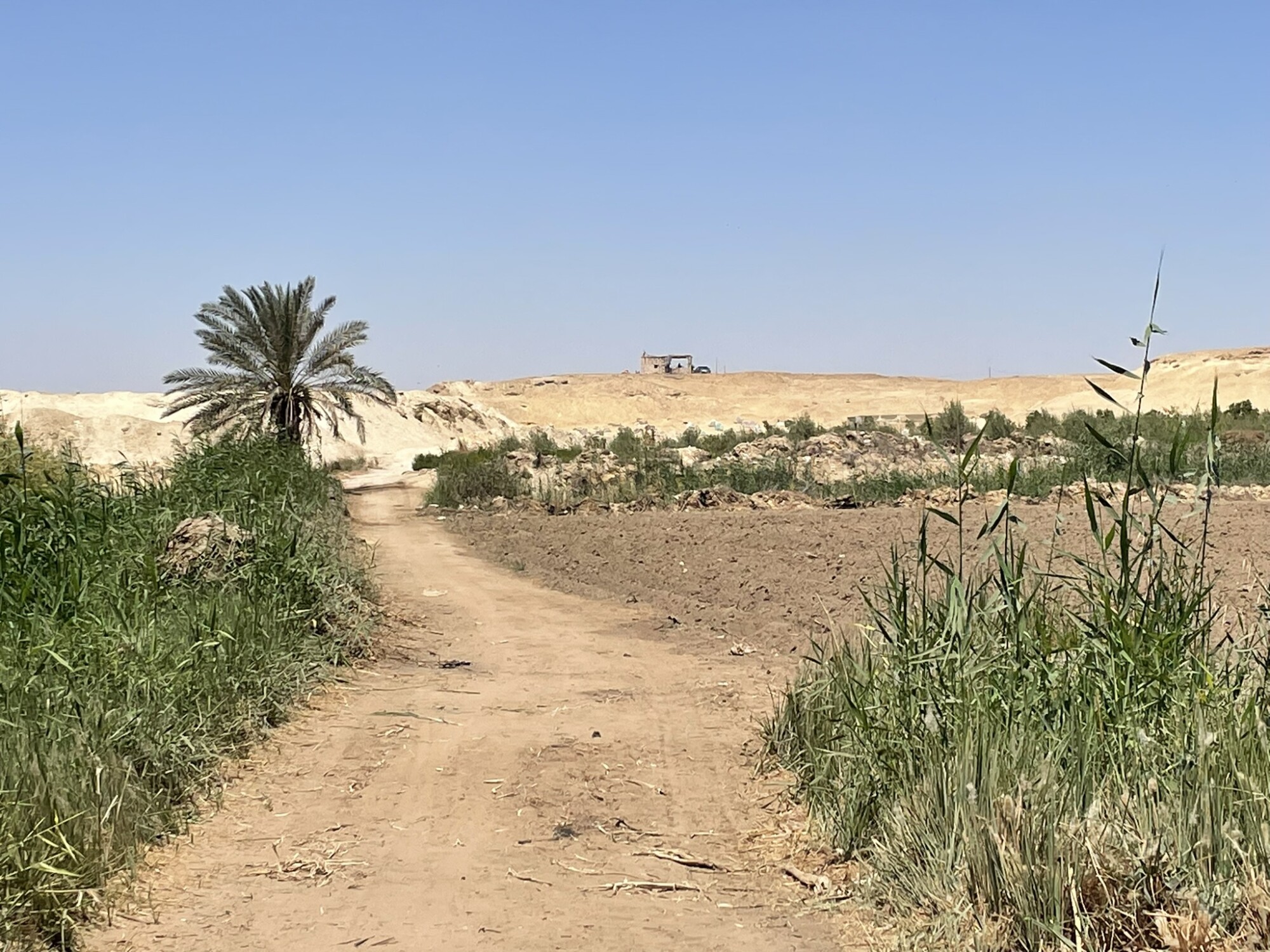
At first glance, Tarkhan may seem unremarkable amidst the vast Egyptian deserts, but beneath its surface lies a fragment of history crucial to understanding the emergence of the Nile civilization. Situated at the intersection of Lower and Upper Egypt, in the shadow of the modern villages of Kafr Tarkhan and Kafr Turki and near the Fayum Oasis, it hosts one of the largest cemeteries from the period of early state formation. Its history—both ancient and modern—is a story of a race against time, sand, and contemporary human interference.
The Beginnings of Exploration: Flinders Petrie and a Major Discovery
The first major investigations at Tarkhan were conducted in the early 20th century by the eminent British Egyptologist William Matthew Flinders Petrie. Between 1912 and 1913, he and his team excavated over two thousand graves across an area of 3.6 km². These large-scale excavations yielded spectacular results, revealing the richness of tomb forms, the diversity of grave goods, and most importantly, the complex social structure of early Egyptian communities. The number and chronology of burials were impressive. Finds included simple graves of the poorest, as well as monumental mastabas of local elites—evidence of emerging social stratification. Petrie was certain that Tarkhan still held many secrets. Yet, for the next century, the site remained largely untouched by archaeologists.
Geographical and Historical Significance of Tarkhan
Tarkhan lies on the border between Lower and Upper Egypt, near the northern edge of the Fayum Oasis. During the formation of the Egyptian state—in the so-called Protodynastic period (Dynasty 0, ca. 3300–3000 BCE)—its location was of immense strategic importance. It served as a hub for contacts and competition between elites from both regions and functioned as a zone of trade and population movement. Major communication routes passed through it, and local rulers played a key role in the centralization and unification of the country.
The Crocodile King – Ruler of the Border?
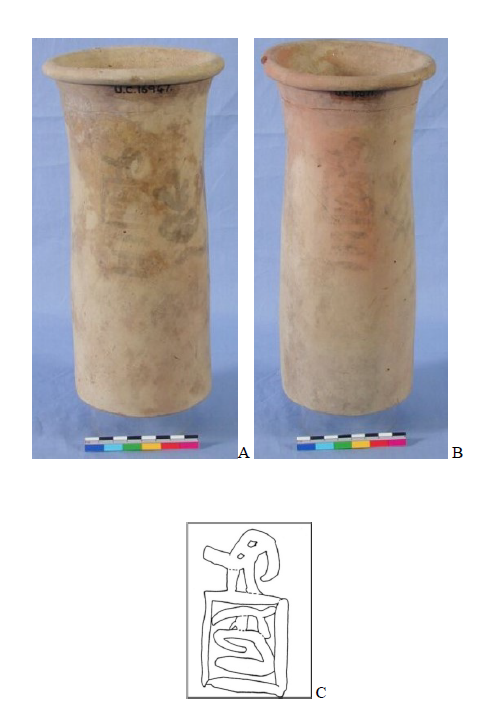
© L. Mawdsley, in Mawdsley L.A., 2020. Mortuary Practices and Social Relationships at the Naqada III Cemetery of Tarkhan in Egypt
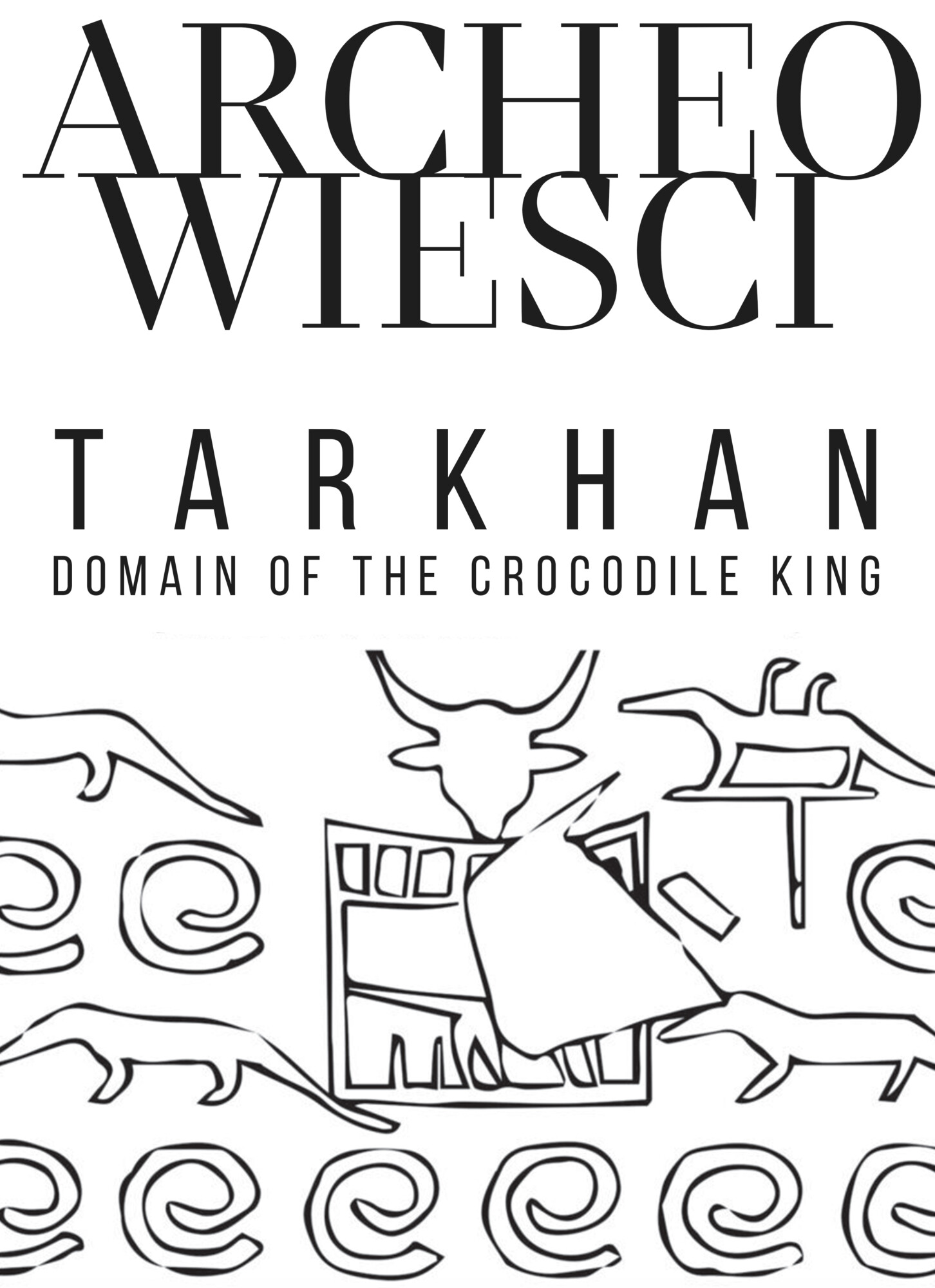
One of Tarkhan’s greatest mysteries remains the figure of the “Crocodile King.” Petrie discovered artifacts in two graves bearing the name “Crocodile,” written within a serekh – the rectangular frame used for royal names. This may indicate the existence of a local ruler who held enough power to employ royal symbolism and possibly exercise control over the Faiyum region.
The crocodile motif is not accidental; from the earliest times, this animal was associated with the cult of the god Sobek, whose main center was precisely the Faiyum oasis. If the “Crocodile King” was indeed a historical figure, he represents an important link in the formation of the Egyptian monarchy—a local leader competing with other claimants to power. Archaeological traces of titles or artifacts associated with such figures are often the only evidence of their existence, serving as the sole record of Egypt’s early rulers.
Contemporary threats and a new era of research – Tell Tarkhan Project 2024
© Julia Chyla, licensed under CC BY-SA 4.0
©Iwona Kozieradzka-Ogunmakin
Modern research applied in Tarkhan: surface, depth, digitization
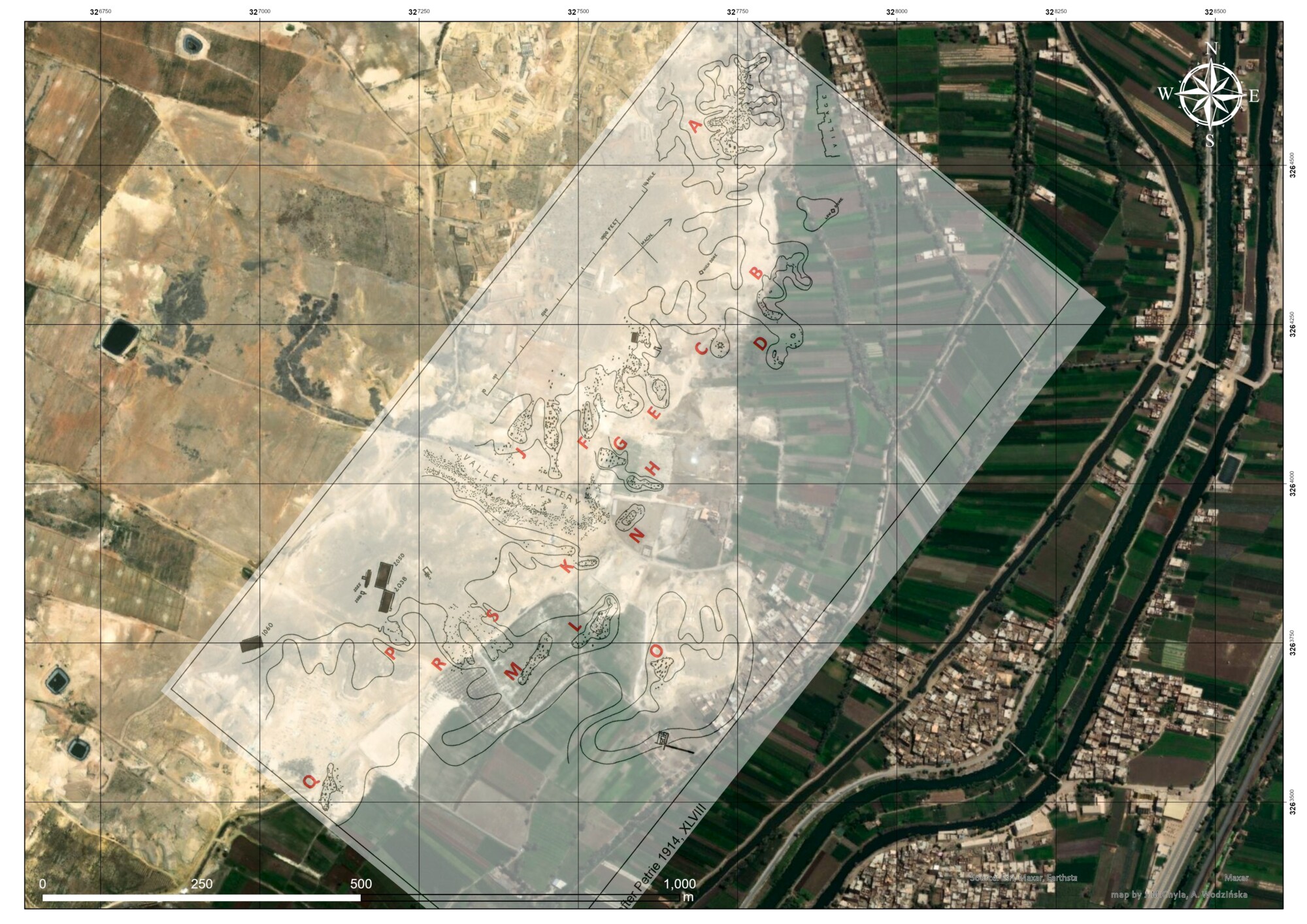
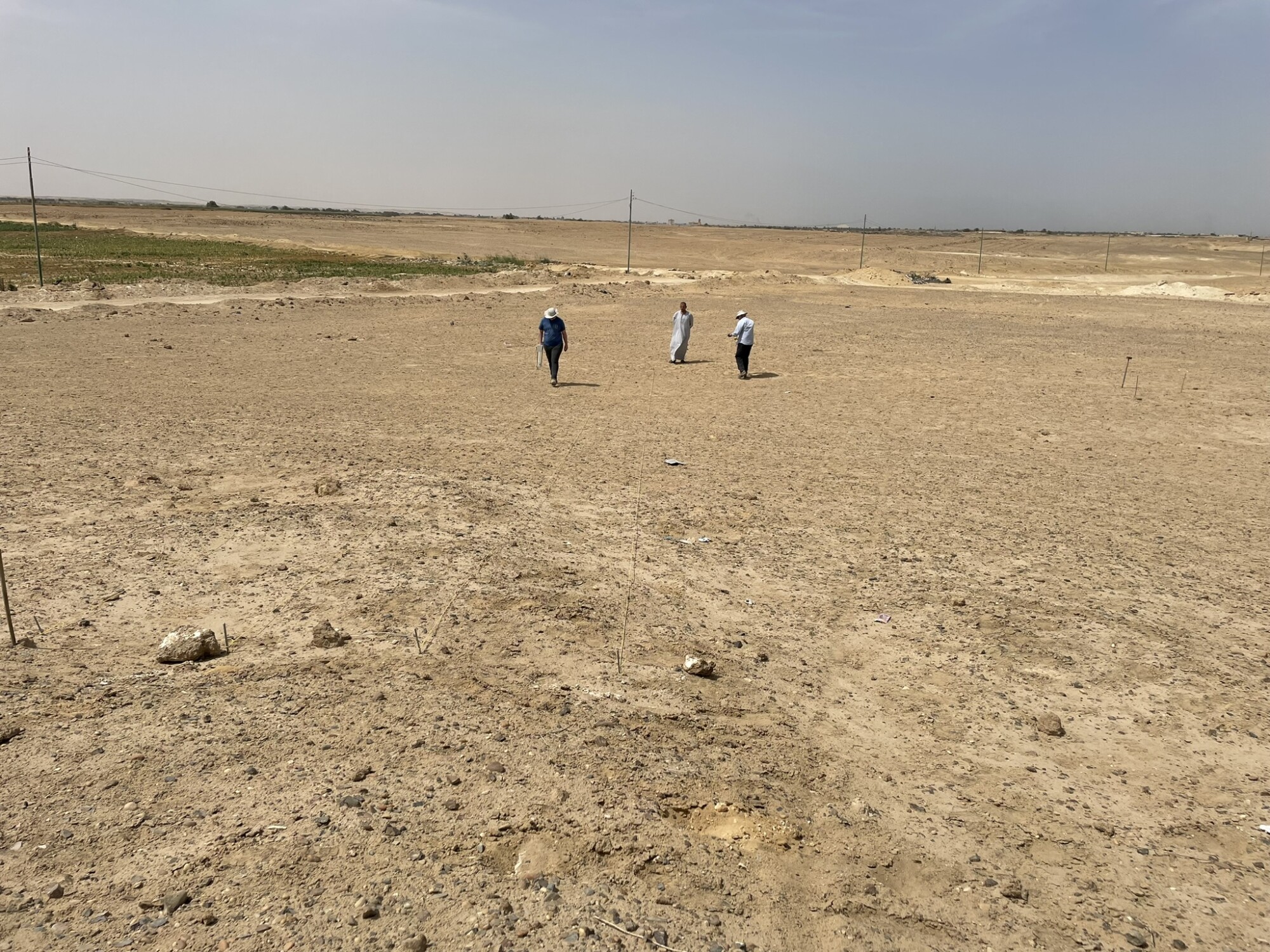
Fieldwork began with precise geolocation of the site. Petrie’s historical maps were compared with satellite imagery and current terrain models. It was found that only 15–20% of the original necropolis area has been preserved. Extensive magnetic survey techniques were employed, allowing researchers to identify previously known structures (mastabas 1060, 2038, 2050) as well as new, previously unknown anomalies.
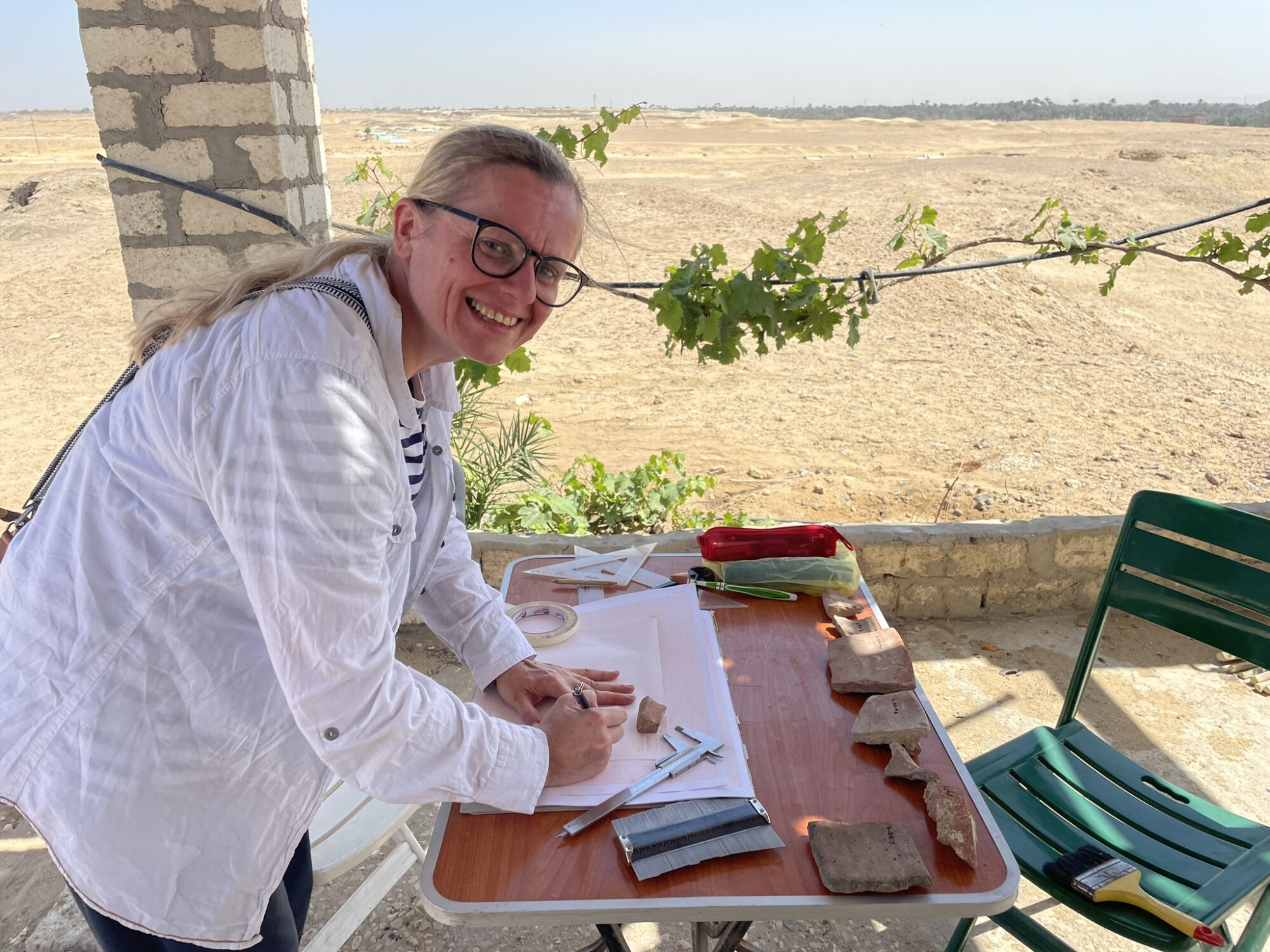
At the same time, systematic surface survey and GIS documentation were carried out, recording every find—from pottery fragments to human bones, mats, wood, and flint tools. Digital data recording provided a dynamic representation of the site, enabling real-time analysis and comparison with historical records.
© Anna Wodzińska, licensed under CC BY-SA 4.0
Discoveries of the 2024 Season: Mastabas, Family Tombs, and Multiple Epochs
Research has confirmed that Tarkhan was used for many centuries. From the Naqada culture, through the Protodynastic period and the Old Kingdom, all the way to the Persian period. Analysis of pottery revealed an extraordinary variety of forms: from predynastic cylindrical vessels, through First Dynasty jars, bread molds from the Third Dynasty, to later vessels and fragments of coffins.
One of the breakthrough discoveries was the identification of a new tomb structure, possibly a previously unknown mastaba from the First Dynasty. A magnetic anomaly in the eastern part of the site indicates the presence of a large tomb, possibly belonging to someone from the elite of the investigated region.
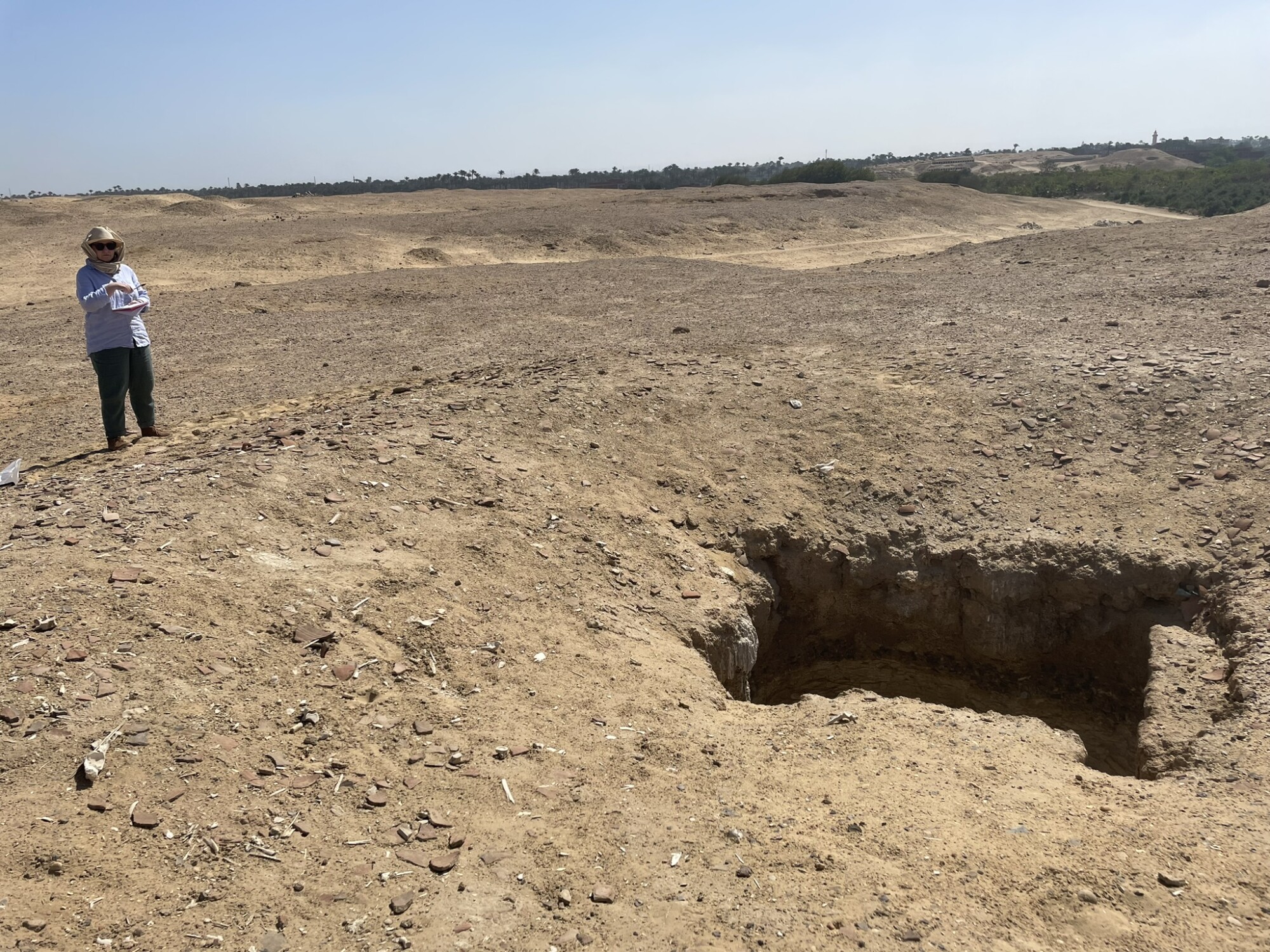
Additionally, studies of one of the tombs destroyed by looters, conducted by Dr. Iwona Kozieradzka-Ogunmakin, revealed the remains of at least 23 individuals, ranging in age from fetuses to adults. It is possible that this was a family or communal tomb. This highlights the significant role that tombs played in building social bonds and collective memory.
© Anna Wodzińska
Contemporary threats: looting, expansion, and neglect
Although Tarkhan has survived for thousands of years, its existence today is threatened by human activity. Tombs are regularly looted, with bones, pottery fragments, wood, and other artifacts scattered. Parts of the cemetery have been built over with modern graves, resulting in the irreversible loss of archaeological data. Comparing Petrie’s maps with the current excavation concession highlights the scale of destruction. Every uncontrolled development brings the history of one of early Egypt’s most important sites one step closer to oblivion.
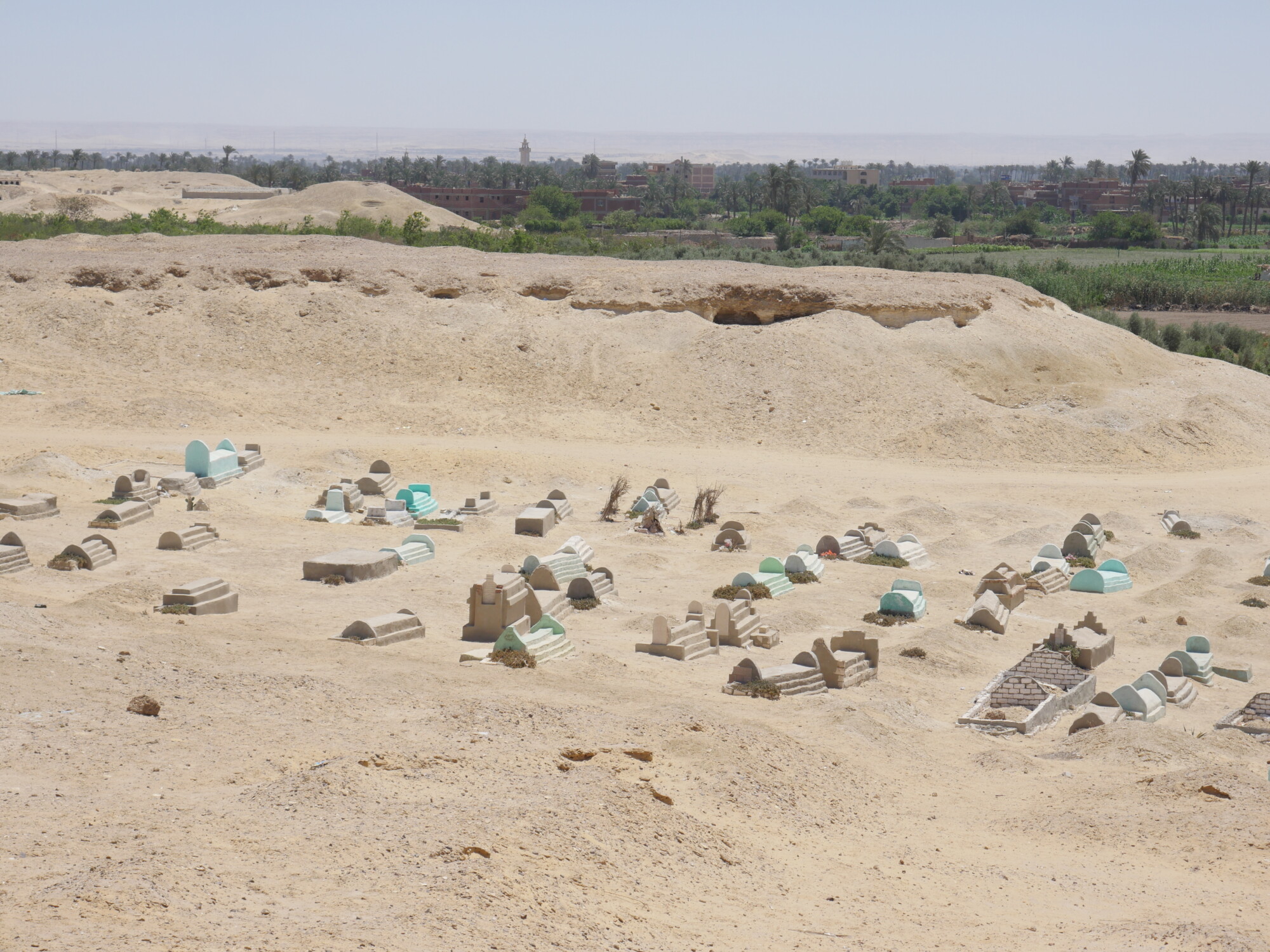
© Anna Wodzińska, licensed under CC BY-SA 4.0
Recommendations and Future Plans
The Tell Tarkhan Project team, in collaboration with the Egyptian Ministry of Tourism and Antiquities, has prepared a detailed plan to protect and further investigate the Tarkhan archaeological site. In the near future, pilot excavations are planned at the so-called Valley Cemetery, the elite sector of the predynastic cemetery. One of the main objectives is also the detailed study of a newly discovered tomb structure, which could turn out to be one of the largest mastabas in the entire region. At the same time, mastabas 1060, 2038, and 2050 will be reopened and fully documented using modern 3D scanning technology. Another important part of the program is the systematic inventory of graves from later periods of the necropolis and the implementation of educational and protective measures aimed at raising public awareness and safeguarding Tarkhan’s cultural heritage from further degradation.
The Significance of Tarkhan for Egyptian History
Tarkhan is more than just a necropolis. It tells the story of the formation of one of the world’s oldest civilizations. Each burial provides insight into daily life, religion, technology, and social change. Particularly fascinating is the story of the “Crocodile King” – a frontier ruler who may have been one of the candidates for unifying Egypt. Tarkhan demonstrates that the process of state formation was not a simple path to pharaonic power but a complex network of local initiatives, alliances, and rivalries. Archaeology allows us to see those whose names do not appear in textbooks but who played an important role in the birth of the Egyptian state.
Summary
Tarkhan is much more than an ancient cemetery. It is a historical laboratory where classical archaeology meets modern technology: magnetic surveys, GIS systems, 3D digital documentation, and bioarcheological research. It is also a place where local memory and global science come together to preserve the past. The fate of Tarkhan shows how much depends on contemporary decisions: through international collaboration and the engagement of local communities,. Now, it is possible not only to protect this exceptional site but also to develop it as a source of knowledge and cultural pride. Tarkhan remains one of the key sites for understanding how Egypt became Africa’s first state and survived for three millennia, from the Crocodile King to the great pharaohs of the New Kingdom.
Author: Anna Wodzińska
Latest publication on the Tarkhan site:
Wodzińska, A., Ashmawy, A., Chyla, J., Gehad, B., Herbich, T., & Kozieradzka-Ogunmakin, I. (2025). New evidence from the late Predynastic to Late Period cemetery at Tarkhan, Egypt. Antiquity, 1–8. doi:10.15184/aqy.2025.10243
Selected Bibliography:
-
Grajetzki, W., 2004. Tarkhan: A Cemetery at the time of Egyptian State Formation, Golden House Publications, London.
-
Mawdsley, L.A., 2020. Mortuary Practices and Social Relationships at the Naqada III Cemetery of Tarkhan in Egypt. PhD thesis, Centre for Ancient Cultures, School of Philosophical, Historical and International Studies, Monash University.
-
Petrie, W.M.F., 1914. Tarkhan II, British School of Archaeology in Egypt, London.
-
Petrie, W.M.F., Mackay, E., 1915. Heliopolis, Kafr Ammar and Shurafa, British School of Archaeology in Egypt, London.
-
Petrie, W.M.F., Wainwright, G.A., Gardiner, A.H., 1913. Tarkhan I and Memphis V, British School of Archaeology in Egypt, London.