Small, inconspicuous figurines discovered in various locations across Egypt have long remained a mystery to archaeologists. Handmade out of clay, they come in various forms, ranging from representations of humans and animals to abstract shapes that are incomprehensible today. Such objects have also been discovered by Polish archaeologists at the Tell el-Retaba site.
Why did the Egyptians mold them out of clay? Were they just children’s toys, dolls, or perhaps something more? More and more evidence suggests that they may have served as protective amulets, offerings to the gods, or even tools used in magical rituals. So, in today’s text, we will try to answer the question of whether they actually had such functions. And if so, were they meant to ward off evil forces, bring good luck, or perhaps cast a curse on enemies?
Inconspicuous artifacts of great significance
Let’s start with the basics: what exactly are these figurines, and why are they worth paying attention to? They are small, hand-made clay figures – animals, women, or mysterious shapes that are difficult to identify clearly. Interestingly, such figurines are very often found. They are usually encountered in contexts dating from the Predynastic Period to the fall of Ancient Egypt. They have been found in homes, temples, and even tombs! Despite this, for a long time no one really knew what they were.
The reason? They were simply… ugly, especially when compared to the beautiful works of Egyptian art that we know from museums. For this reason, no in-depth analysis was undertaken. But if we devote a little scientific attention to them, we will see that there is much more hidden beneath this inconspicuous surface than might appear at first glance.
Figurines from Ramses’ fortress
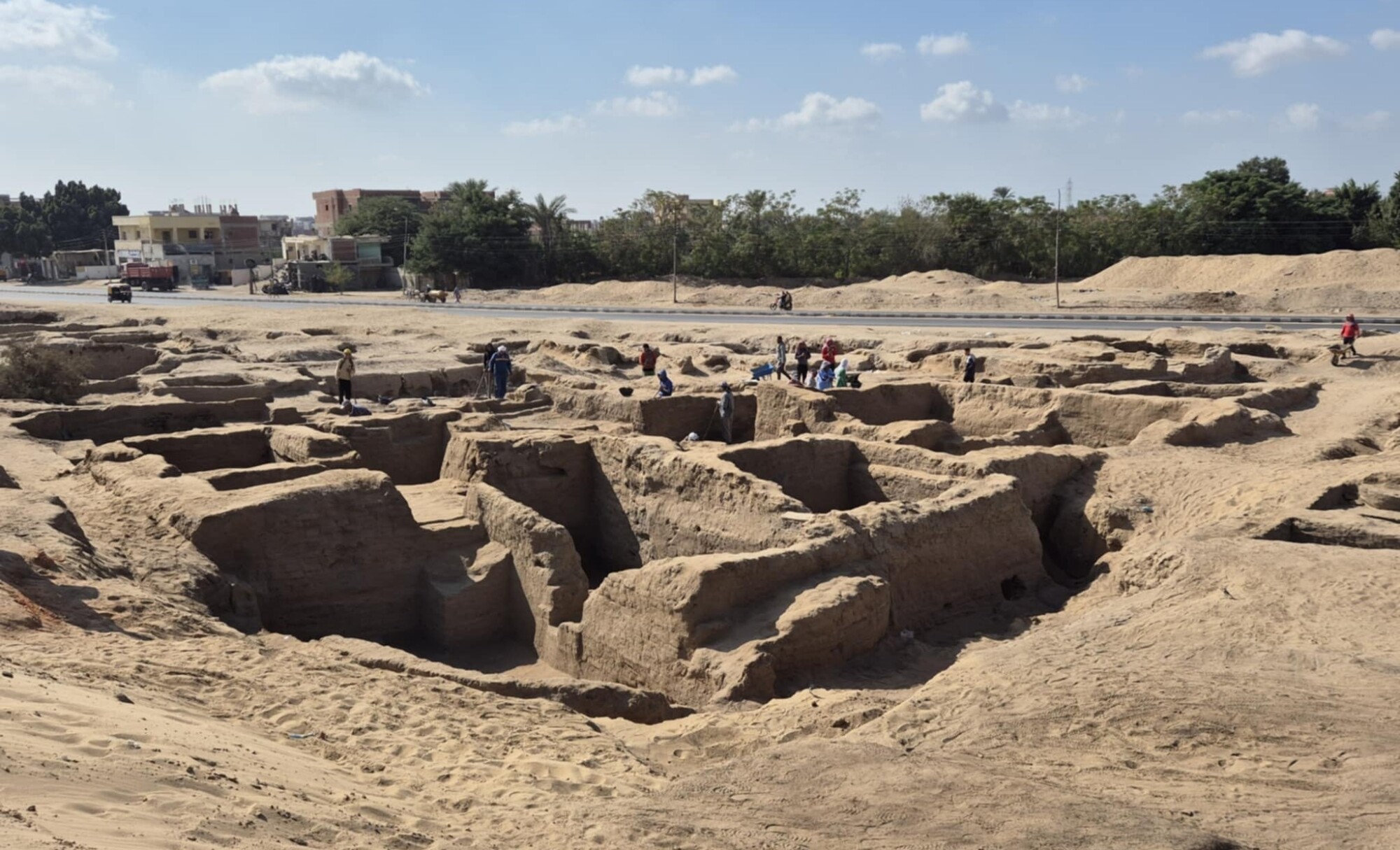
Polish archaeologists have also come across such artifacts. Since 2007, the Polish-Slovak Archaeological Mission has been conducting research at the Tell el-Retaba site. It is located in the eastern Nile Delta, in northern Egypt. It was an extremely important strategic location during the military campaigns in the Syro-Palestinian region. Ramses II built his fortress here, surrounding the area with a massive brick wall. Ramses III then further strengthened the structure by building double walls and a monumental gate flanked by two towers. In the following years, after the fall of the Ramessids, the fortress was abandoned and a settlement was built on its remains.
© Z. Dragunowicz
Clay, fire, and done!
The way these small figurines were made can tell us a little more about their significance. They were made from clay collected from the riverbank, most likely from one of the branches of the Nile that flowed near the settlement of Tell el-Retaba. Sand and plant fragments were added to the clay to improve its properties and give it the right consistency. The figurines were then placed in a fire to harden them. Their colors can vary from red to brown to beige. This indicates that they were fired in the open air and then probably simply thrown into a fire or oven when other vessels were being fired.
These figurines were made quickly, without any special concern for appearance or durability, as they were intended to be used only for a short time. This may suggest that they were objects used in rituals that required quick execution, only to be destroyed or sacrificed afterwards. Such simple, disposable figurines fit perfectly into this concept.
All this indicates that the figurines were made locally, “on site,” and were made by the inhabitants of the settlement themselves. They were most likely made for their own use and not for sale. Each of them is unique in terms of form and workmanship, which suggests that no canonical rules applied to their creation. On the contrary, they were made individually, uniquely, to suit the needs of a specific person or private ritual.
A childish trifle?
As I mentioned earlier, the subject of figurines was long overlooked or treated very superficially by scientists. They were most often associated with the low skill level of their creators and considered to be something created “carelessly.” This meant that many hypotheses about their significance were very general or even trivial.
When clay animal figurines were first discovered, they were immediately dismissed as children’s toys. It was probably thought that such ugly things could only have been made by a clumsy child who was simply imitating the animal world by creating clay models.
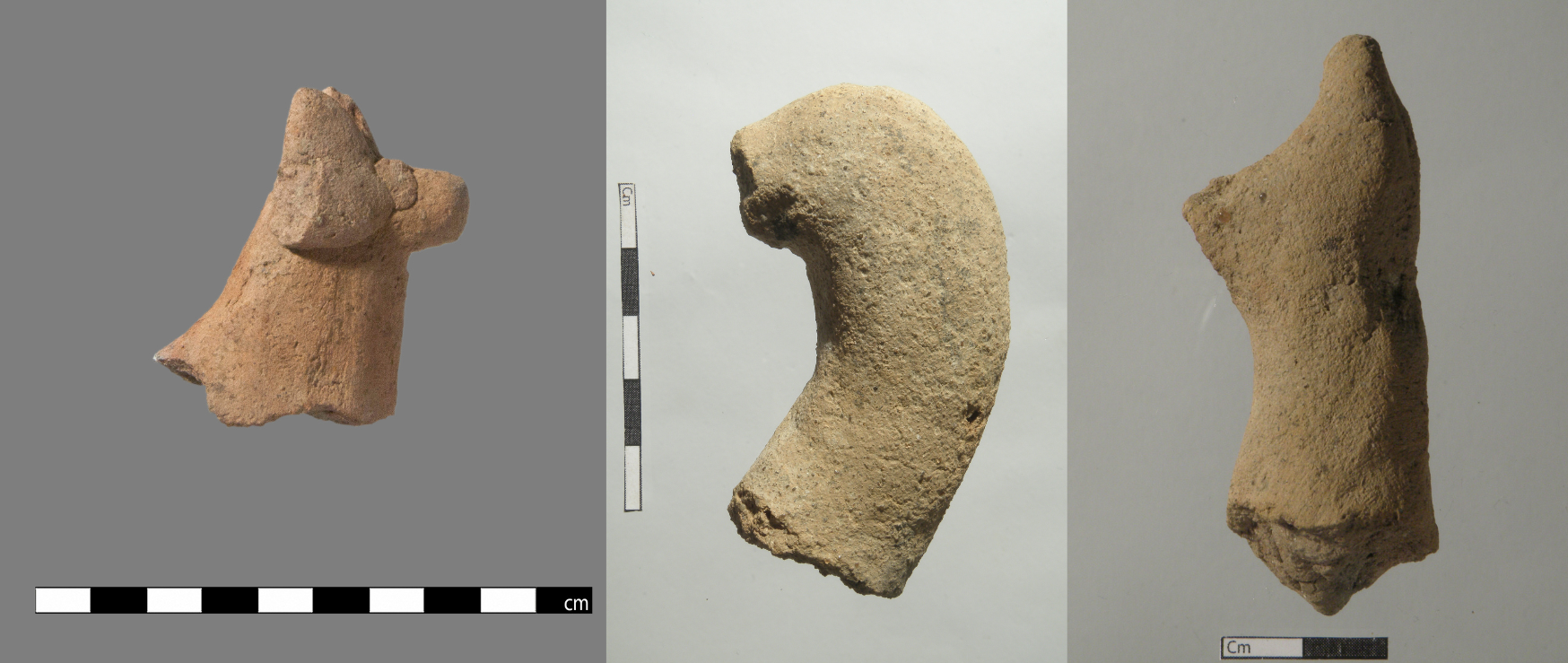
Another interpretation is that such figurines could have been mass-produced as gifts for the deities they represented. In Egyptian religion, many deities had their animal counterparts. For example, Tell el-Retaba was home to a temple of the god Atum, who was often associated with lizards and mongooses. The lizard/mongoose figurine could therefore have been a form of offering to this god. Figurines of birds, cows, horses, and other quadrupeds were also found there, which may have symbolized other deities worshipped in the settlement.
© M. Rekłajtis, S. Rzepka
To this day, animal figurines pose the greatest challenge to researchers, as there are too few written and archaeological sources on the subject. However, it is very likely that, given their number and diversity, these small clay objects served complex and often varied functions in the everyday life of the inhabitants of Tell el-Retaba (for example, some of them may have been toys, while others may have been gifts to deities).
Sexual partners after death?
When figurines depicting women were discovered, the researchers’ first association was quite predictable, as it revolved around sex. This was because the women were depicted naked, with clearly marked sexual characteristics. These figurines were quickly classified as “dolls,” “concubines,” or “wife figurines.” It was assumed that they were to serve as magical sexual partners for deceased men in the afterlife.
The problem is that no one considered that similar figurines were also found in the tombs of women and children, as well as in homes and temples. In such places, it is difficult to talk about an erotic function, right? Then it began to be claimed that these were simply representations of servants. Today, these theories are considered outdated.
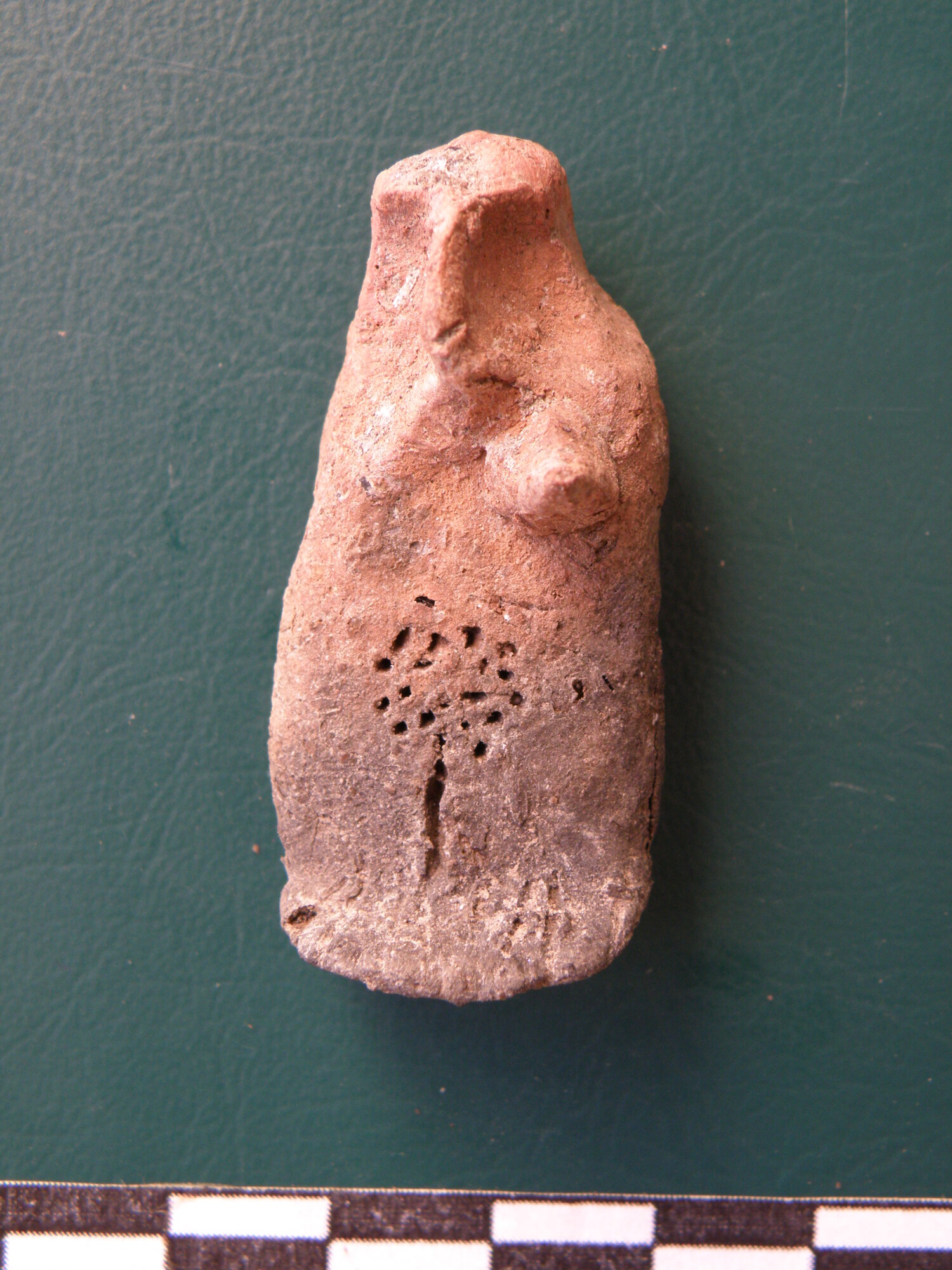
Contemporary researchers lean towards the interpretation that female figurines were a form of votive offerings intended to ensure fertility, successful pregnancies, and safe childbirth. Those found in temples and on altars are often referred to as “fertility figurines.”
Some studies also suggest that some of these figurines were used in magical-medical rituals. They could have served as a kind of “link” between the human world and the world of magic. They were used as key components of protective spells, aimed, among other things, at repelling poisonous creatures or alleviating pain, for example, stomach pain. After fulfilling its function, the figurine was broken, which symbolically defeated the ailment.
Interestingly, the female figurines found in Tell el-Retaba stand out among their counterparts due to their particularly strong emphasis on the breasts. Sometimes in pairs, and in one case also single. It can therefore be assumed that they were used in local rituals, related, for example, to the treatment of breast ailments. However, due to the clear emphasis on sexual characteristics, it cannot be ruled out that, as “fertility figurines,” they were simply intended to ensure fertility and healthy offspring, which was certainly important to many families in the settlement.
© S. Rzepka
A cobra prowling in the grain?
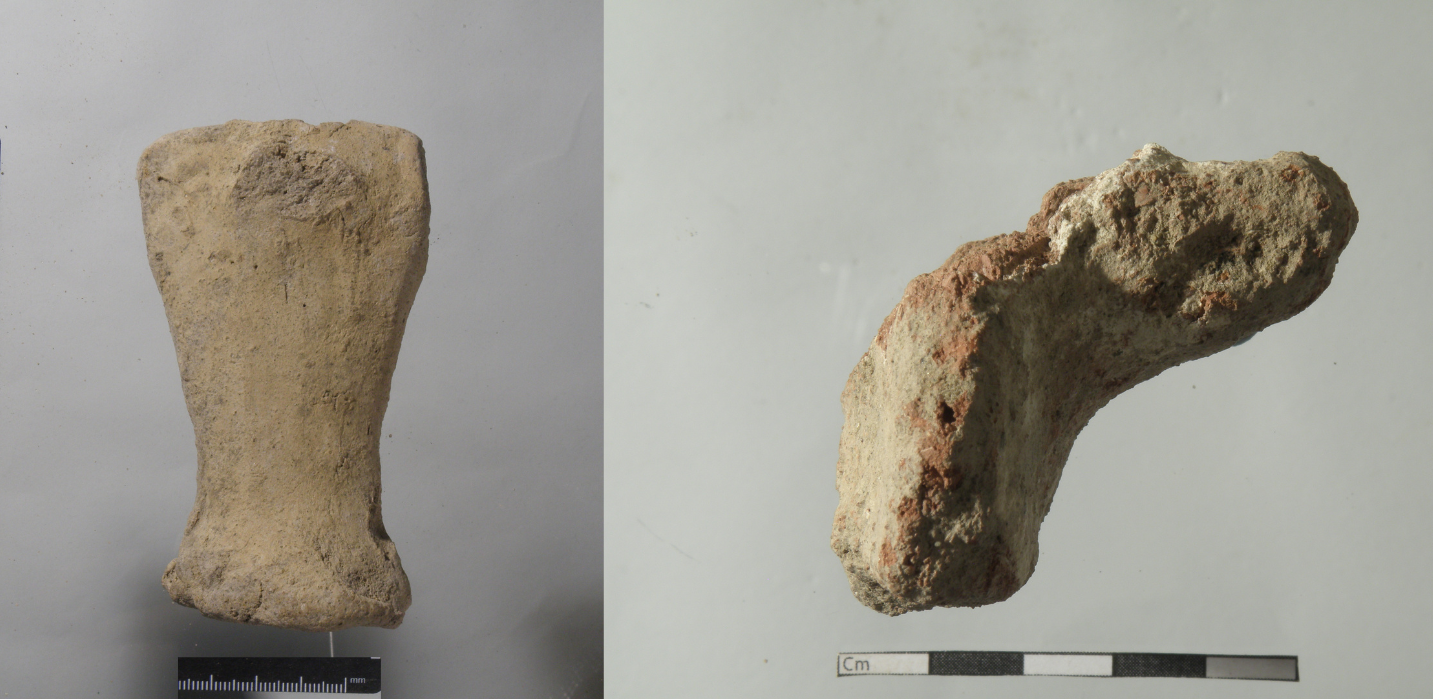
Among the objects discovered at Tell el-Retaba, figurines depicting cobras attract particular attention. The reptile was shown in an “attacking” pose, with its hood spread out. Interestingly, it is precisely these representations that constitute the most numerous group in the entire collection of figurines from Tell el-Retaba discussed today. Why cobras? Their popularity was not accidental.
© P. Sójka, S. Rzepka
It is worth remembering that Tell el-Retaba is a military site located in the Nile Delta, and it was in places like this that the cult of the cobra was particularly strong. This may have been related to social unrest caused by the presence of troops and armed conflicts. In such conditions, people often seek support in the spiritual realm, and symbols of protection and safety, such as the cobra, gain in importance.
In ancient Egyptian iconography, cobras were associated with many goddesses, but the most likely “patron” of these figurines was Renenutet, as the guardian of crops, granaries, and the hearth. The contexts in which these objects were discovered support this theory. They were found not only in homes, but also in places associated with food production and storage. It can be assumed that the figurines served an apotropaic function, i.e., they were meant to protect families and their possessions from evil forces, disease, and misfortune.
Curses hidden in figurines
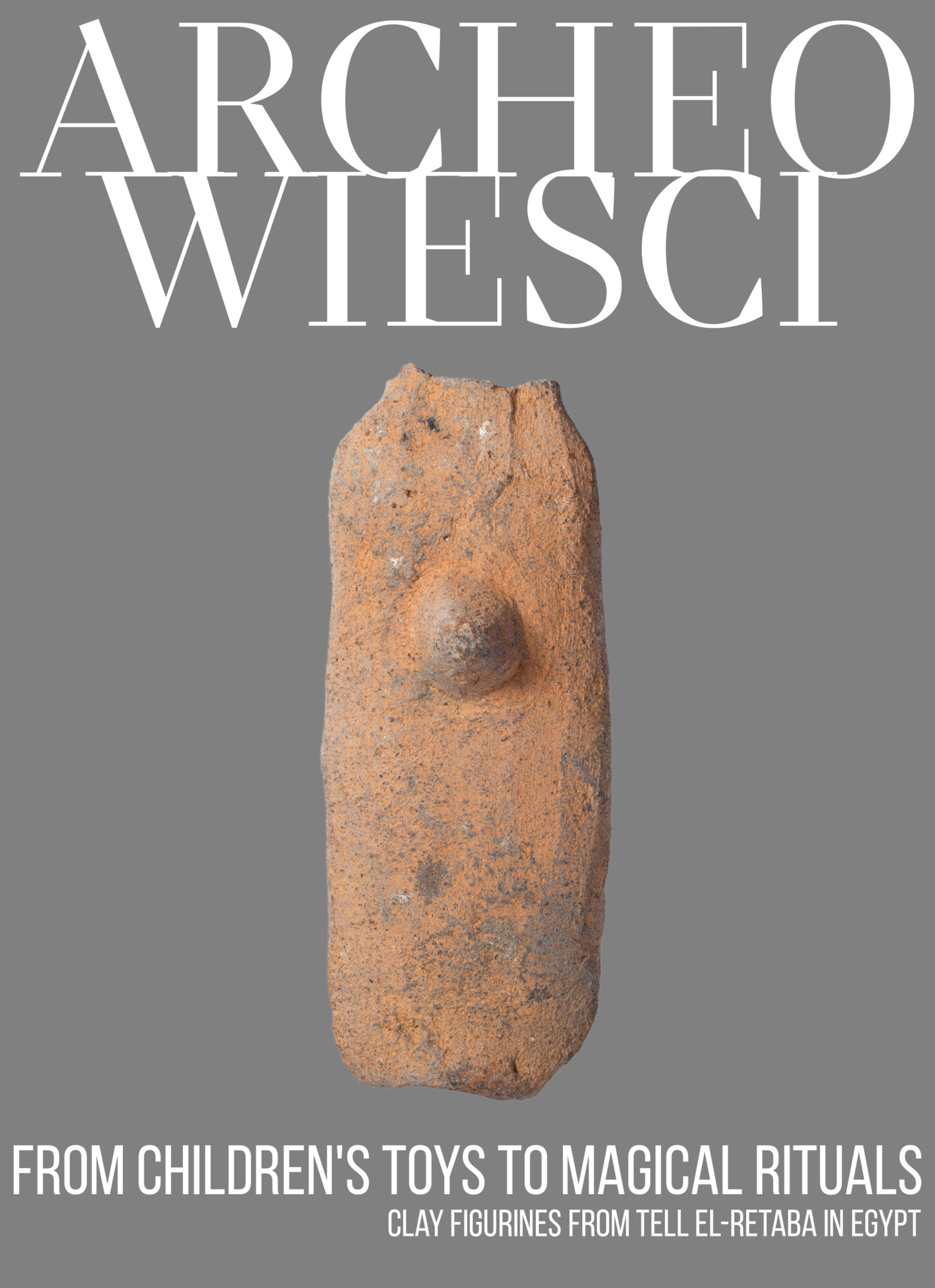
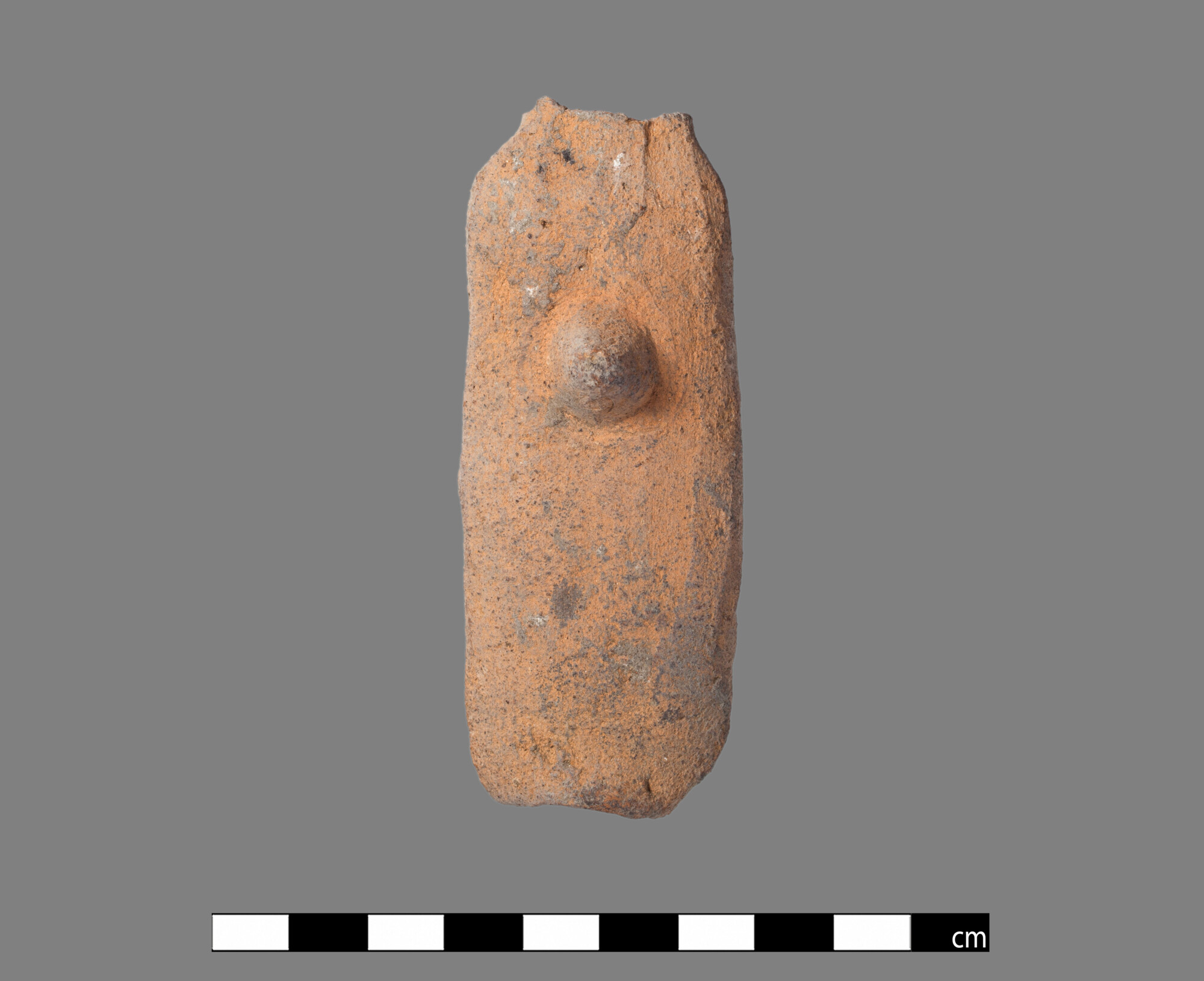
Among the finds from Tell el-Retaba, a particularly intriguing group are the figurines, called “rectangular.” Indeed, their shape is nothing more than a simple, flat cuboid. At first glance, they do not appear particularly decorative, as the only distinguishing feature is a small, conical convex detail located in the center of their front side.
© M. Rekłajtis
Although usually made in a very simplified and schematic manner, these figurines most likely represent human figures, which were imagined as flat, rectangular bodies with rounded or spherical heads. Interestingly, in most cases, they were deliberately broken. It is this repetitive pattern of damage (always in the upper part) that attracts attention. This does not seem to be a coincidence.
According to researchers, these figurines are not toys or decorations. They are remnants of ancient rituals, specifically so-called exorcism rituals. Such practices were known in Ancient Egypt and were primarily intended to protect against forces that were considered hostile or dangerous, both to individuals and entire communities. Often, foreigners, demons, and even wild animals, which symbolized chaos and danger, became the “victims” of magical practices. To deal with such dangers, various objects were used, most often figurines that were supposed to represent the enemy. These figurines were then broken, pierced, burned, or buried. All this was meant to symbolize victory over what was evil and dangerous.
Interestingly, all these figurines were found in only one house in Tell el-Retaba. This suggests that these rituals may have been part of a private, domestic practice, cultivated by the inhabitants of a particular household for generations. After the ceremony, the figurines were thrown away after they had served their purpose, where they were later found by archaeologists. For their creators, these were not ordinary objects, but powerful tools of symbolic struggle.
What do we know about the inhabitants of the settlement thanks to the figurines?
The fired clay figurines discovered in Tell el-Retaba shed light on the everyday life of the inhabitants of this settlement during the New Kingdom and the Third Intermediate Period. Thanks to these artifacts, we can better understand what the magical or ritualistic everyday life of people about whom we still know relatively little looked like. It was the lower classes that constituted the most numerous social group in Ancient Egypt, and yet we know surprisingly little about them. Unlike the elites, whose lives have been well documented in written sources and iconography, often created from their own privileged perspective, the everyday life of ordinary people remains almost completely invisible. That is why it is so important today to give a voice to the actual inhabitants of ancient settlements by analyzing the material traces of their lives.
These figurines are also an expression of personal piety, that is, an individual, often domestic form of religiosity that may have functioned parallel to official state cults. These objects show how the inhabitants expressed their spiritual needs and beliefs in their own way, away from temples and priests. Interestingly, despite the passage of time and political changes in the Nile Delta, the form and character of these figurines remained surprisingly constant. This suggests that local traditions and domestic rituals were strongly rooted and regularly practiced regardless of what was happening in the wider world. Such findings show how important personal religious practices were in the lives of ordinary people in Ancient Egypt.
Bibliography:
Hanasaka, Tetsu. 2013. „Clay Magical Human Figurines Unearthed from Tihna el-Gabal (Akoris)”. w: Hiroyuki Kawanishi, Sumiyo Tsujimura, i Tetsu Hanasaka (red.), Preliminary Report Akoris 2013, 7–13. Tsukuba: University of Tsukuba
Petrie, William Matthew Flinders. 1906. Hyksos and Israelite Cities. British School of Archaeology in Egypt 12. London: School of Archaeology, University College, Bernard Quaritch.
Petrie, William Matthew Flinders. 1927. Objects of Daily Use. 2023. wyd. Oxbow Classics in Egyptology. Oxford: Oxbow Books.
Pinch, Geraldine. 1993. Votive Offerings to Hathor. Oxford: Griffith Institute, Ashmolean Museum
Stevens, Anna. 2006. Private Religion at Amarna: The Material Evidence. British Archaeological Reports. Oxford: Archaeopress.
Szpakowska, Kasia. 2003. „Playing with Fire: Initial Observations on the Religious Uses of Clay Cobras from Amarna”. Journal of the American Research Center in Egypt, nr 40, 113–22.
Szpakowska, Kasia. 2015. „Snake Cults and Egyptian Military Bases”. w: Timothy P. Harrison, Edward B. Banning, i Stanley Klassen (red.), Walls of the Prince: Egyptian Interactions with Southwest Asia in Antiquity, Culture and History of the Ancient Near East 77, 274-91. Leiden: Brill.
Teeter, Emily. 2010. Baked Clay Figurines and Votive Beds from Medinet Habu. Oriental Institute Publications. Chicago: The University of Chicago.
Waraksa, Elizabeth A. 2007. Female Figurines from the Mut Precinct: Context and Ritual Function. Praca doktorska, Baltimore, Maryland: Johns Hopkins University.
Author:
Zuzanna Dragunowicz – graduate of the Faculty of Archaeology at the University of Warsaw, currently pursuing a master’s degree. She is interested in the settlement archaeology of ancient Egypt during the New Kingdom and Third Intermediate Period. What she finds most satisfying about exploring this topic is learning about and recognizing people’s experiences in objects of material culture.
This article may be reprinted free of charge, with photos, provided the source is acknowledged.
The text was written as part of the project “Campaign promoting the research of the Faculty of Archaeology of the University of Warsaw in the Nile Valley” co-financed by the Initiative of Excellence – Research University program.