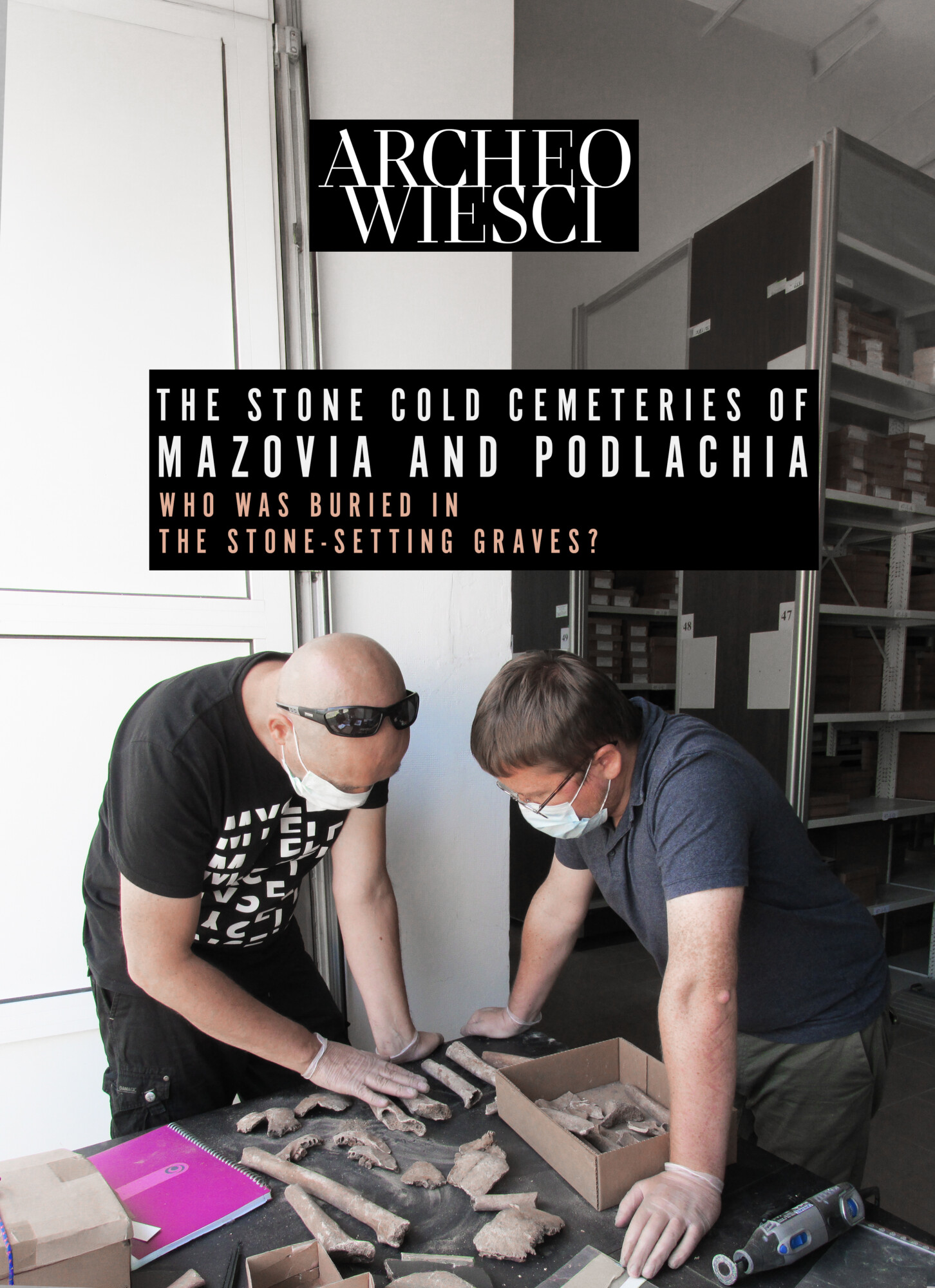
Early medieval cemeteries with graves enclosed in stone structures are among the most distinctive features of the archaeological landscape of Mazovia and Podlachia. These cemeteries are distinguished from other necropolises of this period by the presence of large stone structures surrounding the burials, the regular arrangement of graves, and a specific funeral rite, the origins and significance of which have been the subject of research for many years. Interdisciplinary research, including anthropological, archaeogenetic, and isotopic analyses, has opened up new interpretive possibilities through recent studies of two cemeteries. Their findings allow us to examine not only the form of the burials themselves but also the origin, mobility, diet, and social structure of the individuals buried there.