The domestication of the horse had a significant impact on ancient human societies. Previous contributions published by Archeowieści have explored various aspects of these animals and their role in cultural development. The present article, based on a recent study by Zainab A. Albshir (University of Warsaw), examines the identification of equids in the iconography of ancient Mesopotamia, with particular attention to the challenges of distinguishing horses from other equid species.
How Certain Are These Horses?
Hundreds of pages could be written about the significance of the horse. As noted in the introduction, we have already devoted several articles to these animals. So far, our coverage has focused mainly on what their remains can reveal about the status and role of horses in ancient societies. Much of this discussion has emphasized their potential as sacrificial offerings during funeral ceremonies, as a source of food, or for the use of horse body parts in the medieval economy. However, this picture is incomplete and, in some respects, misleading. Horses were and still are animals held in high regard, often admired and loved.
Horses have also been frequently and intentionally depicted in human art since prehistory. This raises an important question: how easy is it to recognize horses in ancient depictions? In this text, we will examine examples from Ancient Mesopotamia, focusing on selected cylinder seals from the Akkadian period to the reign of the Third Dynasty of Ur. How were horses depicted in these artworks, and how certain can we be that these images actually represent horses?
Or kunga with no name?
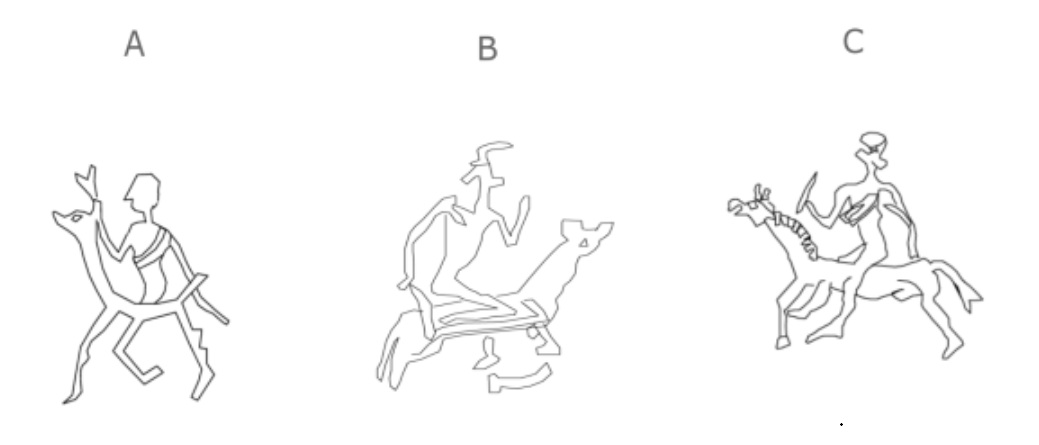
The first cylinder seal discussed here, from the University of Pennsylvania’s Babylonian Collection, dates to the Akkadian period. It was first described in 1923 by Léon Legrain. Upon analyzing the depiction on the seal, he concluded that the impression shows a rider on a horse. However, he marked his identification with a clear question mark, thereby signalling justified doubts. Why the uncertainty in the case of what would seem to be such a simple identification? It stems from the nature of cylinder seals themselves. Neither the seals nor their impressions were conducive to the delicate and detailed representation of forms. Their function was to enable the quick and repeatable imprinting of simplified symbols and schematic images.
© Zainab Albshir, na licencji CC BY-SA 4.0
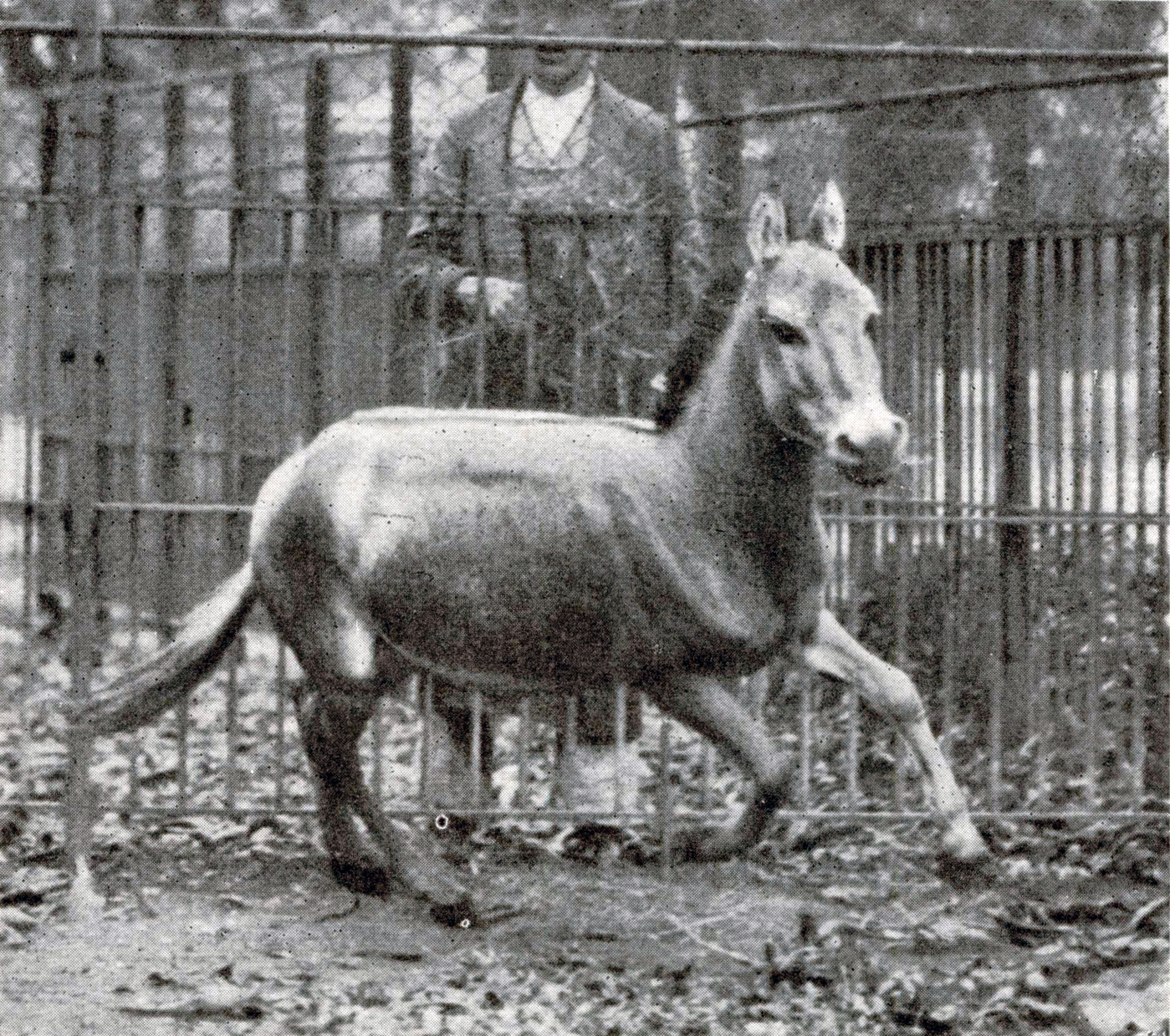
However, this schematic nature gives rise to serious interpretive difficulties. The cautious identification made by the Léon Legrain nearly a century later was challenged by another scholar Juris Zarins. He pointed out that features such as short, erect ears, a compact build, and a relatively flat head argue against identifying the depicted animal as a horse. On what, then, if not a horse, could the rider from the seal marked “CBS 5028” have been riding? According to the researcher, it was an animal known as a kunga, who were the hybrid equids produced by mating domestic donkeys with Syrian wild asses. The situation is similar in the case of another Akkadian seal, first described in 1888. There, too, it is difficult to find an unambiguous depiction of a horse.
Therefore, it is likely that representatives of kunga species appear much more frequently in iconography, at least during the 3rd millennium BCE in southern Mesopotamia.
Public domain
Iconographic data indicate that the onager was a common species during the Akkadian period. In the context of identifying the depiction of a horse on cylinder seals, the doctoral student, the author of the article, adds that particularly significant features that would facilitate the precise identification of the animal as a horse include an elongated neck, a distinct head contour, and a lush mane.
Was the Seal of Abbakalla an Early Horse?
A well-documented example comes from the Third Dynasty of Ur: the seal of Abbakalla, securely dated to the reign of Šu-Suen (2037–2029 BCE). Its impression, discovered at Drehem, has been studied as a potential early depiction of a horse. The animal shown on this seal displays several anatomical features more consistent with a true horse (Equus caballus) than with a donkey, mule, or onager. These include a relatively elongated neck with an indicated mane, short upright ears, a bushy tail, a refined head profile, and limbs shown in a forward-moving pose traits not typically associated with donkeys, hemiones, or their hybrids.
For this reason, the scene has often been interpreted as one of the earliest plausible representations of horseback riding in ancient Mesopotamia.
But does the sporadic nature of clear and unambiguous depictions of horses on cylinder seals really reflect a lack of artistic skill or a deliberate avoidance of the animal? Or might other factors be at play? It is more likely that this pattern reflects a combination of historical and representational factors, including the limited presence of horses in southern Mesopotamia during the third millennium BCE, the morphological similarities among different equids, and the schematic conventions of glyptic art, all of which complicate precise visual identification. It is also possible that additional factors contributed, such as a relative preference for other equids, particularly the kunga, as well as a more limited or later familiarity with the horse as a domesticated species in this region.
As always, when available, written sources provide an important point of reference. The Akkadian term for horse is sīsû, while in Sumerian it is attested as ANŠE.ZI.ZI / ANŠE.KUR.RA. However, references to horses in cuneiform texts appear only sporadically, and significantly less frequently than those to kungas. Moreover, scholars have noted that Sumerian terminology may not refer exclusively to true horses but rather to a broader category of equids. As a result, not every occurrence of ANŠE.ZI.ZI / ANŠE.KUR.RA should be interpreted as evidence for the presence of horses; in some cases, these terms may instead refer to other equids, such as onagers or donkeys.
These textual data also highlight the prominent role of the kunga, which is consistently described as an animal of considerable economic, diplomatic, and ceremonial importance.
© Zunkir, licensed under CC BY-SA 4.0
Do Bones Tell the Same Story?
Zooarchaeological data indicate that no horse (Equus caballus) remains have been securely identified in southern Mesopotamia and dated to the end of the third millennium BCE. The earliest confirmed osteological evidence for horses in the broader region derives instead from northern Mesopotamian sites, including Selenkahiye, Tell es-Sweyhat, and Tell Chuera.
While the presence of horses in southern Mesopotamia during the final centuries of the third millennium BCE cannot be entirely excluded, the current state of research based on zooarchaeological, iconographic, and textual evidence does not provide firm support for their presence in this region at that time. In this context, it is possible that the kunga played a more prominent role than the horse, at least in this part of Mesopotamia.
Today, kungas are no longer extant. Following the introduction of the horse and the later spread of the mule in southern Mesopotamia, the kunga appears to have gradually lost its significance, with its memory preserved primarily in textual sources dating to the Akkadian period.
Source: Albshir, Zainab A. “A critical note on the identification of horses in third-millennium BCE Mesopotamian iconography.” Bioarchaeology of the Near East (2025)
vol. 19, p.35–40
Zainab A. Albshir is a PhD candidate in archaeology at the University of Warsaw. Her research focuses on zooarchaeology, with particular interest in human–animal relationships, domestication, and pastoral practices, as well as environmental changes in ancient societies. She is especially interested in prehistoric periods in North Africa, with a focus on Sudan and Egypt. Her work combines faunal analysis with fieldwork and broader questions of subsistence, economy, and past environments.
Editing and preparation: AB