 It is often difficult for us to imagine what everyday life was like in ancient times. We fantasize about the past, romanticize its image, and create visions of mystical, incomprehensible rituals. We also often see it through the prism of wars and elite culture. Meanwhile, our ancestors most likely had similar needs and functioned in a similar way to us. A good example of this similarity in experience is the use of ceramic vessels. Just as we cook in pots (admittedly metal ones today) and drink from cups, the ancient Egyptians used specific vessels for specific purposes.
However, the question arises: how can we reliably assign a function to a given container discovered during excavations? Valuable knowledge on this subject is provided by depictions of everyday life preserved on the walls of tombs. They show ceramic vessels in the context in which they were used, and sometimes even add information in the form of captions. Like photographs, they provide a vivid picture taken directly from reality several thousand years ago.
While these depictions seem to be an ideal source in many respects, it should not be forgotten that they were created in specific circumstances and for a specific purpose, representing the aesthetic canon. They create a somewhat idealized image of the life of the owner of a given tomb. The walls of the tombs were therefore painted with selected scenes that did not always correspond exactly to reality; nevertheless, this source is very interesting and worth considering in the analysis of the function of the vessels.
The scenes described in this article come from Theban tombs of the elite from the early Egyptian New Kingdom (1550–1300 BC). It was a time of great prosperity for civilization. After a period of political instability, the country was reunited when Pharaoh Ahmose defeated the Hyksos, foreign invaders from the Levant. The strengthening of centralized power and administration, as well as military campaigns abroad, allowed the state to enrich itself, providing better living conditions for the people (at least those from the upper classes) and supporting the development of crafts and arts. Under these conditions, a group of higher and lower officials emerged who could pursue careers in politics, administration, or religion, manage large estates, and have the means to build and decorate impressive tombs.
The extensive Theban necropolis lies on the west bank of the Nile, opposite present-day Luxor in southern Egypt. This burial place of the kings and dignitaries of the New Kingdom consists of several valleys filled with magnificent tombs carved into the rocks of the Western Desert. The most famous of these is undoubtedly the Valley of the Kings, where the famous tomb of Tutankhamun is located.
Ceramic vessels in everyday life
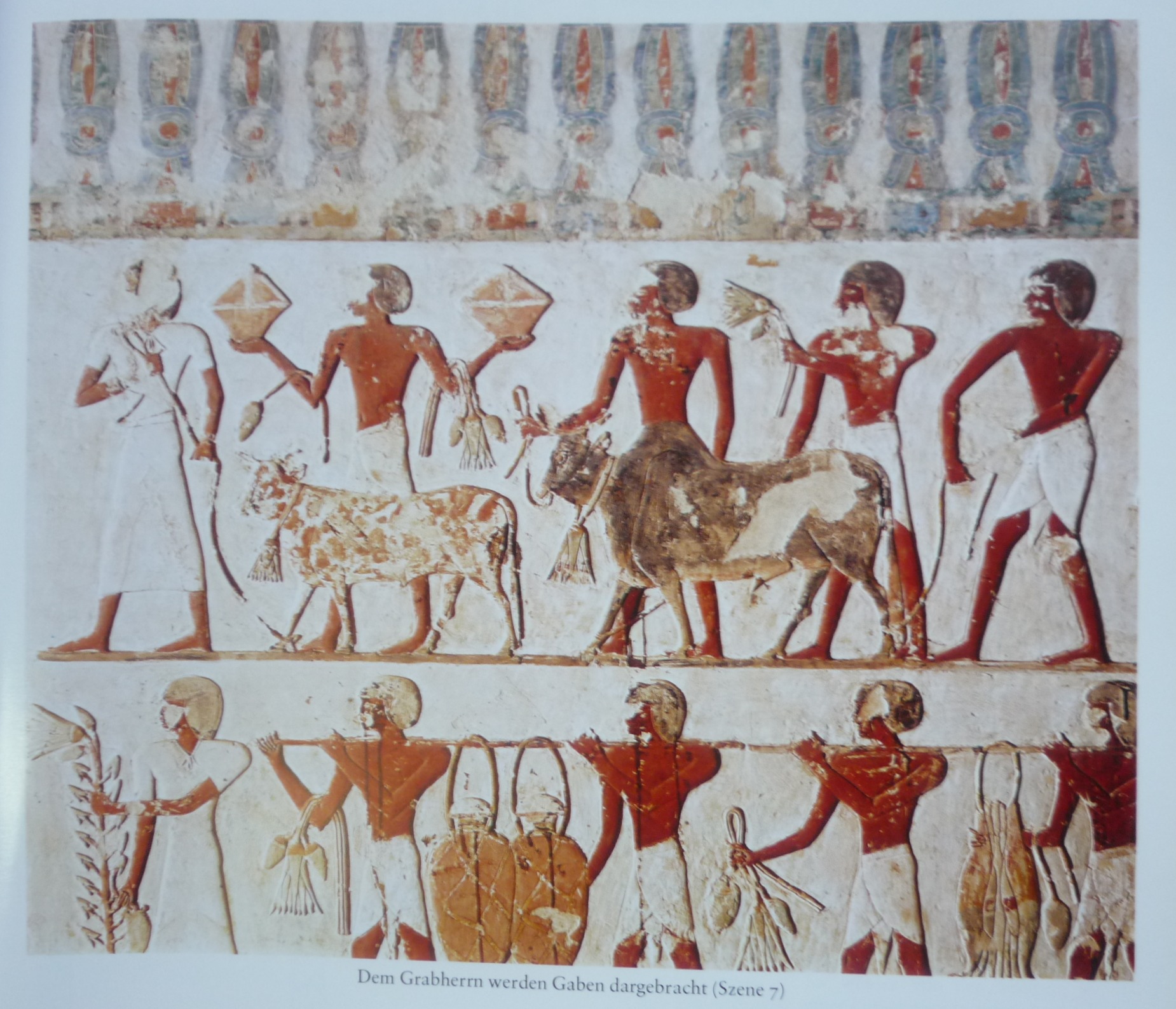
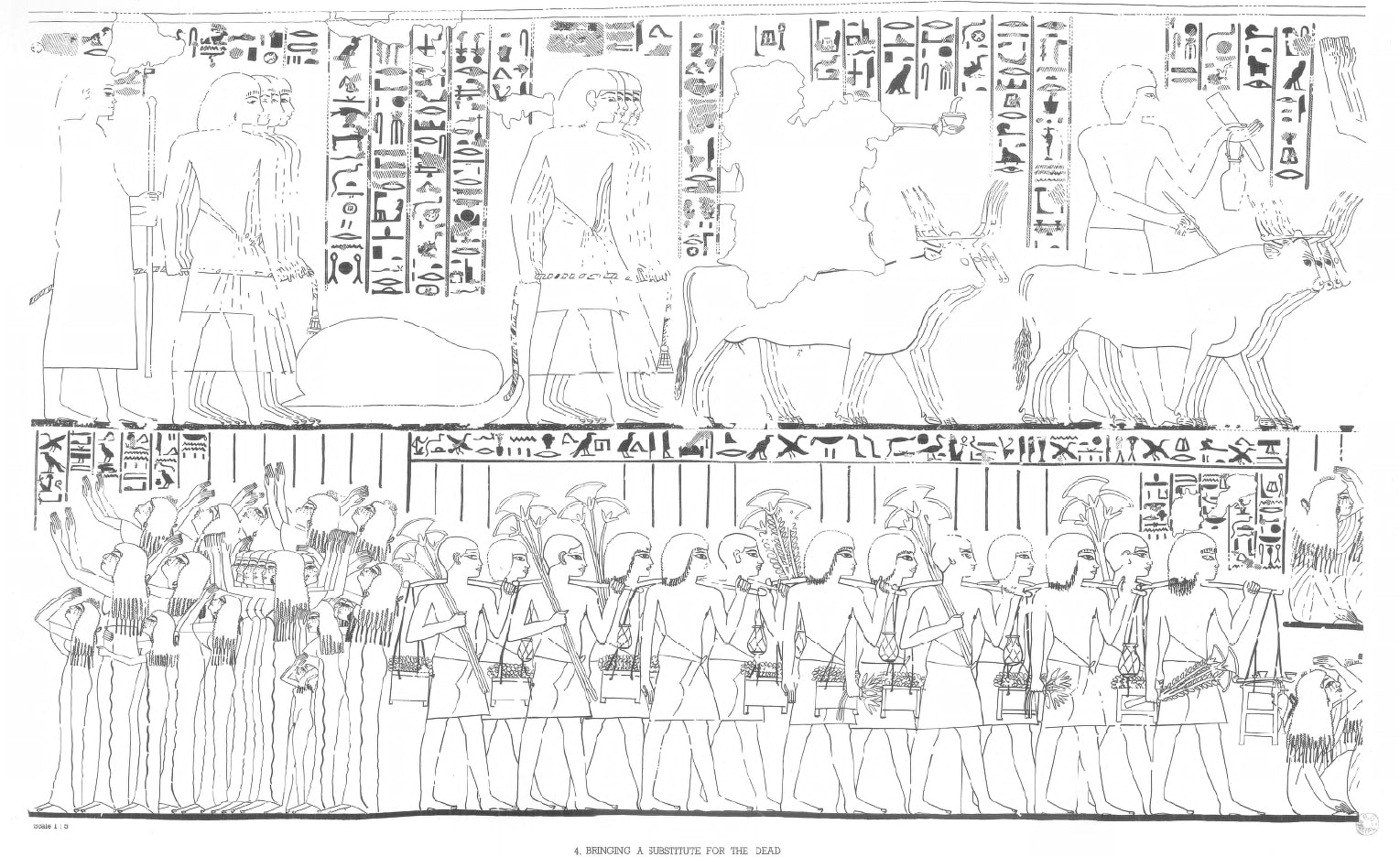
Scenes from everyday life are often found in the tombs of dignitaries. However, they were not intended to be viewed by visitors, but served to depict various aspects of the deceased’s life: duties related to their office, leisure activities (hunting, banquets), or their wealth and subjects. The exact function of these scenes is unknown, but it probably lies somewhere between a kind of pictorial “autobiography” and ensuring that the deceased would have the same life in the afterlife as he had before his death. The ancient Egyptians believed that images were as real as what they depicted. They therefore used them as convenient substitutes for reality.
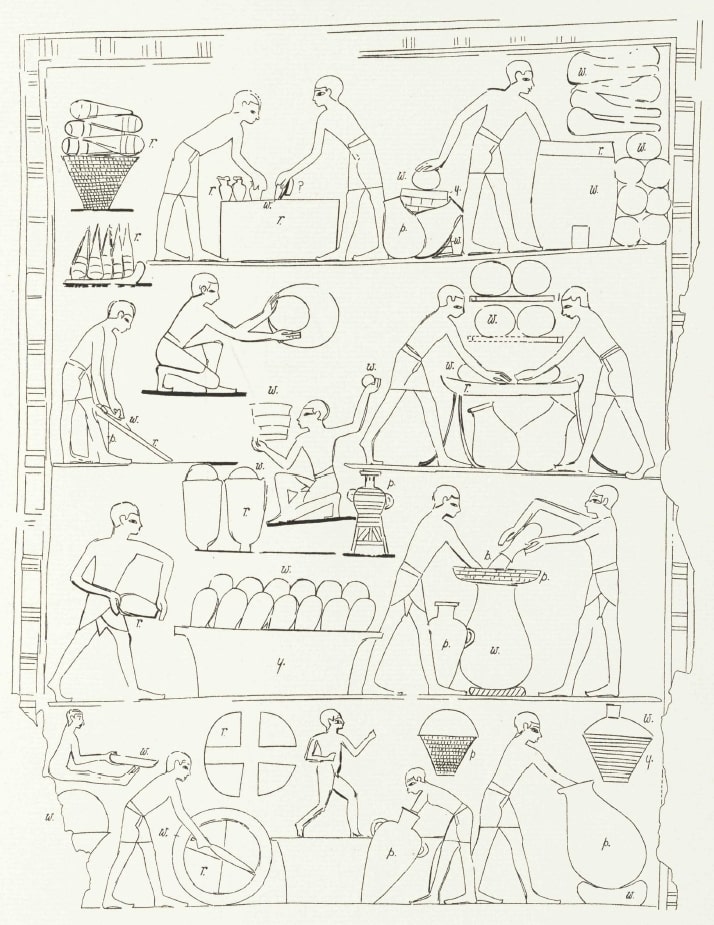
Ceramic vessels are shown primarily in scenes related to food: its production, transport, processing, and consumption. Sometimes, depictions of crafts also include vessels used as containers for various raw and semi-raw materials. Often, the scenes are also accompanied by inscriptions. These may be descriptions of the activities depicted or statements by various characters, placed above them in a manner reminiscent of a comic strip. This makes the tomb reliefs even more vivid and gives us an insight into the way of thinking of the ancient Egyptians.
In the beginning there was the plant
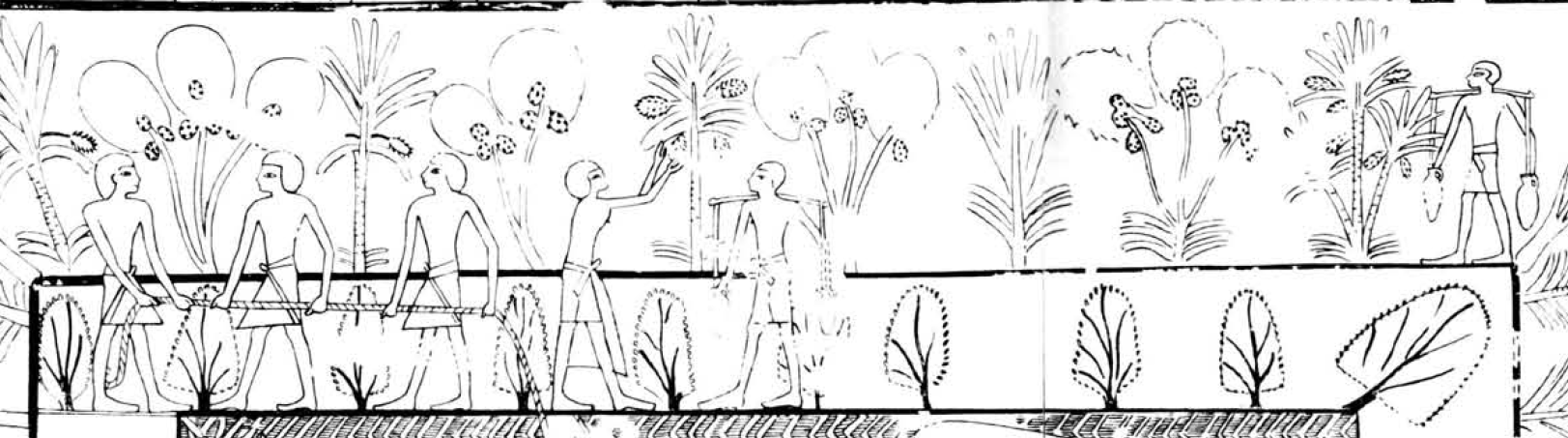
Watering plants from which food is obtained is an essential stage of horticulture. What could be more suitable for carrying water than ceramic jars? In ancient Egypt, such medium-sized vessels were carried in pairs, suspended from a yoke placed across the shoulders.
An example of garden irrigation can be found, among others, in the tomb of the vizier Rekhmire, who held office under the pharaohs Thutmose III and Amenhotep II (c. 1479–1400 BCE). Gardeners carry elongated jars with small handles on yokes in order to supply water to the lush vegetation of their master’s garden.
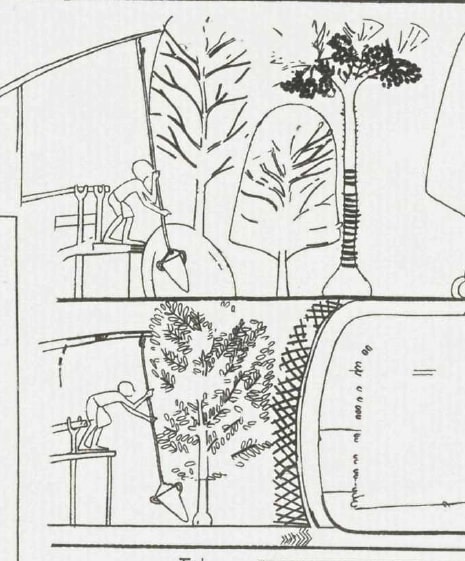
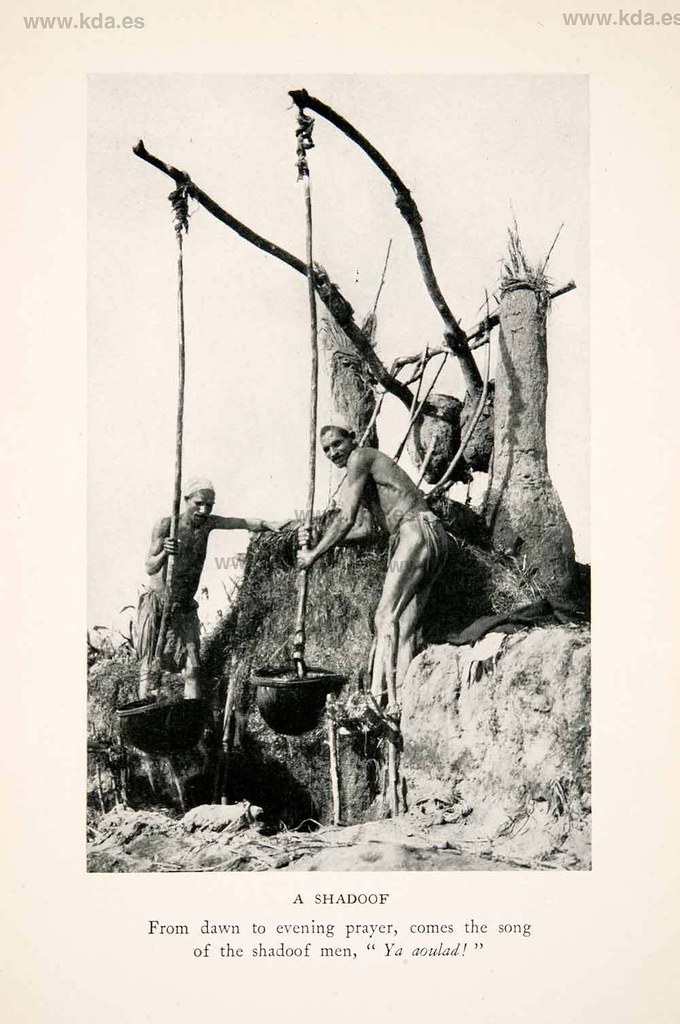
In the tomb of Neferhotep, the Overseer of the Cattle of Amun (that is, cattle belonging to the temple of Amun), who lived during the reign of Pharaoh Ay (c. 1327–1323 BCE), the act of drawing water prior to irrigation is depicted. Gardeners use a type of water-lifting device that is still employed in Egypt today, known in Arabic as the shaduf. The device consists of a long pole set on a support, with a counterweight on one end and a water vessel suspended from the other. In this representation, the vessel used for drawing water is a jar with two handles, probably identical to the amphorae used for transporting wine and other goods.
In vino veritas
Unlike the ubiquitous beer, wine was a drink reserved for the wealthy. The fruits used to make it required more careful attention and larger amounts of water than the cereals that formed the basis of bread and beer.
Freshly harvested grapes were stomped with the feet in large vats, and the remaining pulp was further pressed from twisted cloth bags. The resulting juice was poured into amphorae, which were sealed with clay. Small holes were sometimes left in these clay stoppers to allow gases produced during fermentation to escape.
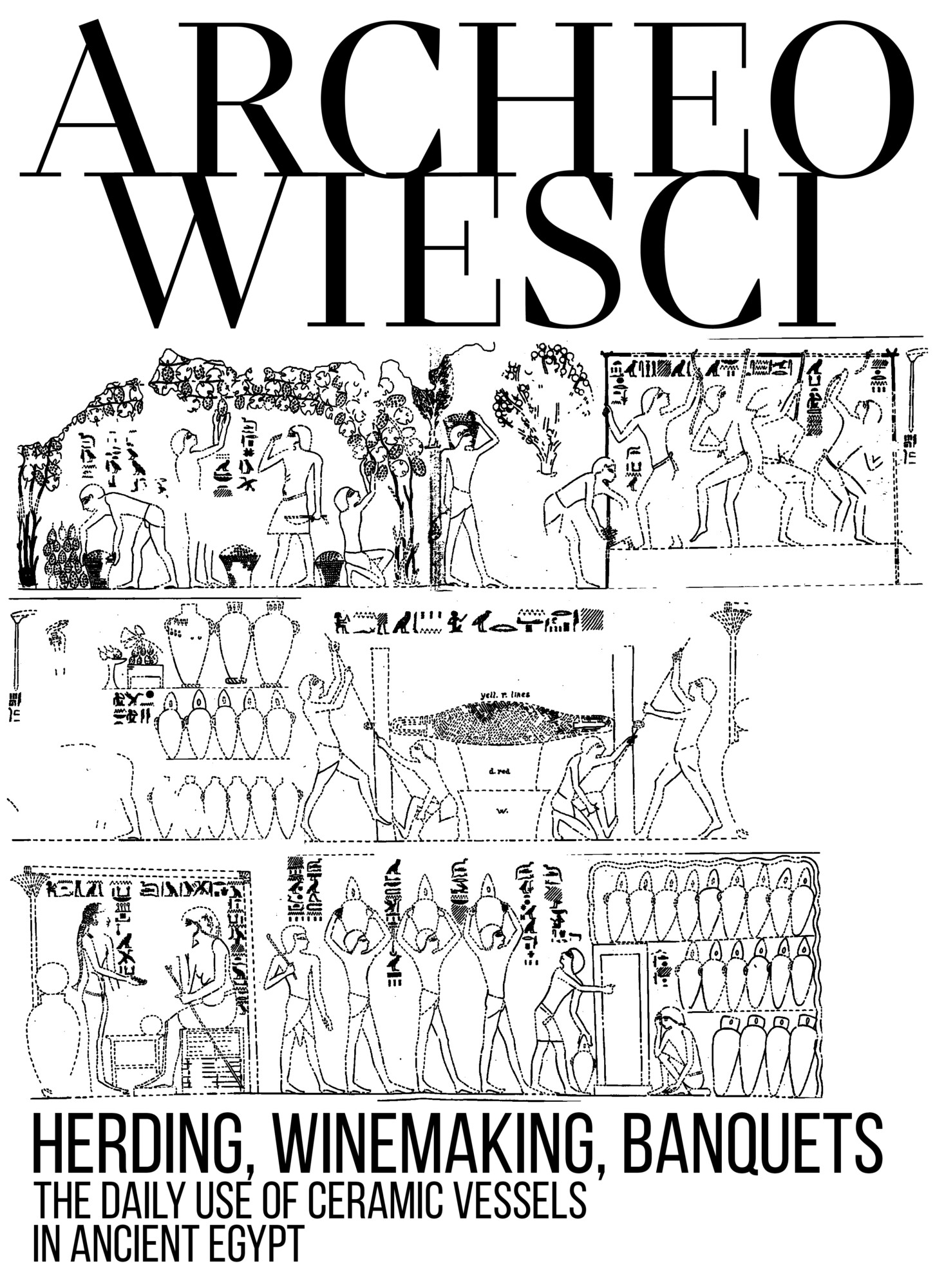
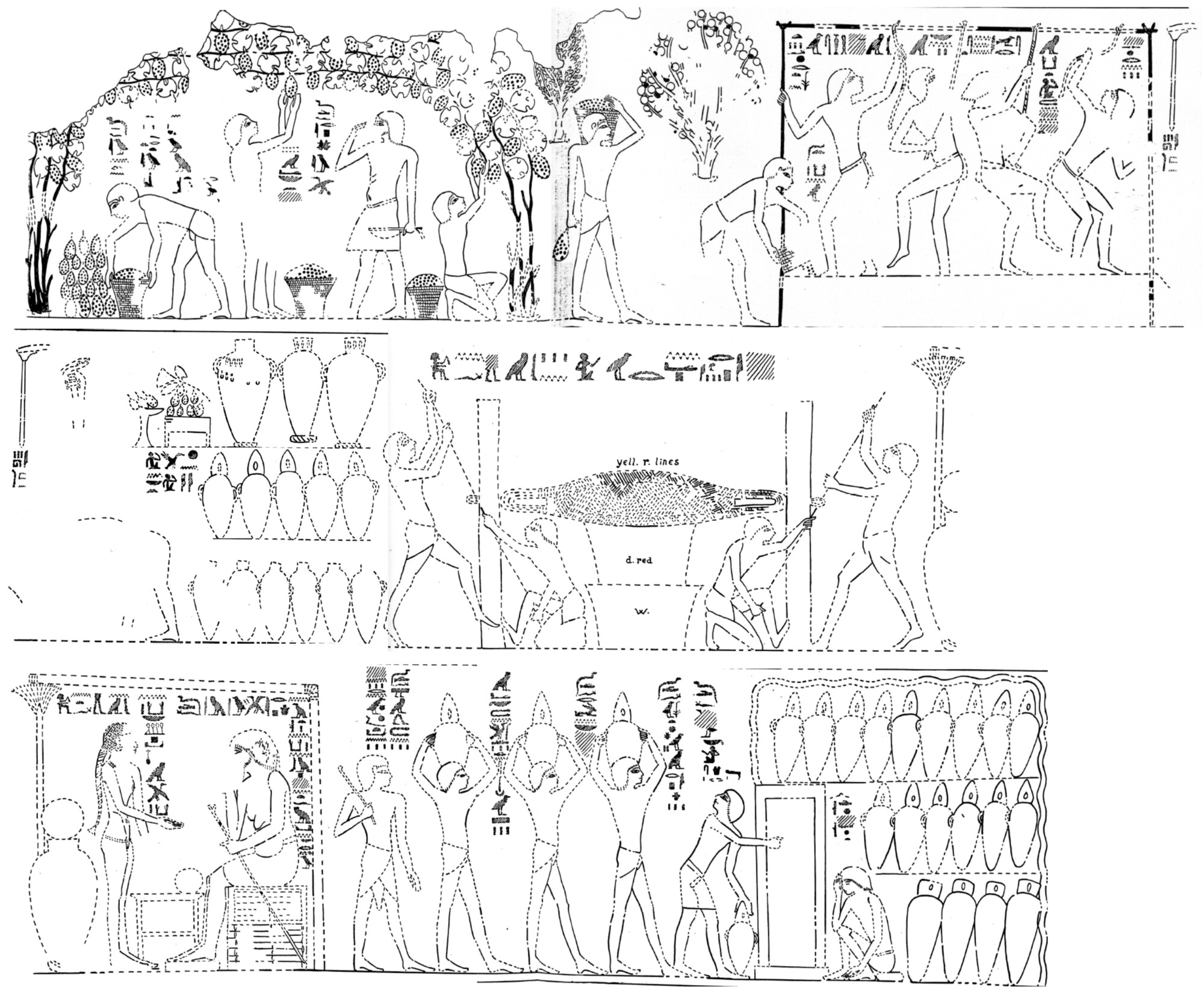
Scenes of wine production in New Kingdom tombs can be very elaborate. In the tomb of the Great Herald Intef (reigns of Hatshepsut and Thutmose III, c. 1479–1425 BCE), almost every stage of production is depicted—from left to right—including tasting and transporting sealed jars to storage. The scenes are even accompanied by the words of participants, which makes them particularly lively.
The first task, of course, is the grape harvest. A supervisor stands among the workers (with whip in hand!). His words are unfortunately illegible, but it is clear he is urging his subordinates to work faster. The grapes are then carried in baskets and thrown into the vats. The workers stomping the grapes stand on suspended ropes and sing a song to the goddess Ernutet, protector of the harvest:
“Song for our Lady Ernutet: ‘O, let her remain with us in our work! … Let our lord [Intef] drink it [wine] as one who is highly praised by the king.’ Said for the ka of Herald Intef.”
(The Egyptian concept of ka can be loosely translated as “soul.”)
A small shrine to the goddess stands immediately to the right of the vat, though it is almost entirely faded. Below it is an equally faded figure collecting the fresh juice flowing from the vat. Further along are rows of amphorae (some already sealed) and the pressing of remaining juice from the pulp. A cloth is suspended between columns, pouring red liquid into a wide vessel, with an inscription above describing the scene.
Next is the supervisor tasting the wine, presented to him by a servant:
“For your ka! Accept this good thing along with the ka of Herald Intef!”
(or roughly: “Cheers! Drink this for Intef’s health!”).
The supervisor responds:
“How sweet is this wine of the workers! For the ka of Herald Intef, as a gift for you from Ernutet (?)”.
The final stage of the process is carrying the sealed jars to the heavily guarded storehouse. Here again, the supervisor urges the workers:
“Hurry, or we will be burned [by the sun?].”
One of the porters complains:
“Oh, but the quantities [of wine] are heavy!”
and another, knocking in vain on the storehouse door, says:
“The servant sleeps,”
to which his companion replies:
“He is drunk on wine.”
The guard protests:
“I am not sleeping at all!”
In the tomb of the aforementioned vizier Rekhmire, only the main stages of wine production are depicted: harvesting the grapes, stomping them, and pouring the juice into jars. The scenes are almost identical to those in the tomb of Intef, but they are not accompanied by any inscriptions.

And in crafts…?
Finally, ceramic vessels were also used as containers in various crafts. Once again, the rich tomb of Vizier Rekhmire provides most of these scenes.
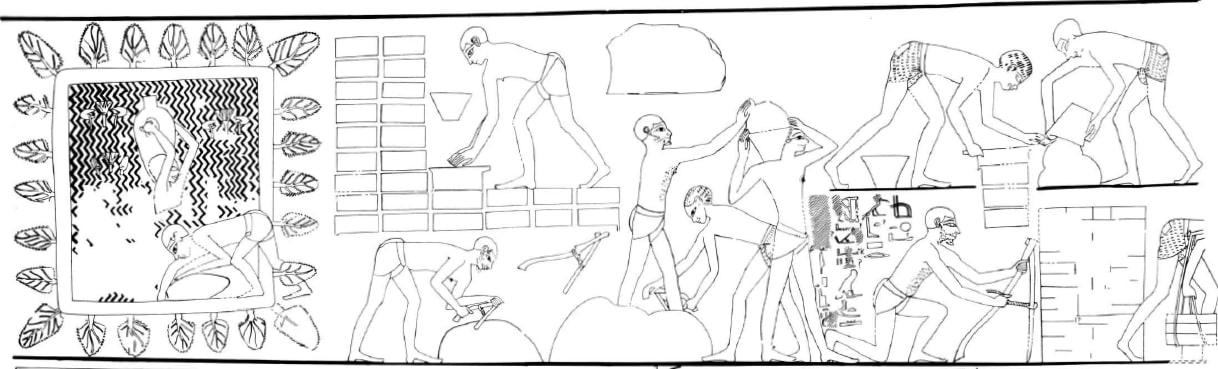
The amphorae we are already familiar with large jars with two handles after transporting valuable substances such as wine, resin, or honey, were also used for drawing water, for example in the production of mud bricks.
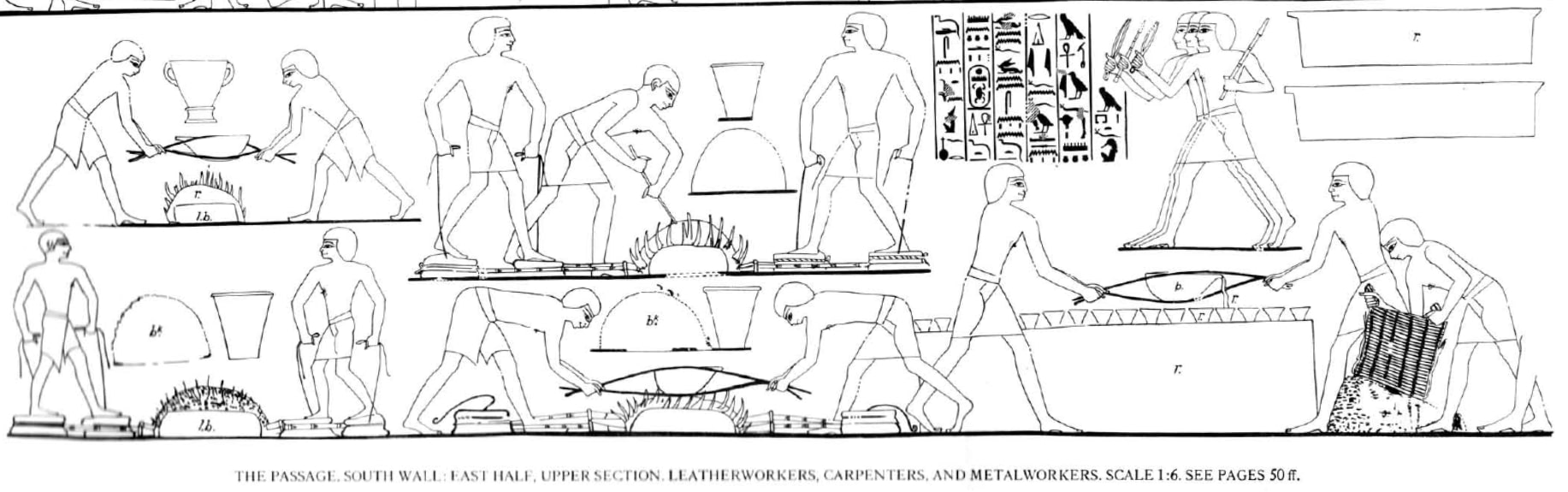
Metal smelting required containers resistant to high temperatures. For this purpose, ceramics worked exceptionally well. However, vessels previously used for other products were not repurposed; instead, crucibles and molds were made in shapes specifically designed for metallurgy. These particular vessels are not depicted in any other known representations.
A final word
The rich and varied scenes found on the walls of dignitaries’ tombs provide an almost direct glimpse into the daily life of ancient times. Thanks to this, archaeologists can better understand the purposes of sometimes enigmatic objects uncovered during excavations.
Unsurprisingly, ceramic vessels served a wide range of functions in various human activities, primarily those related to food. Durable ceramic containers were often reused multiple times, not necessarily only for their original purpose. Amphorae stand out as an ideal example of such “recycling.” High-quality, hard, and watertight jars, after fulfilling their role in transporting valuable substances, were used for drawing and carrying water, storing food in households, and ultimately… even as a coffin for a small child!
Bibliography
Bard, K.A. (1999), Encyclopedia of the Archaeology of Ancient Egypt, London-New York.
Davies, N. (1930). The Tomb of Kenamun at Thebes.
Davies, N. (1933). The Tomb of Neferhotep at Thebes.
Davies, N. (1943). The Tomb of Rekh-mi-Re’ at Thebes.
Davies, N., Burton, H., Peet, T. E. (1941). The tomb of the vizier Ramose.
Guksch, H. (1982). Das Grab des Benja, gen. Paheqamen, Theben Nr. 343. Nachtrag zur Publikation des Grabes, Archäologische Veröffentlichungen 7. Mitteilungen des Deutschen Archäologischen Instituts, Abteilung Kairo, 38, 195-199.
Paice, P. (1989). The Pottery of Daily Life in Ancient Egypt, The Journal of the Society for the Study of Egyptian Antiquities, XIX, 50-83.
Säve-Söderbergh, T. (1957). Four eighteenth dynasty tombs.
Shaw, I., Nicholson, P. (1995). The British Museum Dictionary of Ancient Egypt.
Tylor, J.J., Griffith, F. LL. (1894). The Tomb of Paheri at El-Kab.
Author: Ania Weźranowska – archaeologist and ceramologist specializing in Egyptian ceramics, particularly of the New Kingdom period. Participant in archaeological expeditions in Egypt (Tell el-Retaba and Deir el-Bahari) and PhD candidate at the Faculty of Archaeology, University of Warsaw.
Edited by: J.C.
Translation: A.B.
This text was produced with funding from the project “Campaign Promoting Research of the Faculty of Archaeology, University of Warsaw in the Nile Valley” under the Excellence Initiative – Research University program.