The domestication of the horse had a significant impact on ancient human societies. Previous contributions published by Archeowieści have explored various aspects of these animals and their role in cultural development. The present article, based on a recent study by Zainab A. Albshir (University of Warsaw), examines the identification of equids in the iconography of ancient Mesopotamia, with particular attention to the challenges of distinguishing horses from other equid species.
Sumerians are known as the founders of the urban civilization that dominated in southern Mesopotamia in the 4th and 3rd millennia BC. They developed a network of irrigation channels that made it possible to cultivate cereals in desert areas of the Lower Euphrates, introduced an ideographic script, initially pictographic and then simplified to the form of cuneiform characters impressed in wet clay, built the biggest cities in the world at that time, with monumental temples and enormous palaces.
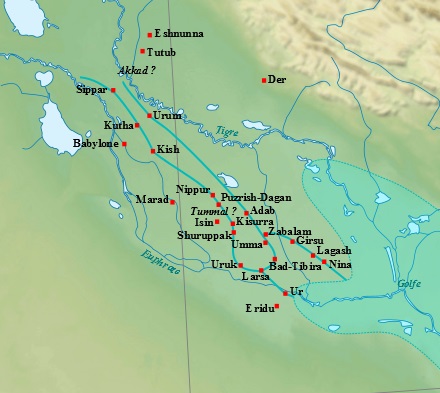
The most important cities of Mesopotamia in the late 3rd millennium BC. Sumer stretches from Erid to Nippur, the region between Kish and Sippar was occupied by Akkadians, then in the 2nd millennium it was the core of the Babylonian state. The map shows the range of the Persian Gulf in the late 3rd and early 2nd millennium BC Near_East_topographic_map-blank.svg: Sémhur(published under CC BY-SA 3.0, via Wikimedia Commons)