Author: Iga Ćwiklińska
The cosmovision of many pre-Columbian cultures in the Andes was rooted in the observation of astronomical phenomena. These observations helped structure the rhythm of the year, organize ritual calendars, and interpret the relationships between people, nature, and the cosmos. This knowledge was reflected both in the orientation of ceremonial architecture and in the imagery created by ancient communities.
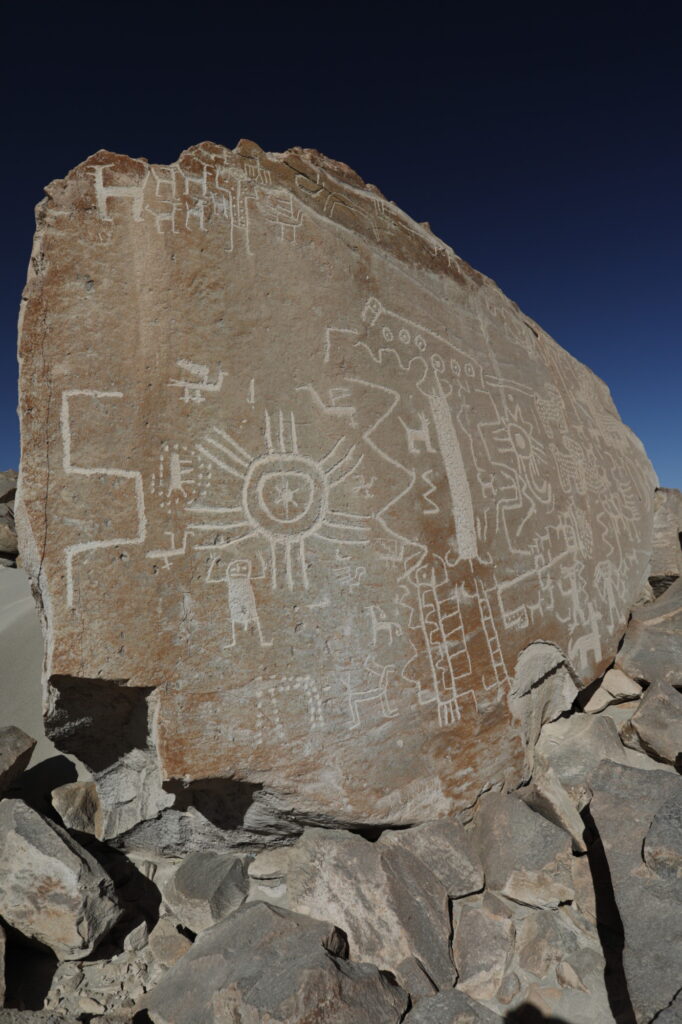
One place where such ideas may have been preserved in the form of rock art is Toro Muerto, a major archaeological site on the southern coast of Peru. An analysis of the iconography of boulder TM 2498 in Sector X suggests that its complex composition of engravings may have been linked to astronomical observations carried out at this location.
© PIA-TM Archives, licensed under CC BY-NC-ND 4.0.
The Cosmovision of Pre-Columbian Andean Communities
Cosmovision is a way of understanding the structure of the world and the relationships between human beings, nature, and cosmic phenomena. In the Central Andes, observations of the cycles of the Sun, Moon, and stars had both practical and symbolic importance. They helped mark the rhythm of the year and track changes in the natural environment, while also forming part of a broader order that regulated social life and ritual time.
Knowledge derived from observing celestial bodies was reflected not only in the orientation of sacred architecture, for example in Inca culture, but also in the iconography of certain archaeological sites. Toro Muerto may be one of them.
Sector X: A Distinctive Part of Toro Muerto
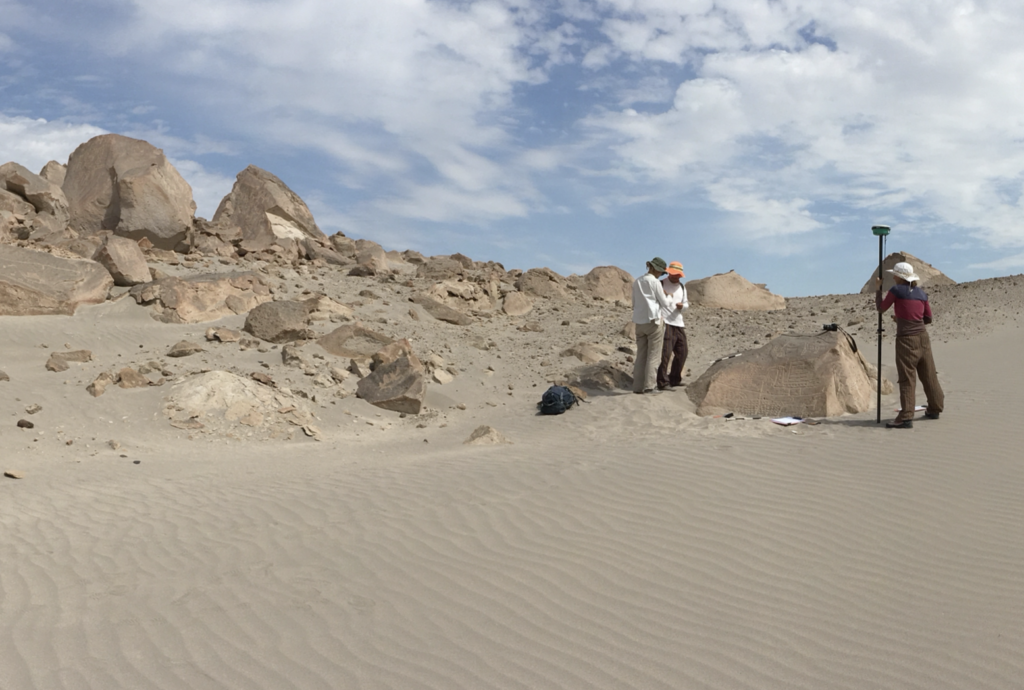
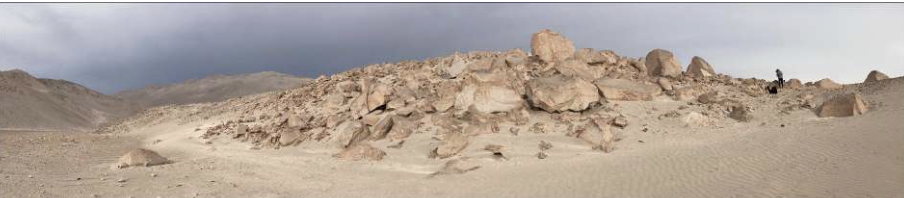
Toro Muerto is a vast ceremonial site where nearly 2,600 rock boulders decorated with petroglyphs have been identified. These carvings include geometric, zoomorphic, and anthropomorphic motifs. One particularly intriguing part of the site is the so-called Sector X, a relatively small area that stands out in several important ways.
Between 2017 and 2018, nearly 100 decorated boulders were documented there. Analysis of this group led researchers to propose that Sector X may have been used for astronomical observations. If so, an important question follows: does the iconography of this area also preserve traces of that knowledge?
© PIA-TM Archives, licensed under CC BY-NC-ND 4.0.
The Iconography of the Western Panel of TM 2498
The largest boulder in the entire Sector X complex is the centrally located, multi-ton block TM 2498. Its western face, measuring several square meters, is densely covered with carved images.
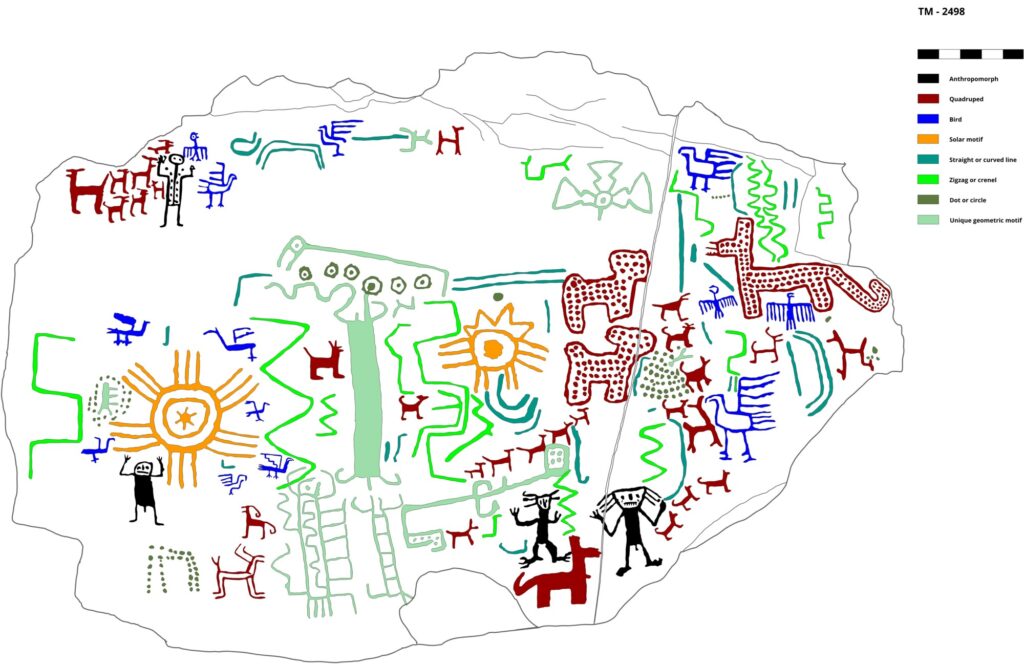
The composition is organized around a clear vertical axis marked by a large geometric motif placed at the center of the panel. On either side of it are two radiating circles, which appear to be among the most important elements of the entire composition. These have been tentatively interpreted as representations of the Sun in two extreme positions of its annual cycle, namely the winter and summer solstices.
Around them are other elements: semicircular geometric motifs, clusters of dots, and representations of birds, quadrupeds, and anthropomorphic figures with raised arms.
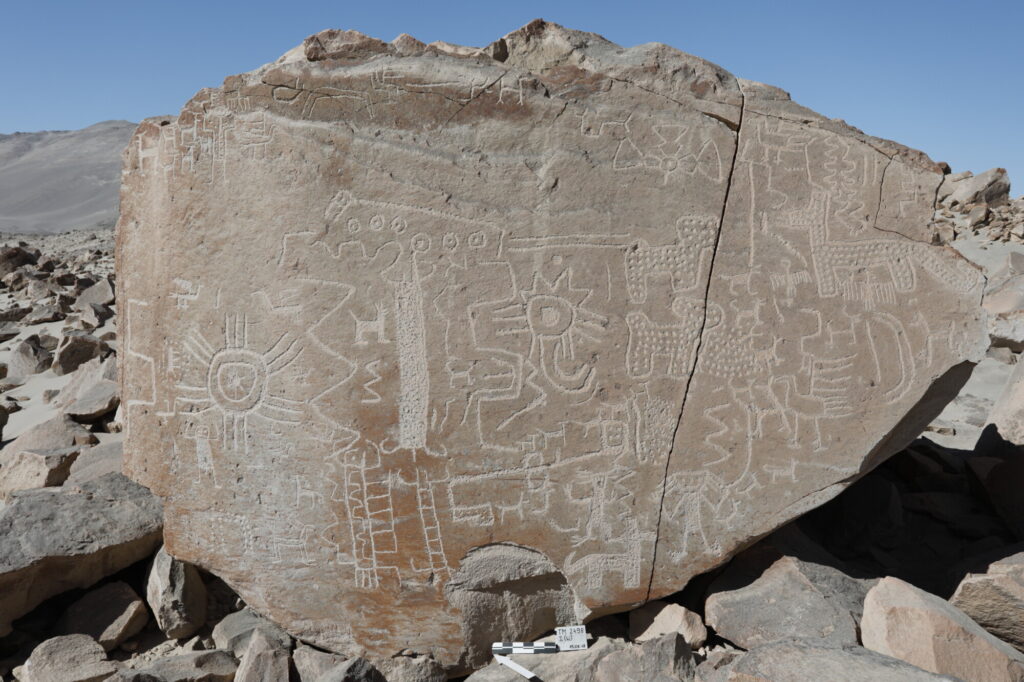
In searching for the meaning of this complex image, researchers must rely on comparative material. The creators of the Toro Muerto petroglyphs left no written records, so interpretation depends primarily on iconographic analysis and archaeological knowledge about Andean conceptions of the cosmos.
Comparison with Moche Iconography
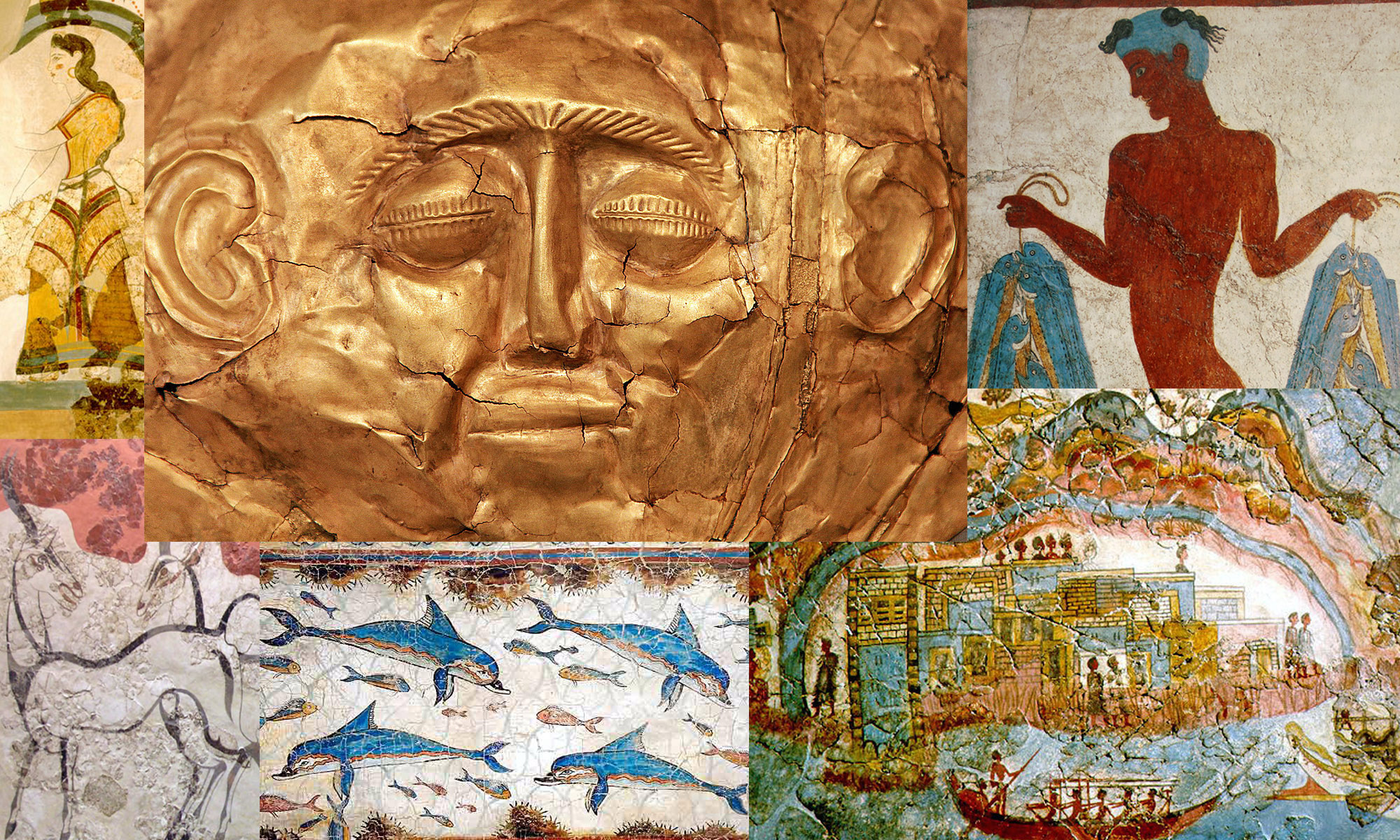
There are not many iconographic parallels that can be invoked here. One of the most compelling points of comparison comes from the murals of the Moche culture, which flourished on the northern coast of Peru between the 1st and 8th centuries CE.
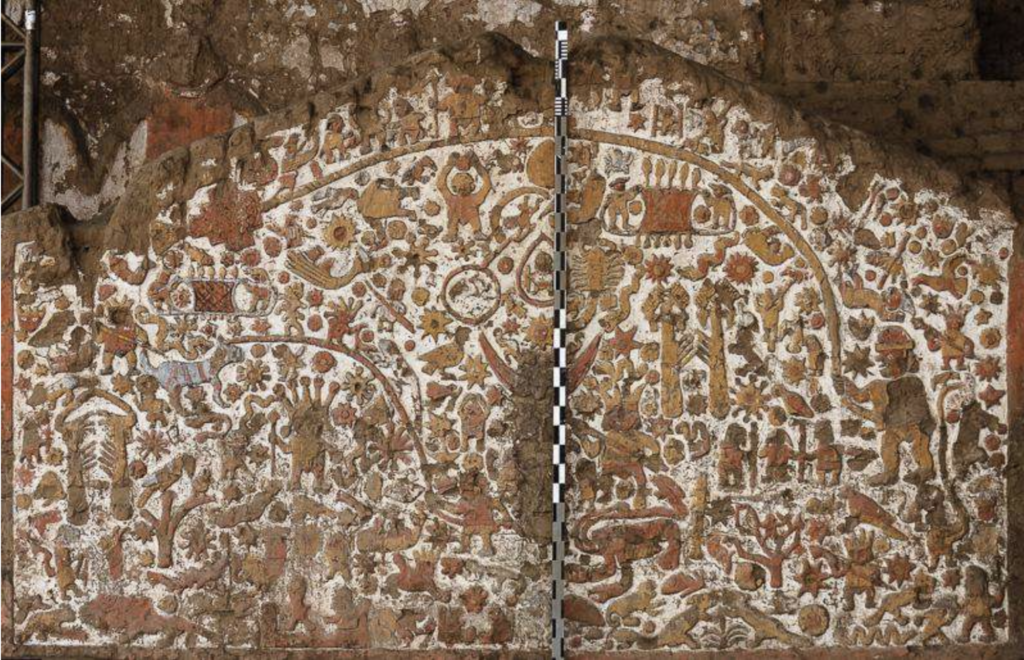
The reliefs from the temple complex of Huaca de la Luna are among the best-known visual representations of cosmovision in the Andes. Although the Moche centers were located several hundred kilometers north of Toro Muerto, the spread of their visual traditions along the Peruvian coast, together with the relatively similar chronology, makes them a useful comparative reference.
These murals present complex compositions with astral motifs, human figures, and animals arranged around central symbols. They are interpreted as visual representations of a cosmic order linking astronomical phenomena with natural cycles and with the rituals shaped by them.
Similar combinations of motifs, arranged in a broadly comparable way, can also be seen in the iconography of the western panel of TM 2498. Although the petroglyph composition is far more schematic, these formal similarities may point to related cosmological concepts and comparable ways of representing astronomical phenomena and their impact on the surrounding world.
© PIA-TM Archives, licensed under CC BY-NC-ND 4.0.
How Can the TM 2498 Petroglyphs Be Interpreted?
The iconographic analysis of panel TM 2498 allows us to propose four possible interpretative directions. These do not exclude one another; rather, each highlights a different possible dimension of meaning.
The two radiating motifs, interpreted as solar symbols, may refer to observations of the solar cycle, perhaps to the solstices or equinoxes, which may have held special significance in the context of ceremonies performed here. From this perspective, the remaining elements of the composition, such as clusters of dots or semicircular geometric forms, could refer to other astronomical phenomena, for example lunar cycles.
At the same time, the presence of animals and geometric motifs may suggest an attempt to connect observed cosmic phenomena with changes in the natural environment and with seasonal cycles. In this sense, the petroglyphs may have had a calendrical function.
It is also possible that some of the motifs refer to visual representations of the sky. In many Andean cultures, constellations were interpreted as animal figures or mythical beings. If so, the petroglyphs may have functioned as a form of sky map.
Finally, the presence of anthropomorphic figures with raised arms near the solar symbols may suggest a connection between the panel and ritual practices accompanying astronomical observations. The iconography may have been not only part of ritual activity, but also a visual record of it.
A Petroglyph as a Record of Astronomical Knowledge
Although all of these interpretations remain hypothetical, the analysis of the iconography and the orientation of the panel suggests that the composition of TM 2498 was not accidental. Most likely, it formed part of a broader system of signs linked to astronomical observations carried out within Sector X.
Further research, including archaeoastronomical measurements and the analysis of other panels in this part of the site, may help us better understand the significance of this place and the role of rock art in transmitting knowledge about cosmic cycles in ancient Andean communities.
At the current stage of research, the meaning of petroglyph TM 2498 remains unresolved. Its complex composition nevertheless suggests that it may have played a key role in the function and symbolism of Sector X as a whole.
This article can be re-printed with photographs free of charge provided that the source is cited
Author
Iga Ćwiklińska, post prepared on the basis of BA, titled:
Bibliography
Aveni, A. 2003. Archaeoastronomy in the ancient Americas. Journal of Archaeological Research 11(2):149–191.
Franco Jordán, R. 2021. Moche: Iconografía y cosmovisión. Instituto Peruano de Estudios Arqueológicos; Institute of Andean Research, Lima.
Garrafa Sánchez, R. 2012. Representación monumental del cosmos en murales mochica: Iconografía y tradición. W Cosmos Moche. Colección Enigmas del Antiguo Perú (red. R. Ochoa Berreteaga), 23–78. Museo Andrés del Castillo, Lima.
Gonzales, L. 2018. Informe final del Proyecto de Investigación Arqueológica sin excavaciones en el sitio con arte rupestre de Toro Muerto – Arequipa. Museo de la Universidad Nacional de San Agustín, Arequipa.
Gonzales, L., i Wołoszyn, J. Z. 2021. Toro Muerto: Los nuevos aportes científicos desde el estudio arqueológico. W Toro Muerto: Rumbo a Patrimonio Mundial (red. J. Posso Sánchez), 129–149. Editorial Universidad Nacional San Agustín, Arequipa.
Malville, J. M. 2015. Pre-Inca astronomy in Peru. W Handbook of Archaeoastronomy and Ethnoastronomy (red. C. L. N. Ruggles), 795–806. Springer Science+Business Media, New York.
Uceda, S. 2001. Investigations at Huaca de la Luna, Moche Valley: An example of Moche religious architecture. W Moche: Art and Political Representation in Ancient Peru (red. J. Pillsbury), 47–61. Studies in the History of Art 63. National Gallery of Art, Washington, DC.
Uceda, S., Morales, R., i Mujica, E. 2016. Huaca de la Luna: Templos y Dioses Moches. Fundación Backus; World Monuments Fund Perú; Biblioteca Nacional del Perú; Gráfica Biblos, Lima.
Villanueva, J. P. 2024. Solsticios y equinoccios en los petroglifos del Sector X de Toro Muerto. Estudios preliminares.Debates da Associação Brasileira de Arte Rupestre. YouTube.
Wołoszyn, J. Z., Gonzales, L., i Rozwadowski, A. 2019. The petroglyphs of Toro Muerto: New documentation and discoveries at the largest South American rock art complex. Antiquity 93(372):e37, 1–8.
Wołoszyn, J. Z., Gonzales, L., Abraham, A., i Brondi, F. 2020. Virtualizando el patrimonio cultural rupestre: El caso del Sector „X” en Toro Muerto – Arequipa, Perú. Devenir 7(13):77–102.
Ziółkowski, M. 2020. The Moon and Planets Among the Incas and Other Pre-Hispanic Andean Peoples. Oxford Research Encyclopedia of Latin American History.