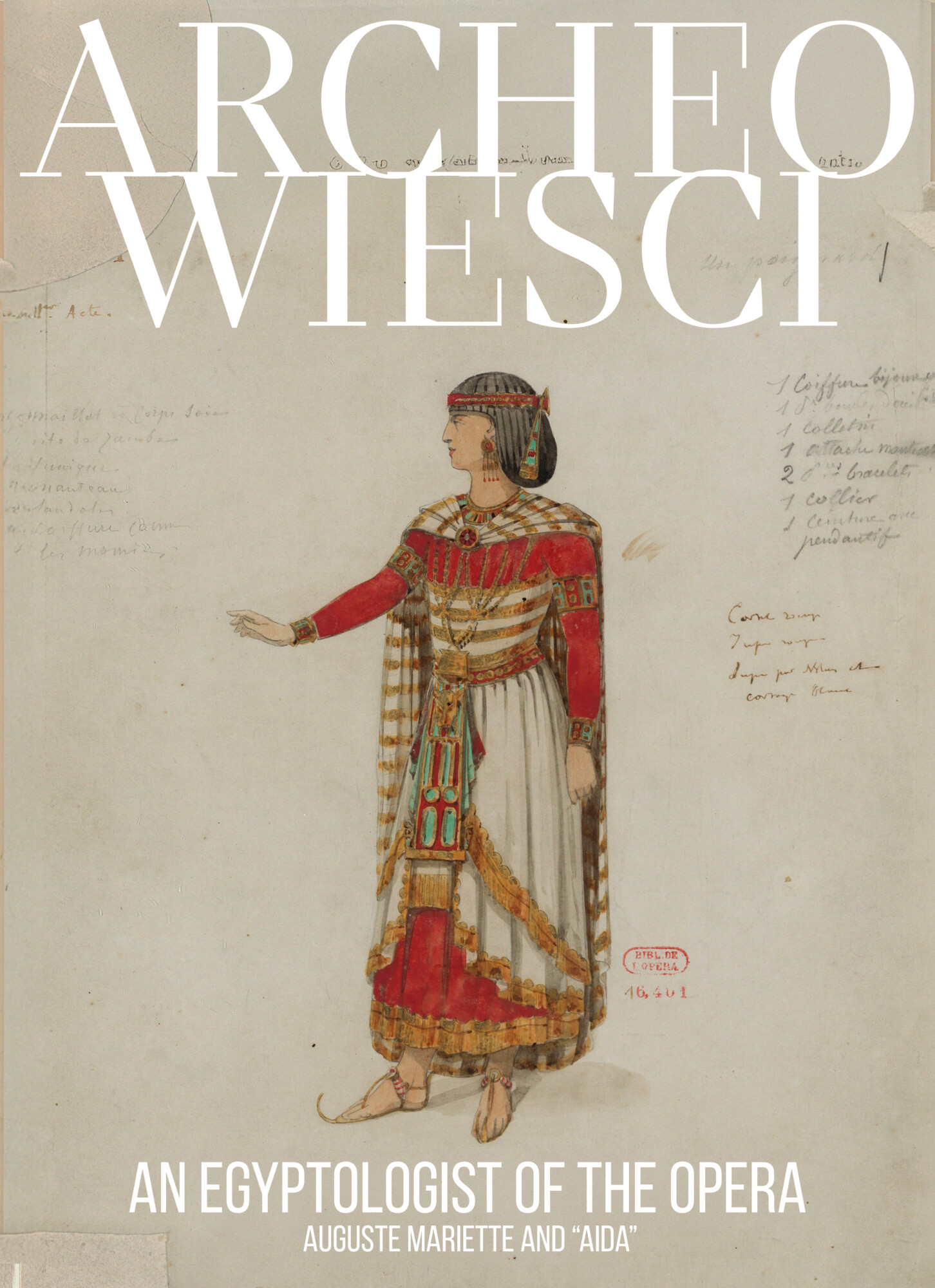
 Aida, often referred to as an “Egyptian opera,” became a classic almost immediately after its premiere in 1871. Initially, it was intended to grace the celebrations marking the opening of the Suez Canal, but ultimately this plan did not come to fruition – more than two years passed between the inauguration of the Canal and the first performance of Aida. Set in ancient Egypt, it continues to attract thousands of viewers, fascinated by the tragic story of the main character and the stunning music by Giuseppe Verdi. Few people know that the “archaeological” character of this opera was the work of a man whose name is now known to every enthusiast of ancient Egypt – the French Egyptologist Auguste Mariette (1821–1881).
Public Domain
The teacher from Boulogne
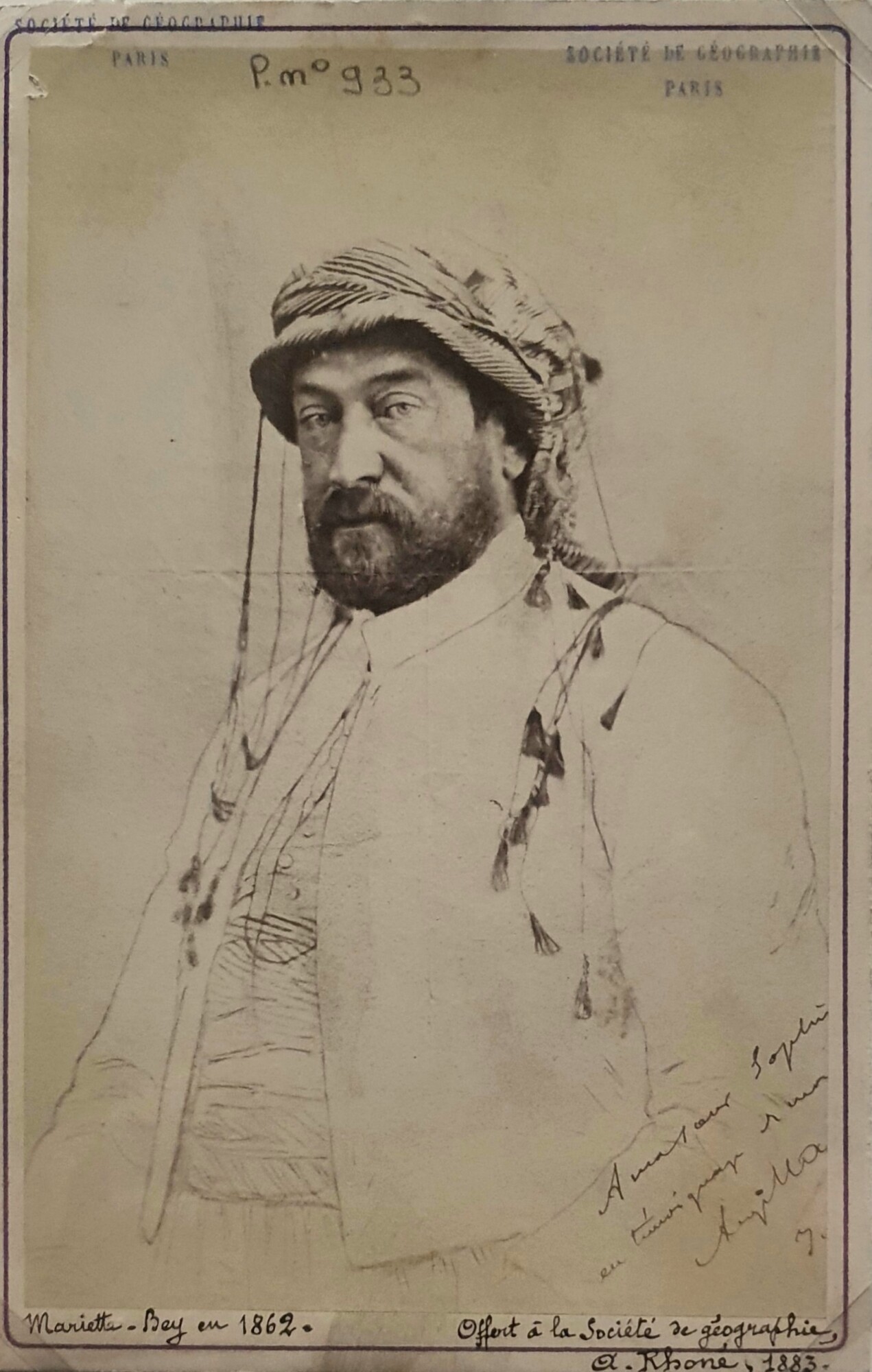
When Aida first appeared on the scenes, Mariette was only fifty years old, but he was already a true authority in the world of Egyptology. He began his adventure with Egyptian antiquities as a self-taught scholar, exploring the history and language of ancient Egypt without anyone’s help. He eventually left his teaching job in Boulogne to find employment at the Louvre in Paris. After a few years, he was sent to Egypt with the task of bringing back to France artifacts that could enrich the museum’s collection. However, once there, Mariette decided to spend the funds entrusted to him not on the purchase of antiques, but on excavations near the pyramids of Giza. Following the clues contained in the account of the ancient Greek traveler Strabo, he searched for the legendary Serapeum, the temple of the ancient capital of Egypt, Memphis.
Public Domain
It was a decision that could have had disastrous consequences, but luck was on Mariette’s side. The discovery of the Serapeum, and especially the crypts containing the mummified remains of bulls worshipped in Memphis, caused a real sensation. This marked the beginning of his extraordinary career, which culminated in the creation of two institutions that still exist today: the Egyptian Antiquities Service, established to protect Egypt’s monuments, and the Egyptian Museum in Cairo, which houses the largest collection of Egyptian artifacts in the world.
Over time, Mariette became a symbol of the era of romantic exploration in Egypt – an era of extraordinary amateur discoveries, from which explorers brought back to Europe chests filled with Egyptian monuments.
These times came to an end with the advent of the “scientific” era of Egyptology, with its rules and methodical approach to the material under study, as well as the regulation of the legal status of objects obtained during excavations. However, Mariette’s biography holds many surprises, and his contribution to “Aida” is one of them.
“In true Egyptian style”
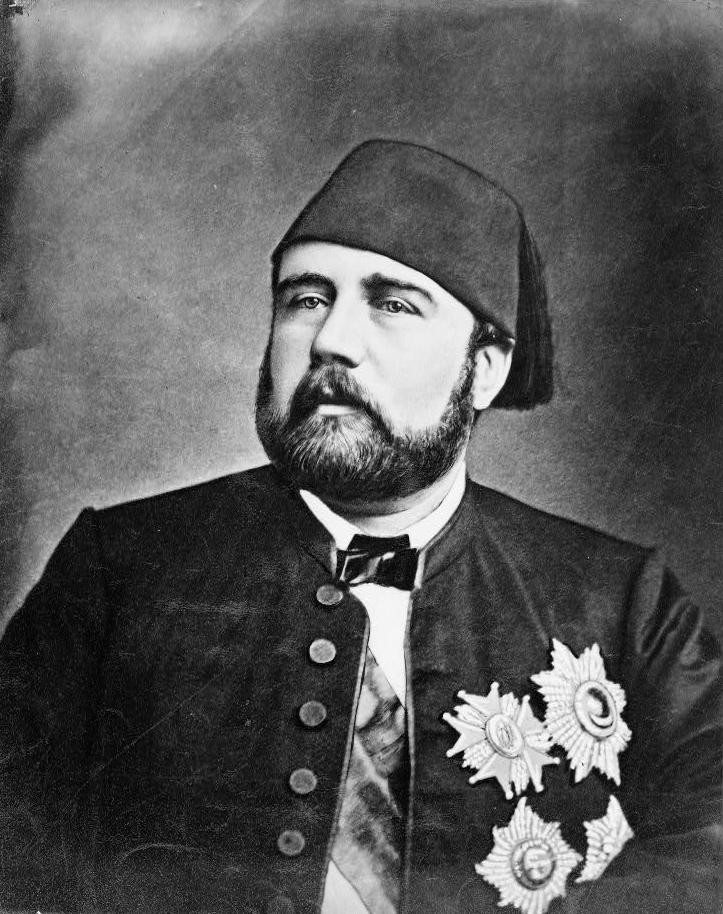
The opera was commissioned by Ismail Pasha (1830–1895), an ambitious and highly educated viceroy (kedyw) of Egypt. His desire was for the opera to reflect the realities of antiquity as faithfully as possible: hence the choice of Mariette, an eminent expert on ancient Egypt, as the person supervising the entire project.
“(…) it is His Highness’s wish that the opera be composed and performed in a truly Egyptian style. His Highness has ordered me to provide the composer and librettist with all the necessary information to ensure that the work has a local flavor,” wrote the Egyptologist in his letters.
Domena Publiczna
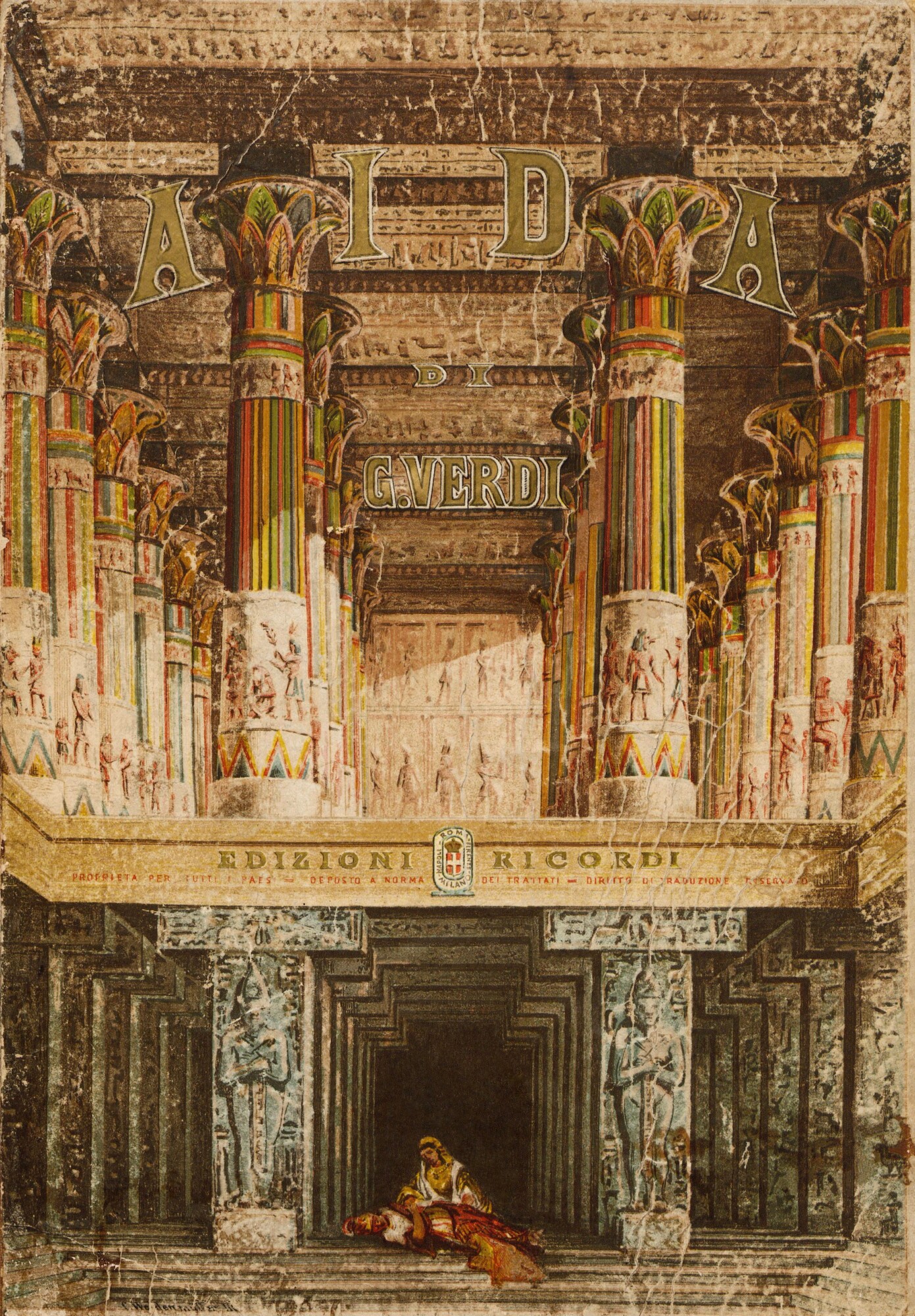
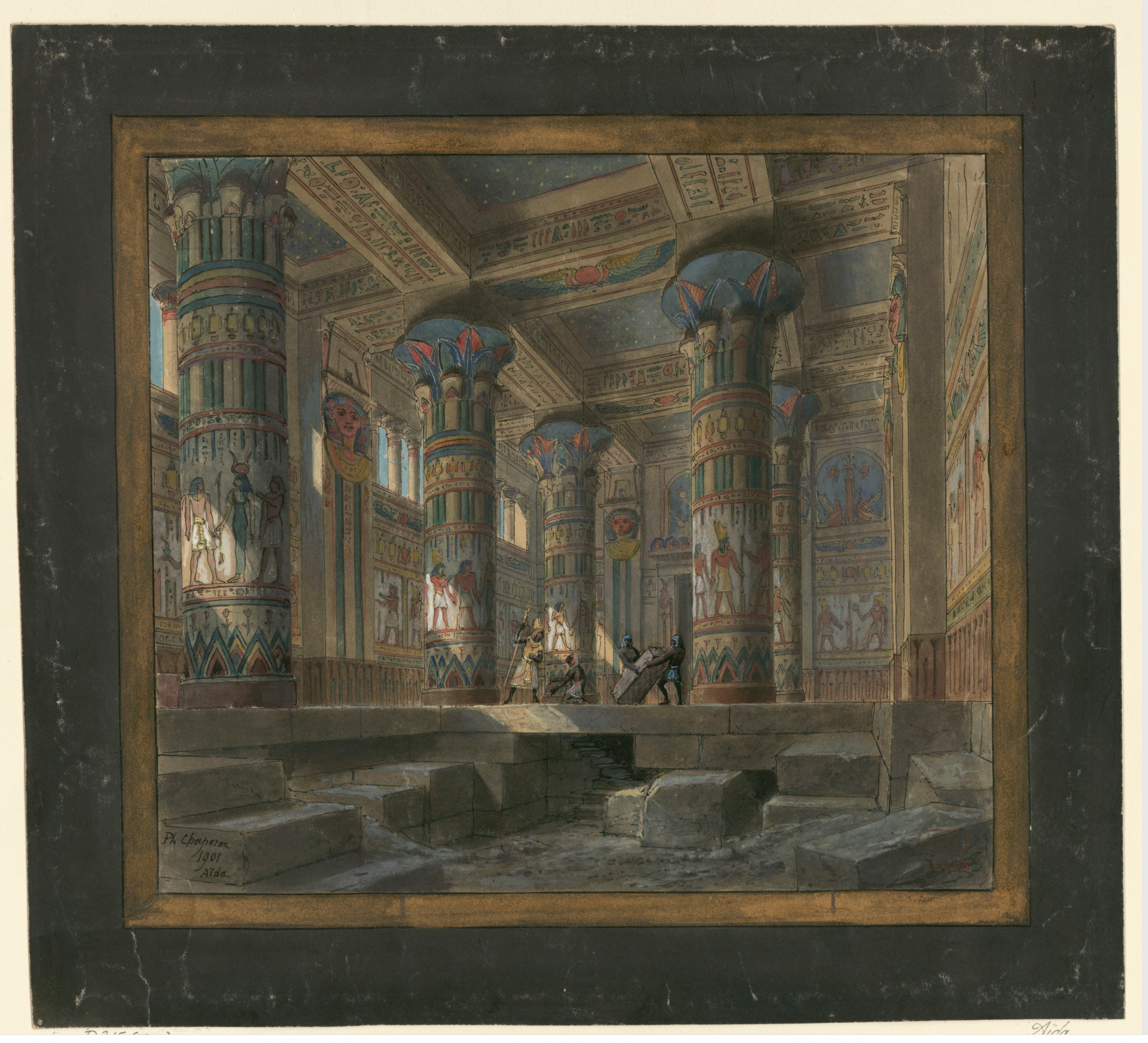
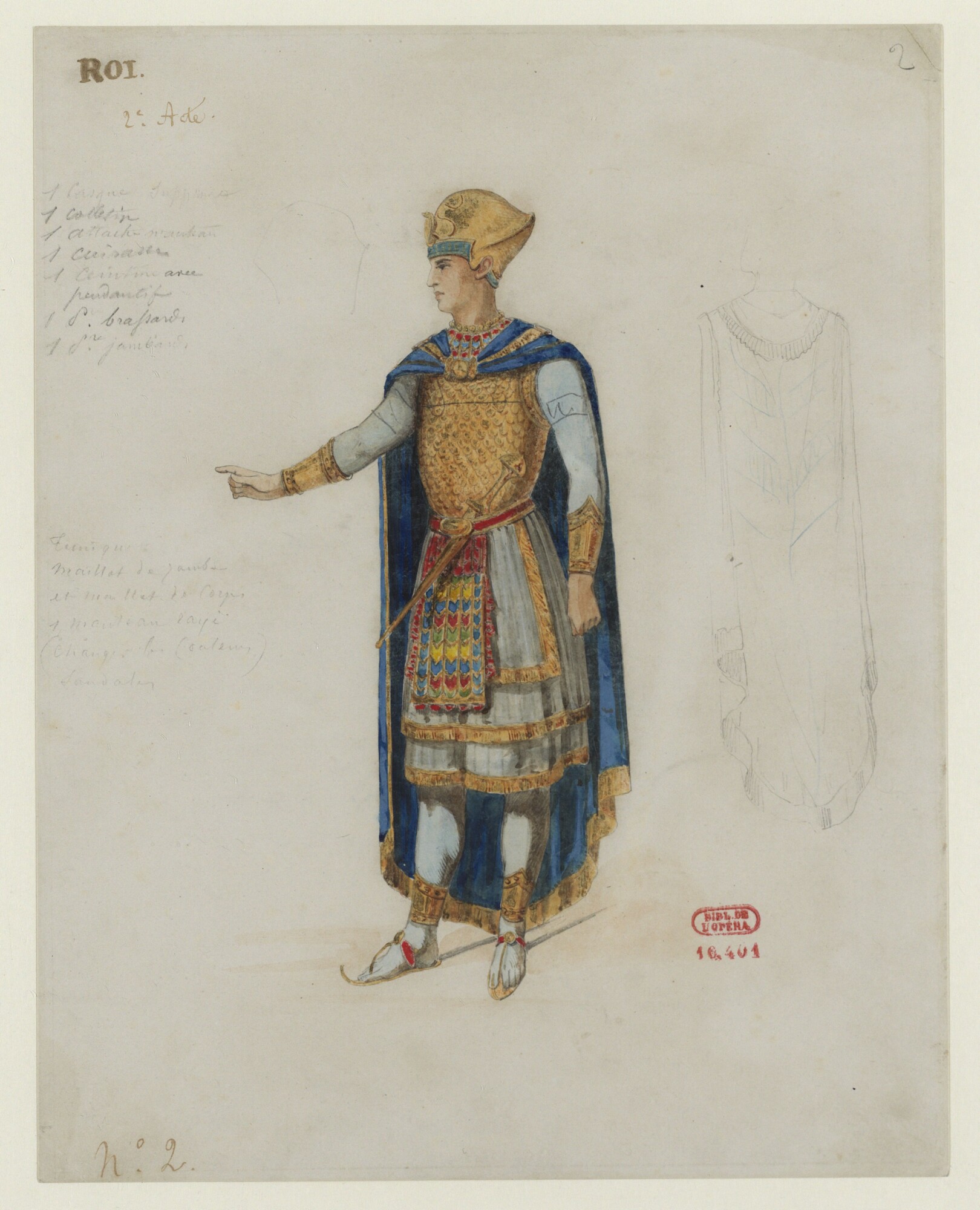
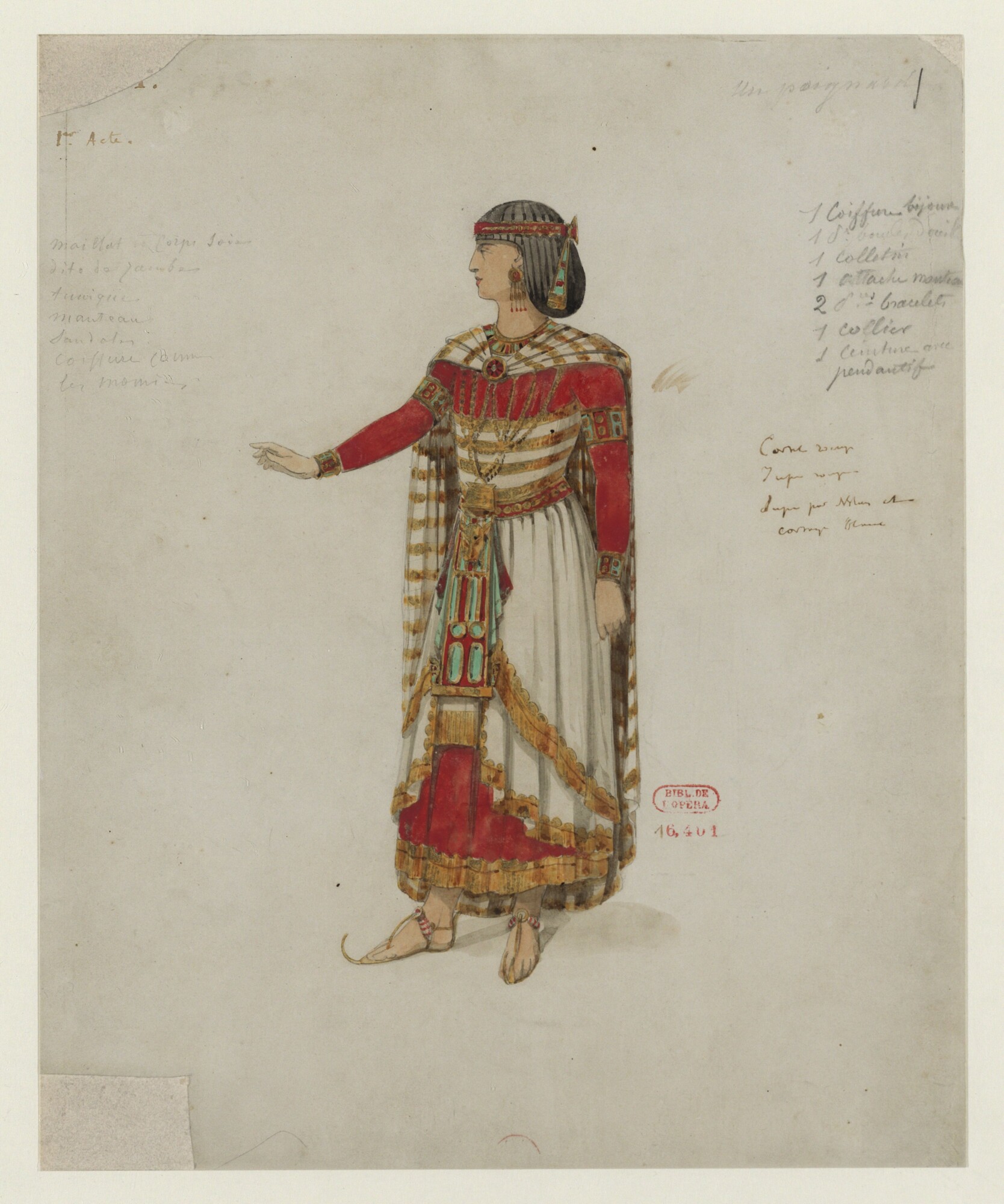
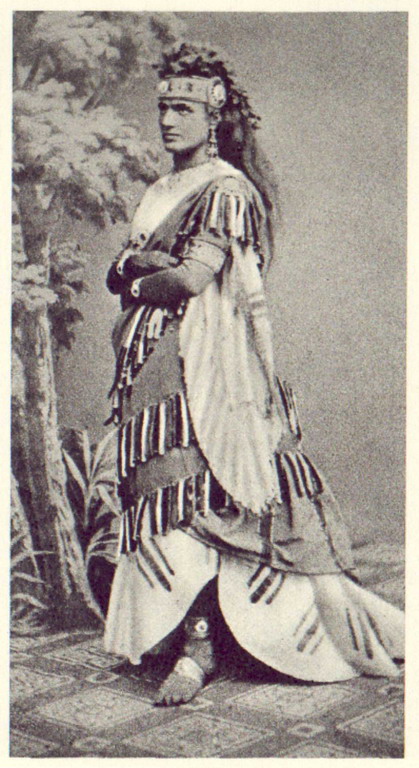
In order to provide the audience with the most authentic experience possible, Mariette spent six months in southern Egypt, where he meticulously made copies of monuments to serve as models for props and set design. Partly modeled on the underground chambers of temples in Upper Egypt, which later served as the setting for the tragic scene in Act IV was designed. Audiences in Cairo also had the opportunity to admire replicas of artifacts stored in the Egyptian Museum, of which Mariette became the first director. The Egyptologist personally supervised the smallest details of the visual layer, including advising the artists participating in the Cairo premiere on costumes.
Public Domain
Later set designers and costume designers did not always strictly adhere to Mariette’s rule: many researchers point out that watching “Aida” is a fascinating source of knowledge about the changing “fashion” for ancient Egypt among Western audiences. The raging Egyptomania meant that some viewers simply expected the creators to include specific symbols or objects associated with ancient Egypt. For example, in the 1970s, when America was captivated by an exhibition dedicated to the treasures of Tutankhamun’s tomb, viewers of Aida in New York could admire guards wearing replicas of the famous pharaoh’s golden mask on their heads.
Public Domain
However, Mariette’s greatest influence is evident in the script itself. Although the story told in Aida is fictional, many of its themes have their roots in real ancient texts and performances. Most likely, the idea for the plot of Aida, in its more or less concrete form, was born in Mariette’s mind during a trip to southern Egypt in 1866. At the time, he was gathering material for a story entitled The Bride of the Nile, although accounts of the circumstances of its creation differ. Interestingly, at least two other authors (including Mariette’s own brother) claimed authorship of the story on which the libretto of Aida was based.
Princess of Ethiopia
Public Domain
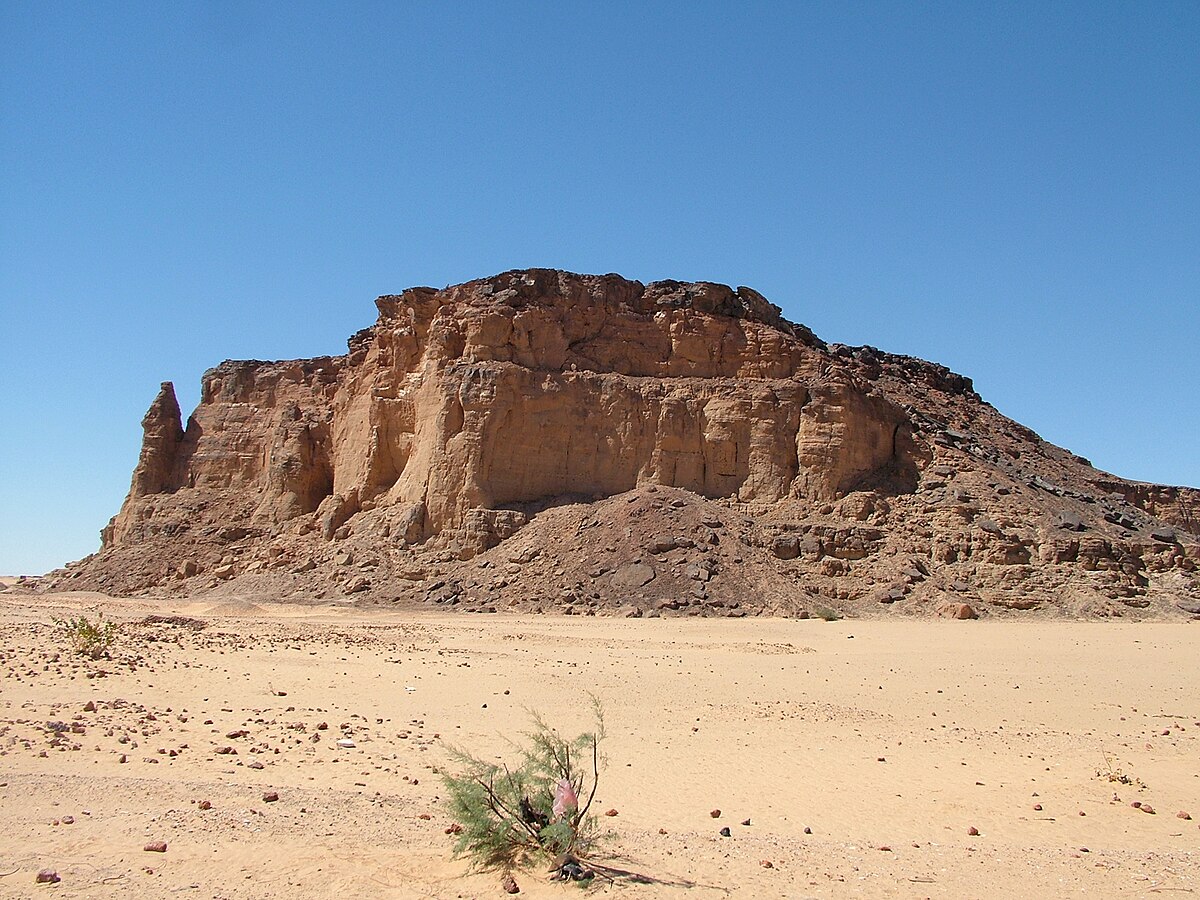
The title character of Giuseppe Verdi’s opera, Aida, is the daughter of the king of a land referred to by classical authors as Ethiopia, who has been enslaved by the Egyptians. She also appears under this name in the opera, although today this country, located in modern-day Sudan, is referred to by archaeologists as the Kingdom of Kush. In the mid-8th century BC, the rulers of Kush conquered Egypt for almost a century, sitting on its throne as pharaohs of the 25th Egyptian dynasty. Like the kings of ancient Egypt, the Kushites – rulers of the land that had been under Egyptian influence for many centuries – spoke Egyptian and wrote their texts in hieroglyphics.
© LassiHU, licensed under CC BY-NC 4.0
Egyptologist Thomas Schneider pointed out that one of the most important discoveries, which formed the basis for later research on ancient Kush – the discovery of five stone slabs from Jebel Barkal containing historical inscriptions of Kushite rulers – took place just nine years before the premiere of Aida. What is more, Mariette was the first scholar to study these newly discovered texts. This information alone suggests that these steles were at least partly the inspiration for the scriptwriter.
However, Schneider goes a step further and shows that the information contained in the inscription is surprisingly consistent with some of the themes in Aida. A reference to the victorious military expedition of the Kushites to Egypt, described in detail in the earliest of the texts, can be found in the first words of the libretto, when news of the threat from the south reaches the pharaoh’s palace. Moreover, Thebes is mentioned among the cities in danger, and the Kushites’ entry into Thebes is described in detail in the text of the stele. In turn, the theme of the Ethiopians’ loss of control over Egypt and their failed attempt to recapture the territory, known from the further action of Aida, is the subject of the second inscription. Lesser similarities can also be seen in subsequent texts. Among them is the procedure for selecting the commander of the army by the oracle of the god, which seems to echo the analogous method of selecting the new ruler of Kush described in another stele, just as the climax of the action in “Aida” in Act IV brings to mind the execution mentioned in one of the texts.
Public Domain
The German researcher also draws attention to the names of the main characters – Aida’s beloved, Radames, which bears a striking resemblance to the Egyptian name Ramses, the rival of the main character for Radames’ heart, the Egyptian princess Amneris (perhaps modeled on the name Amenirdis, a priestess and daughter of one of the Kushite rulers of Egypt) or Aida’s father, Amonasro, which is the real name of one of the rulers of ancient Sudan in the mid-3rd century BC. Ironically, it is the name of the main character that causes us the most trouble today. Although, according to Mariette himself, Aida (actually “Aita,” as we learn from reading his letters) is a name of Egyptian origin, it was clearly changed by him in such a way that it is difficult to determine its meaning unequivocally today.
Mariette and Verdi
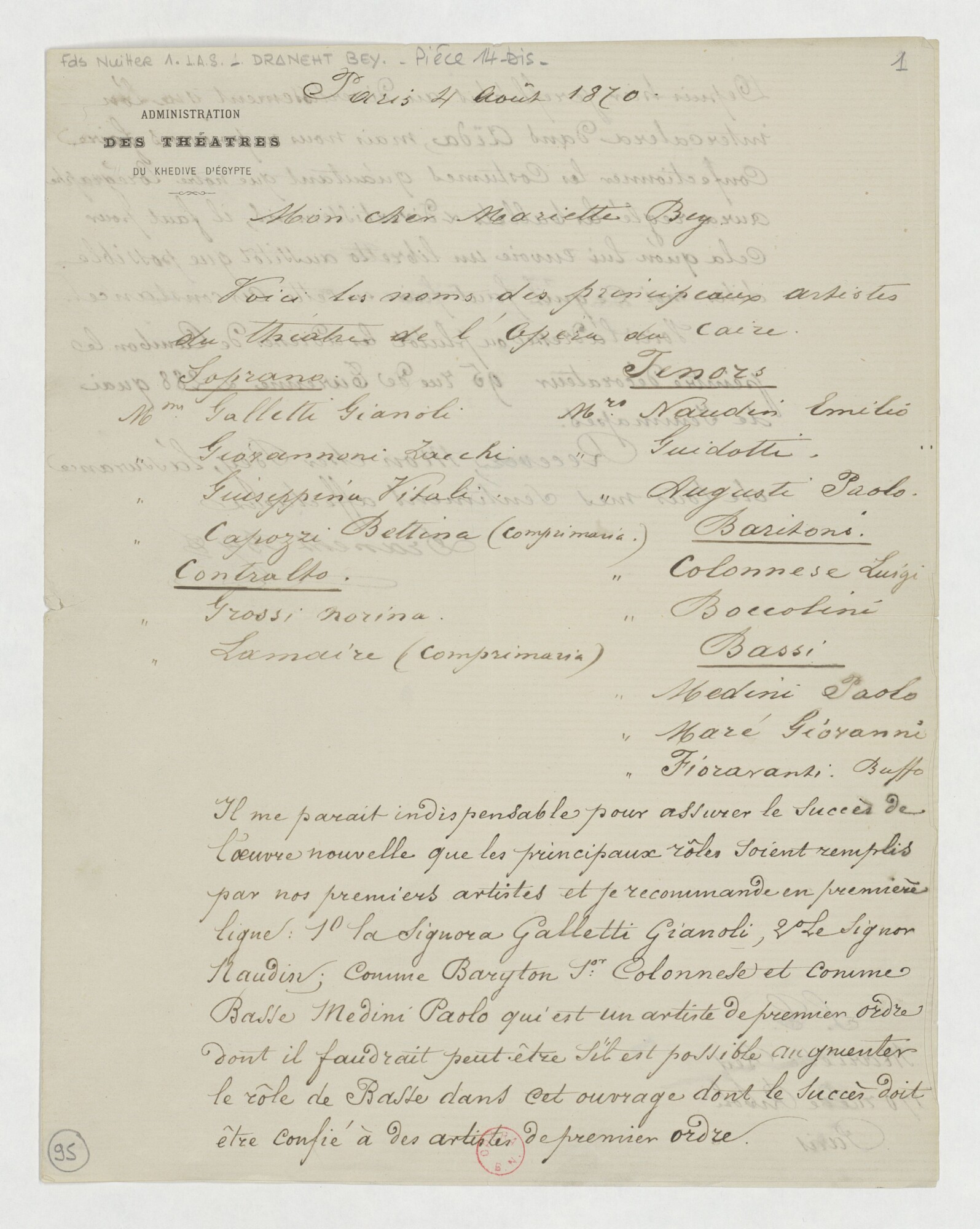
All these details have led to Aida often being referred to as an “Egyptological opera.” It is therefore somewhat ironic that Verdi himself probably never met Mariette in person. Verdi’s published archives contain only one letter addressed to the Egyptologist, dated November 1870. The famous composer, addressing Mariette in a very formal manner, announces that work on the opera is almost complete, asks for the payment mentioned in the contract to be sent, and assures him that he will send a trusted person to Cairo to supervise the rehearsals.
“I regret, Your Excellency, that having the honor of writing for the first time to (…) such an eminent scholar as yourself, I must address matters of business, but unfortunate circumstances compel me to take up this subject personally, and I hope you will forgive me for this request.”
These are the last sentences of the only known exchange between Mariette and Verdi.
Public Domain
Interestingly, Verdi initially refused to write the music for Aida. From Mariette’s correspondence, we know that among other candidates originally considered for this project, alongside Gounod and Wagner, was Prince Józef Michał Ksawery Poniatowski, a Polish composer in exile, related to King Stanisław August. However, this candidacy quickly fell through for reasons that remain unclear. Ultimately, Verdi changed his mind – his contract was worth 150,000 francs, while Mariette received no compensation for his efforts, except for his regular salary.
Although Mariette’s name is rarely associated with Aida today, it is worth remembering that its plot contains references to real events and characters. We owe this to a person who, apart from a small circle of archaeologists, remains virtually unknown – just as the land from which the title character originates is little known to the wider public.
Bilbiography
Busch, Verdi’s Aïda. The History of an Opera in Letters and Documents, Minneapolis 1978
J.-M. Humbert, How to Stage Aida, [w:] S. MacDonald, M. Rice (red.), Consuming Ancient Egypt, London 2003, 47–63
Locke, Beyond the Exotic: How ‘Eastern’ is Aida?, Cambridge Opera Journal 17/2 (2005), 105–139
Schneider, The Gebel Barkal Stelae and the Discovery of Ancient Nubia: Auguste Mariette’s Inspiration for Aïda, Near Eastern Archaeology78/1 (2015), 44–51
Author: Marta Kacznowicz
https://orcid.org/0000-0003-4477-9207
https://uw.academia.edu/MartaKaczanowicz
Translation: A.B.